Needham Looks Toward Progress at Juneteenth Celebration

June 22, 2026
• During what some characterized as a fraught political moment, the community commemorated the annual holiday with reflections and calls to action.
In the Emancipation Proclamation, effective Jan. 1, 1863, President Abraham Lincoln declared “all persons held as slaves within any State or designated part of a State, the people whereof shall then be in rebellion against the United States, shall be then, thenceforward, and forever free.”
It would be more than two years later that those enslaved in Galveston, Texas would learn of their freedom, on June 19, 1865. The day, celebrated as Juneteenth, became a federal holiday five years ago.
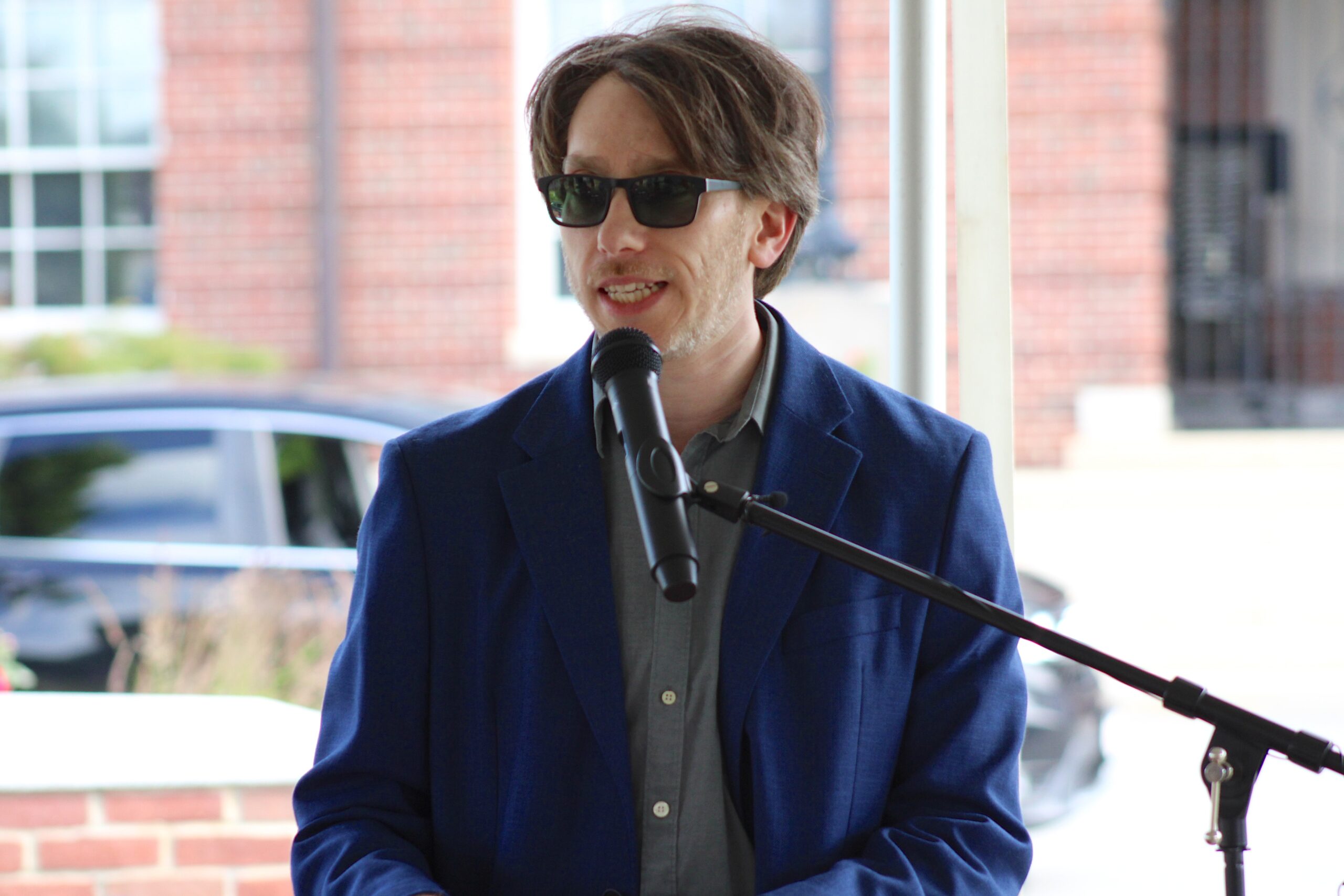
The bell at Needham’s First Parish Church tolled as community members gathered at the Town Common to commemorate Juneteenth Friday morning. In Needham’s third official observance of the holiday, Select Board Vice Chair Josh Levy led a ceremony which included remarks from local leaders and poetry readings.
Levy briefly reflected on the country’s history and its path toward justice.
“It did not change any status of remaining slaves in the border states,” Levy said of the Emancipation Proclamation, “and so one of the things we notice is that when we fight for freedom, it often proceeds slowly or imperfectly, but it’s always worth fighting for. It’s always worth celebrating.”
State Sen. Becca Rausch charted the peaks and valleys of progress for Black Americans after Juneteenth: Reconstruction, Jim Crow, discrimination and violence, the fight for civil rights and beyond. As the country eyes its 250th birthday this July, Rausch called on attendees to honor “those who never stopped fighting.”
“I hope that the deeply dedicated pursuits of justice and freedom, equity, and acceptance will eventually right the wrongs of hatred, of bigotry, and of our failures to see each other’s humanity,” Rausch said. “I remain steadfastly your partner in those pursuits.”
In his reading of James Weldon Johnson’s poem “To America,” Needham High School rising junior Michael Williams found insight into African Americans’ relationship with their country.
How would you have us, as we are?
Or sinking ‘neath the load we bear?
Our eyes fixed forward on a star?
Or gazing empty at despair?
Rising or falling? Men or things?
With dragging pace or footsteps fleet?
Strong, willing sinews in your wings?
Or tightening chains about your feet?
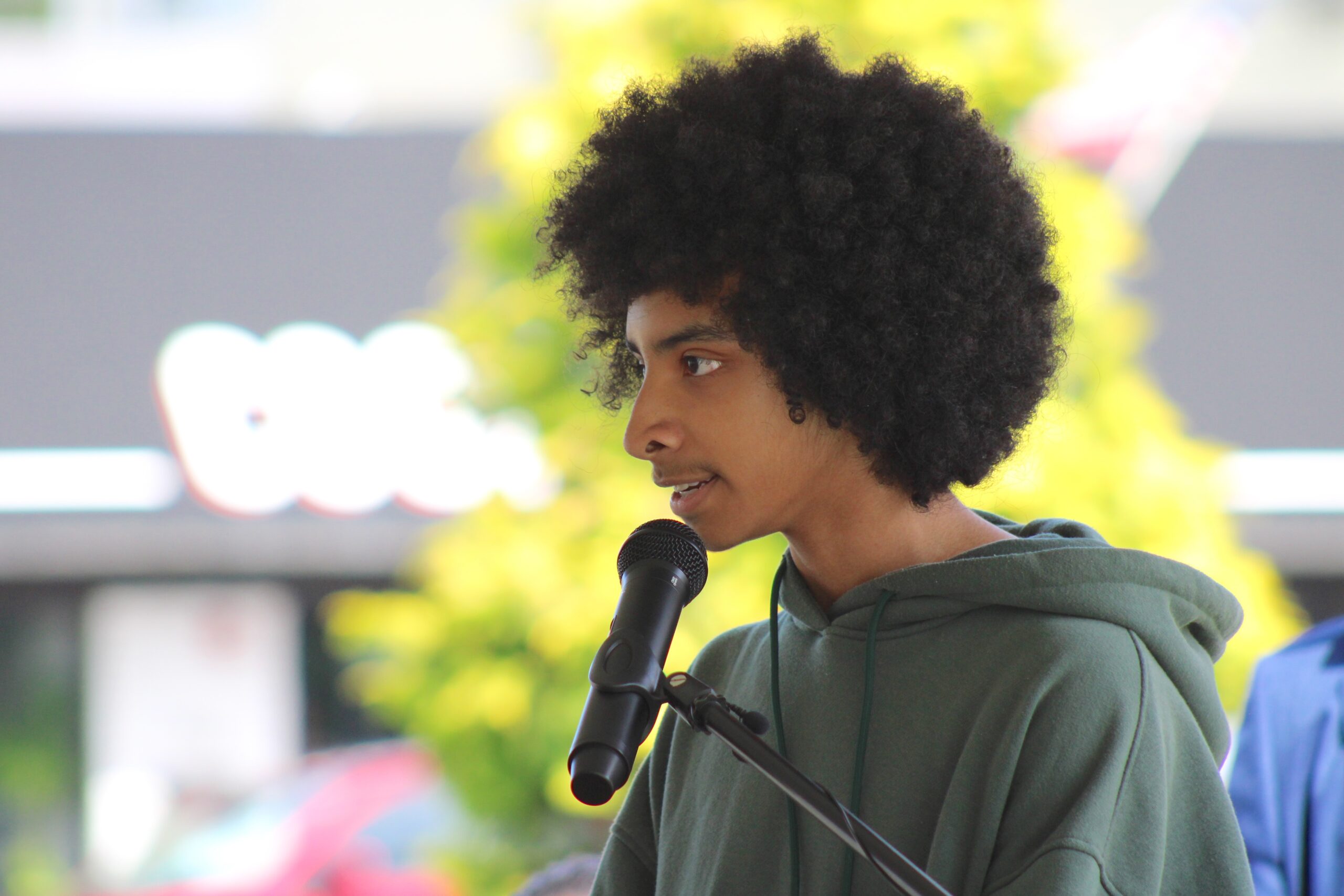
Williams encouraged people to educate themselves on the country’s history and recognize how that history is “already repeating.” He cited current attacks on voting access and gerrymandering along racial lines.
“I think every year that we celebrate this occasion is important, especially in critical times in this country especially,” Williams said in an interview, “and I think it’s important that we keep reminding ourselves of events like this and stains in our country’s history, that way we don’t repeat history like this in the future.”
Needham Poet Laureate Ann Nydam quoted Black abolitionist and writer Frederick Douglass: “Poets, prophets, and reformers are all picture-makers—and this ability is the secret of their power and of their achievements. They see what ought to be by the reflection of what is, and endeavor to remove the contradiction.”
“So that means poetry has a powerful job to do on times and occasions like this,” Nydam said at the ceremony.
Levy read “Bury Me in Free Land,” a poem written by Black abolitionist Frances Ellen Watkins Harper in 1858. An excerpt of the poem reads:
I could not rest if around my grave
I heard the steps of a trembling slave;
His shadow above my silent tomb
Would make it a place of fearful gloom.
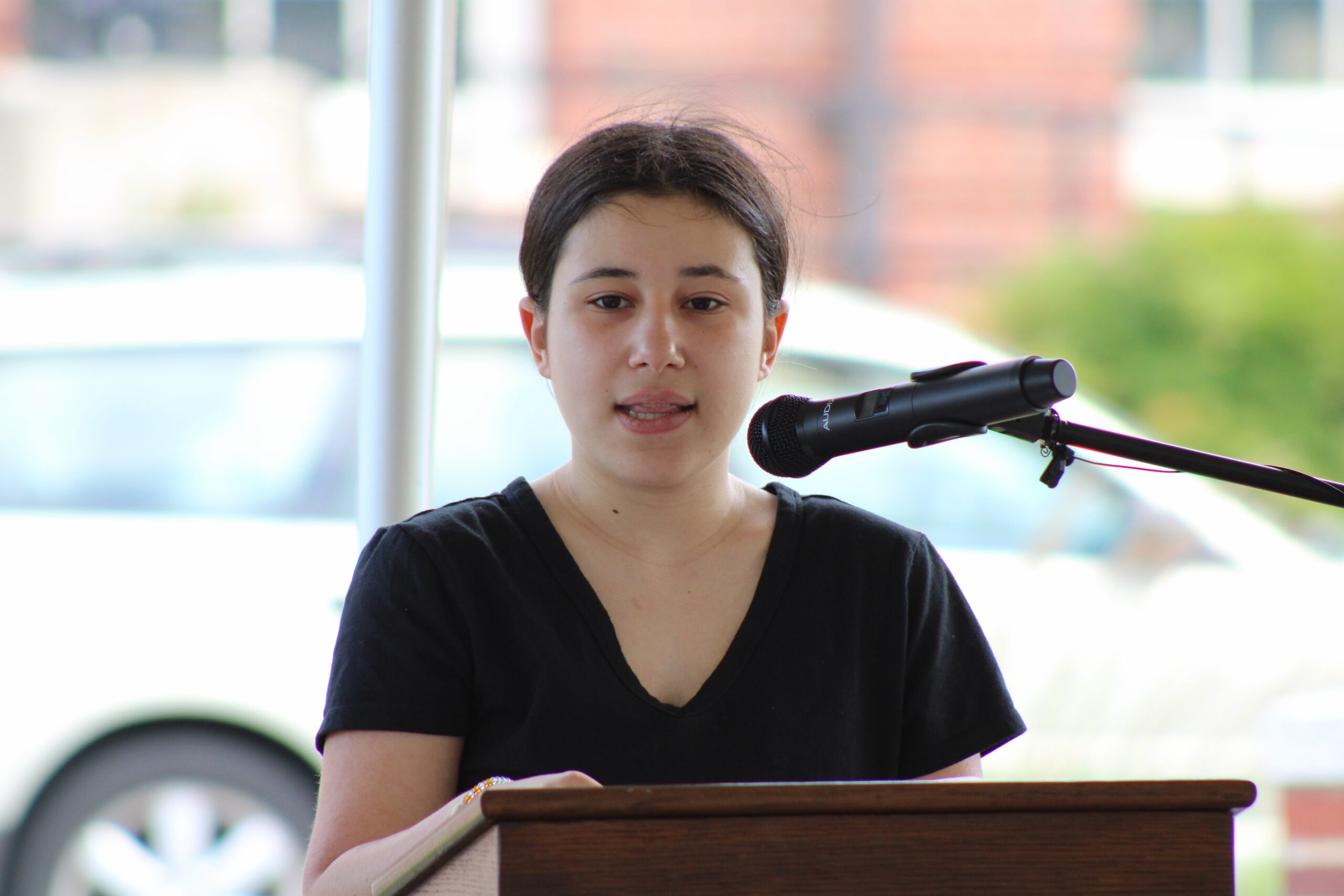
Progress moves slowly, evidenced by some of the language in the Emancipation Proclamation, NHS rising junior Molly Spear said. Spear recited the proclamation during the ceremony and said, as she prepared to read it, she was struck by the archaic language. References to “our almighty God” stood out to her as outdated and symbolized perhaps “a small step” forward, Spear said.
In school, Spear’s history teachers have offered brief overviews of Juneteenth, but with school ending as the holiday approaches, those lessons aren’t necessarily thorough or capture students’ full attention. Reading the proclamation provided a poignant reminder of that history for Spear.
“Through the speech, I think I just realized that this really happened in our history,” she said in an interview, “and it’s a very important event that I think we should all remember and think about what happened in our past and how we’re trying to move forward from it.”
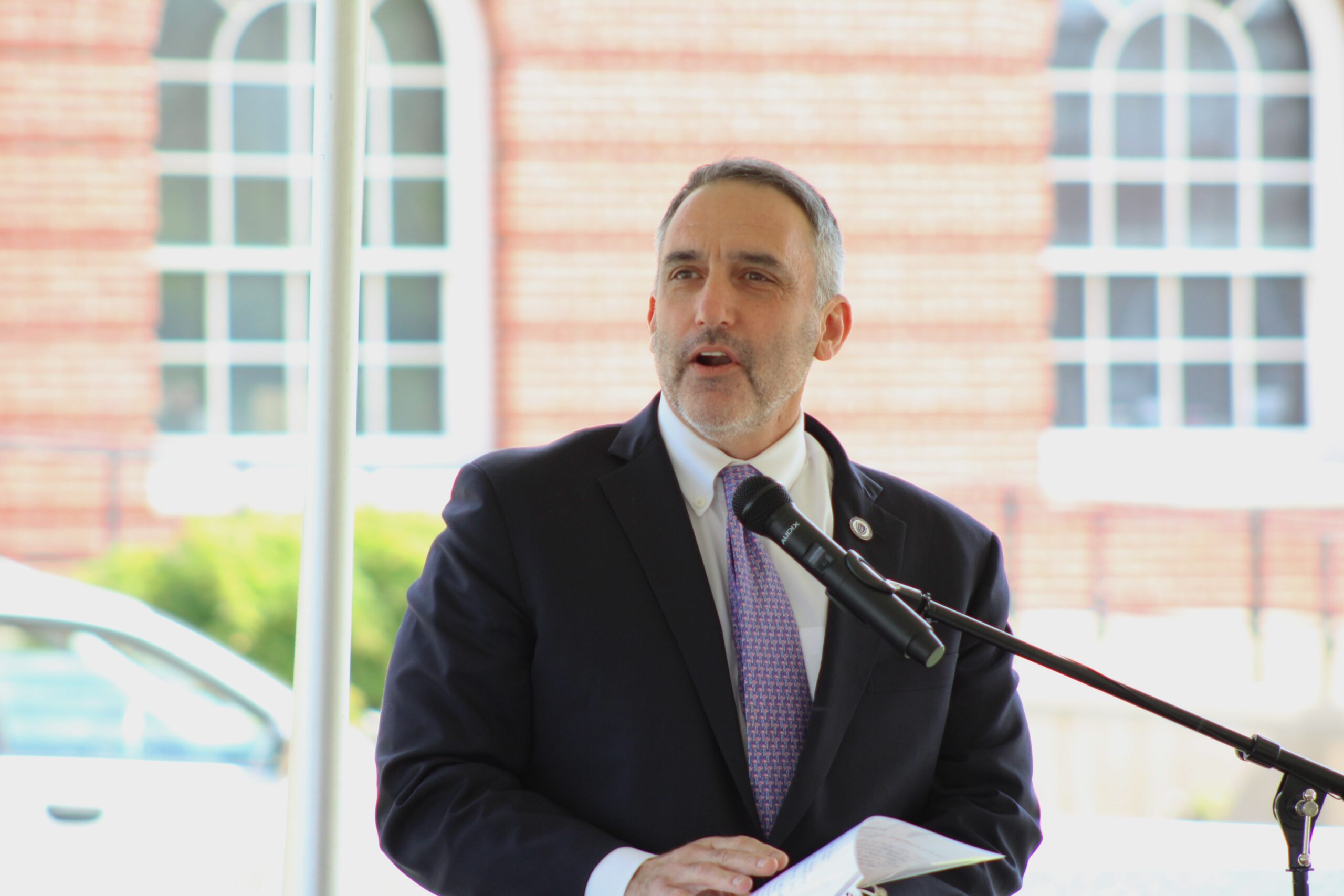
Slavery would not be fully abolished until December 1865, with the ratification of the 13th Amendment, but other inequalities have followed, state Rep. Josh Tarsky said. While commemorating Juneteenth, Tarsky added that “there’s still much to do.”
“In these divided political times surrounded by world rancor, today is a call to action,” Tarsky said at the ceremony, “to treat everyone well, to remember and right wrongs, to celebrate our differences and gains, to reflect and dream, ultimately to move America towards what we think, want, and know it can be, ideals that we mark today, and that we should strive to live up to every day.”