Arlekin Players’ Latest Play Reflects Ongoing Conflicts

June 15, 2026
• “DELIRIUM” will premiere in Boston June 18 before continuing its run off-Broadway in New York.
Igor Golyak’s personal identity drew him to his latest directorial undertaking. Golyak, a Needham resident, is from Ukraine and is Jewish, meaning “I follow two wars right now, every morning and every night,” he said.
As he witnesses destruction, loss and grief, Golyak said he’s also seen love and a shared humanity. That balancing act, between devastation and connection, led the creative to adapt Eugène Ionesco’s “Frenzy for Two” into a new play, titled “DELIRIUM.”
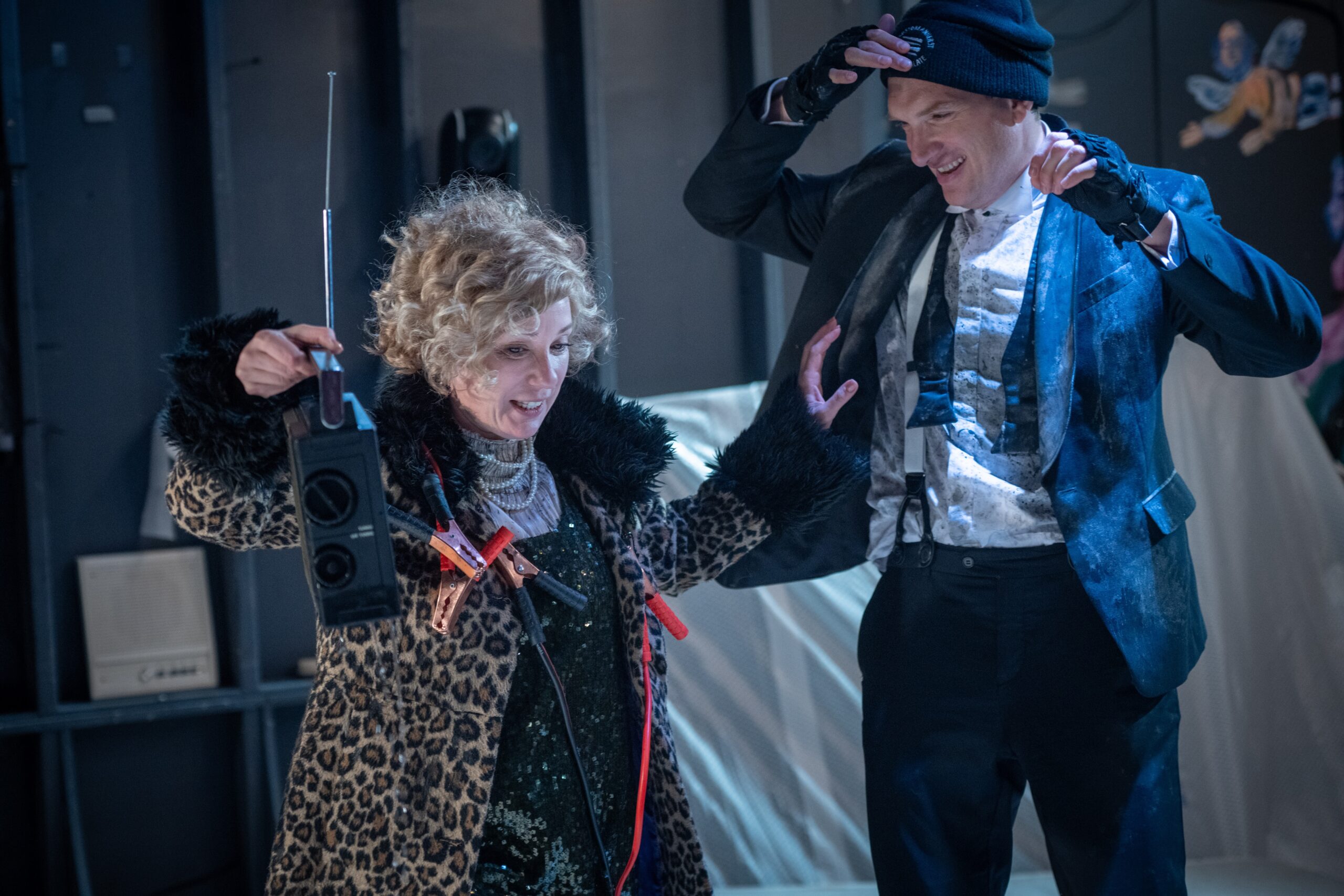
The show follows two people during wartime who are trapped in a trivial argument, but that argument “becomes the thing that holds them together, that saves them,” Golyak said.
“It’s about humanity that we discover through ourselves, through our conflicts, through our resolutions, and about love, about family, about how we save each other and what kind of aggression lives inside us, and what kind of love lives inside us simultaneously.”
“DELIRIUM” stars Russian actors and refugees Chulpan Khamatova and Andrey Burkovskiy. The show begins its two-week run at the Calderwood Pavilion at the Boston Center for the Arts on Thursday, June 18.
Needham’s Arlekin Players, founded by Golyak in 2009, began as a “refugee company” and acting studio, he said. The group, formed primarily by Russian speakers from the former Soviet Union, performed exclusively in Russian in their first eight years.
Since then, however, the company has expanded its reach, both in language and geography. They’ve performed in New York, San Francisco and elsewhere in their 17-year run, and most of their shows over the last decade are in English.
“From this refugee company group, immigrant group, we grew into a national company,” Golyak said.
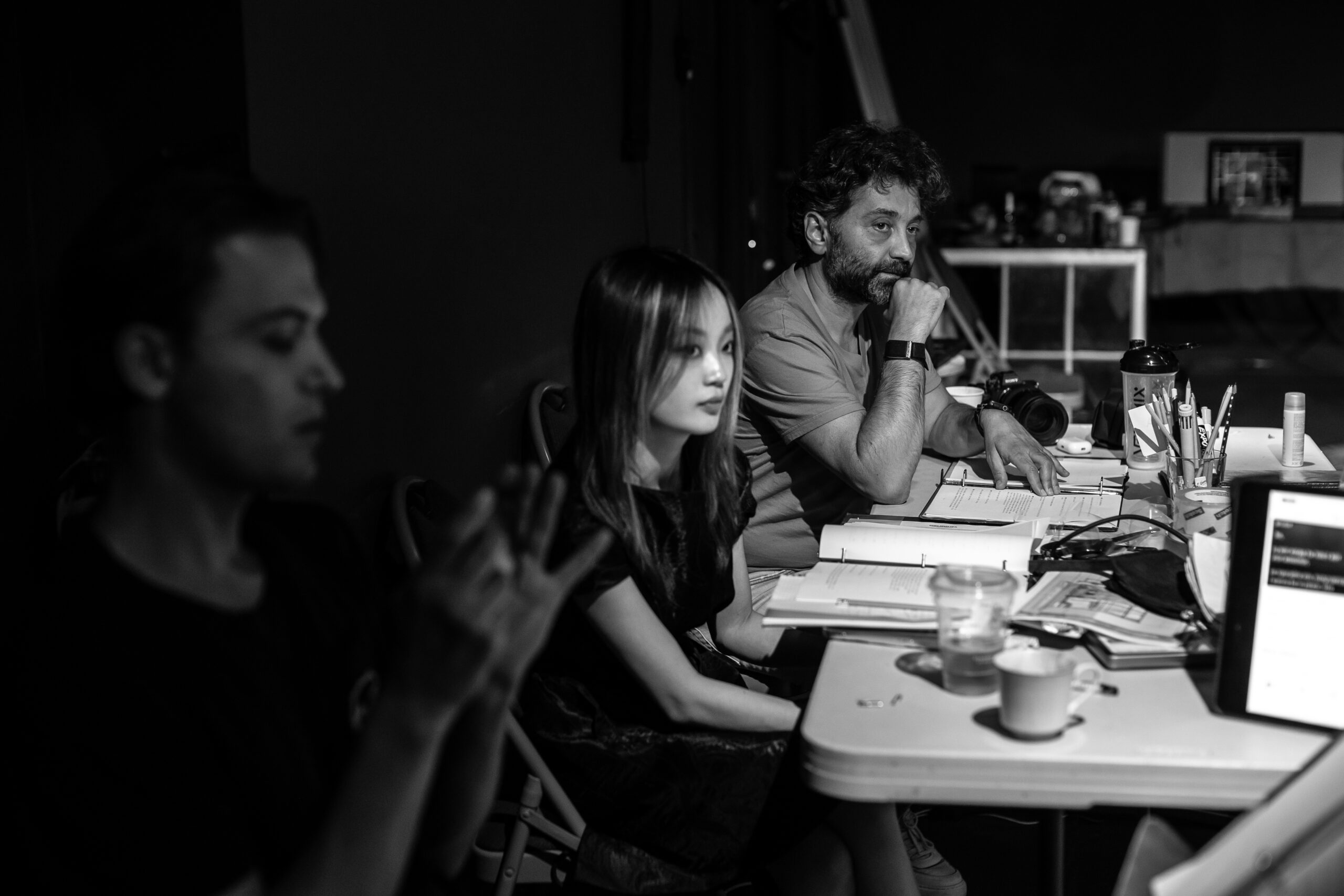
Irina Vilenchik and Julia Shikh, who both joined Arlekin in its early years, feel the acting troupe is now a “tight family.” Vilenchik is in charge of props on “DELIRIUM,” with Shikh assisting. Watching the organization grow from fewer than a dozen core actors to now about 20, and with productions traveling across the country, signals “another step” upward, Shikh said.
When they once created props by hand or sought second-hand items from neighboring families, the shows have grown in budget and size. Still, their work involves effort and innovation, such as stitching nearly three dozen handles on stacks of mattresses and visits to cow farms for metal gates.
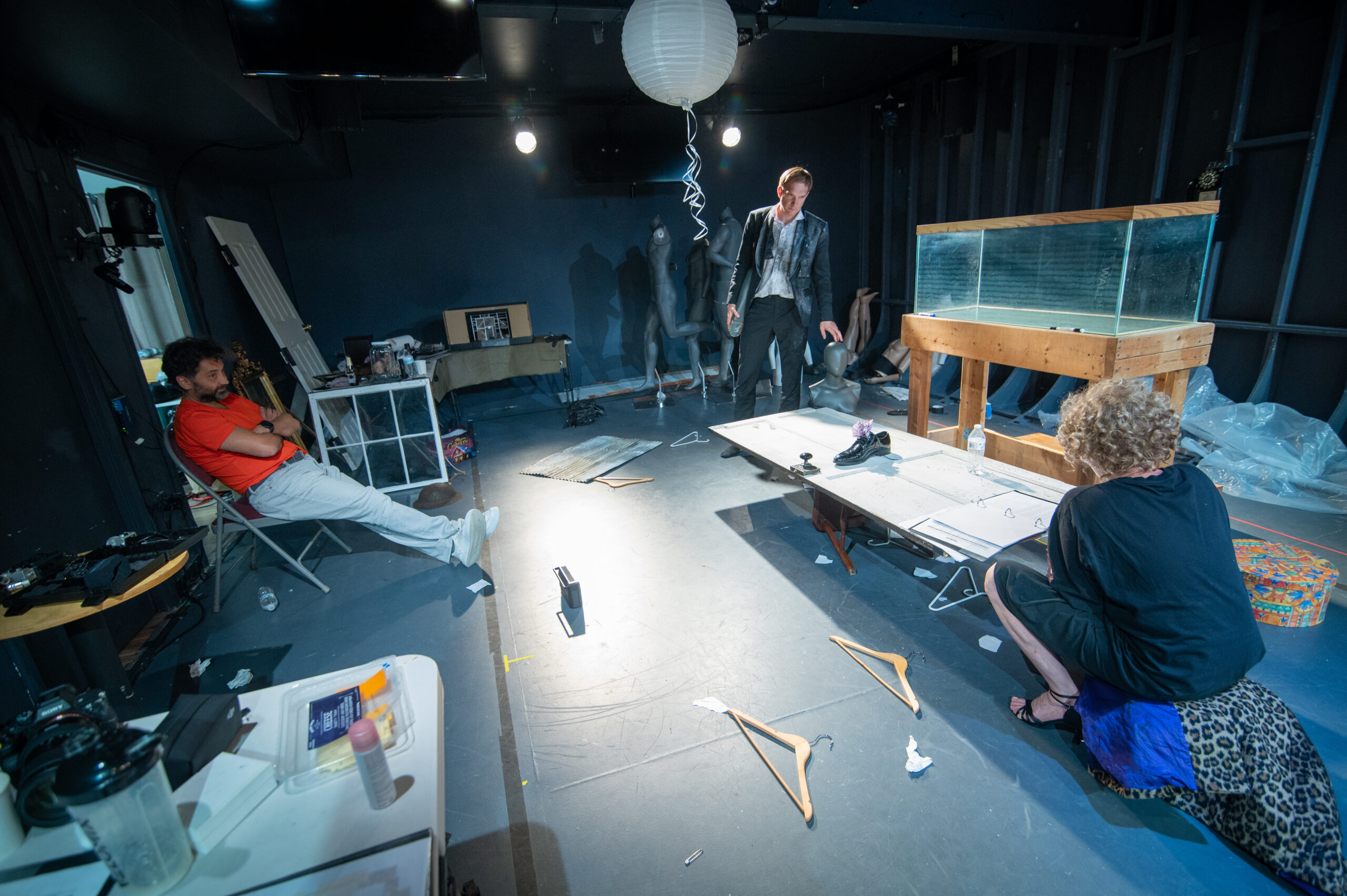
“It’s something that we’re doing just because we understand that it’s part of us,” Shikh said, “so it’s not that we are just helping the show to become a show, we are part of the show. All of us, we really feel that we are part of it.”
The continued support from the Russian-speaking community uplifts the theater, Vilenchik said. Since transitioning to productions in English, they still feel that love and energy, she said. Both women moved to the United States from Russia.
As they eye opening night, Vilenchik and Shikh said the show highlights a “love-hate survival” under unusually difficult circumstances, though Golyak withholds from giving answers. They both said the director is more one to offer questions.
“What’s happening outside, the war that is happening outside, is completely unnatural, and they kind of are looking for their universe inside each other to survive whatever is happening outside of that,” Vilenchik said of the show. “That’s what it is for me.”
The nature of the play, Golyak said, creates a lightness in the physicality and comedic moments and darkness in the tragic ones.
“Being a Jewish Ukrainian refugee and living in the time of war, where everything is so close to home and doing a play about surviving in war times, where the absurdity becomes the reality, the absurdity of our world becomes the reality of our world, is what the play is about,” he said.
“DELIRIUM” runs June 18 to July 2 at the Calderwood Pavilion at the Boston Center for the Arts.