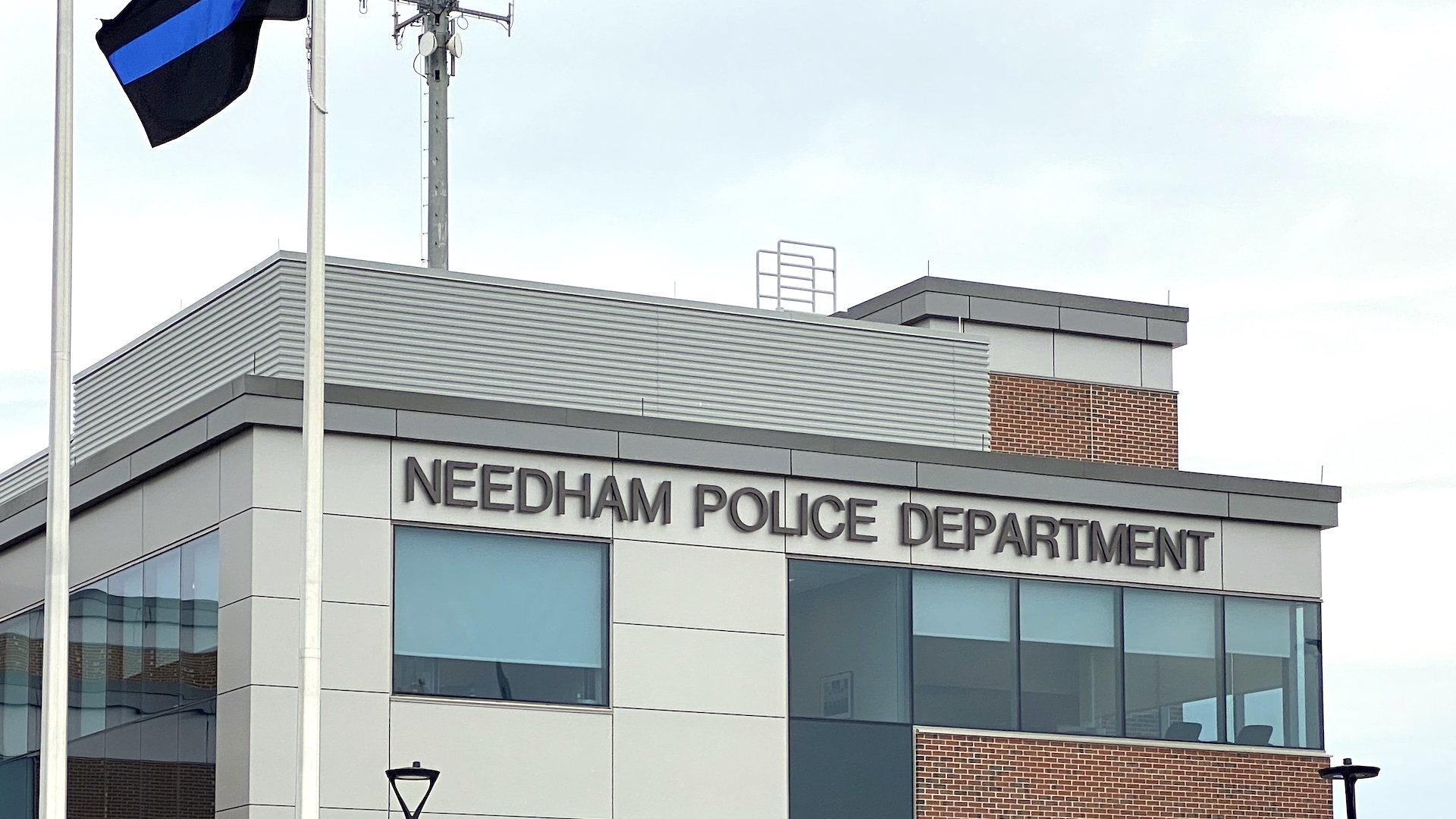
Needham Police Spread Awareness on E-Bike Safety

August 3, 2026
• A proposed state law follows safety concerns around e-bike usage in Needham and around the commonwealth.
Last month, Massachusetts State Senate passed a bill that included updated regulations around electric bicycle and other micromobility device usage. The legislation comes as local law enforcement across the commonwealth have seen an uptick in accidents and complaints involving electric bicycles, especially among adolescents.
Although Needham has experienced fewer incidents than other communities, School Resource Officer Joe Brienze said it’s important that parents understand what the law says about e-bikes, e-dirtbikes and other micromobility vehicles.
“We just want them to be a little bit safer,” Brienze said. “We’ve had some close calls, and we don’t want that to be the story Needham is remembered by.”
E-bike use has risen in popularity nationwide, and it typically peaks in summer due to factors like better weather and school breaks. E-bike and other micromobility related-injuries have also increased by roughly 23% annually since 2017, according to a January report from the Massachusetts Special Commission on Micromobility.
The NPD has issued public safety notices via social media about e-bike use, pointing to neighboring communities where riders have been killed in crashes involving the vehicles. In October, police requested the public’s help in identifying teenagers on e-bikes at Memorial Field, reporting they were “running red lights, weaving in and out of traffic, driving on the wrong side of the road, and riding on the turf,” according to a Facebook post.
Brienze said the department receives calls concerning e-bike use from residents, including one report that teens were riding through Needham High School. Most of those riding e-bikes are children in middle school and early high school, he added.
E-bikes, which are motorized, can reach speeds close to 30 miles per hour.
In 2024, the Massachusetts Legislature created a commission to review the existing framework around micromobility devices like e-bikes and determine how to integrate them into the commonwealth’s transportation system.
The commission noted in its report that the rise in micromobility devices could lead to improvements in roadway congestion and a decrease in carbon emissions. However, current regulations on micromobility devices — age limits, types of devices and where they could be used — bred confusion among officials, buyers like parents and users themselves that hampered potential benefits, according to the report.
A series of high-profile e-bike related accidents, including a crash that resulted in the death of a teenage boy in Stoneham last November, added an urgency among legislators to update regulations.
Following the recommendations of the commission, Gov. Maura Healey filed the Ride Safe Act in May. The bill establishes four classifications of electric vehicles based on their speed, as well as minimum age requirements and stronger rules on where electric vehicles can operate.
In her proposal, Healey said classifying micromobility devices by their speed as opposed to their name was a “smarter” system that “positions Massachusetts as a national leader” in regulating electric vehicles.
The Ride Safe Act has not passed in full, but the state Senate passed an economic development bill July 24, which included the speed-based framework for micromobility vehicles. The bill was sent to the House but got bounced back to the Senate July 30.
Brienze said the speed-based classification system could be especially helpful in mitigating confusion around purchasing e-bikes.
“If you have clear rules for parents to understand and follow, because there’s so many, I think it’s a great idea,” Brienze said.
The speed-based regulations could help address the issue of distinguishing between typical e-bikes and off-highway vehicles (OHVs) like e-dirtbikes, which are more strictly enforced.
Since April, the NPD has issued citations for unlawful e-dirtbike use on at least two occasions. Brienze said the department opts for an educational approach rather than a punitive one when dealing with such cases, since products sold online may be advertised as street legal even when they aren’t.
“We want to make it more of a learning experience just to understand the other side of where we’re coming from, where we’re trying to prevent a tragedy from happening,” he said, “rather than kids fearing us and thinking we’re just there to punish them.”
The state commission’s January report also highlighted the need for infrastructure changes, including improving and enforcing bike lanes for e-bike users. Healey’s proposed bill does not directly address that issue.
The Envision Needham Center project previously considered separated bike lanes along the downtown portion of Great Plain Avenue. Aidan Boni, a founder of the pro-Envision advocacy group Safe Streets Needham, said improving road safety through street design would be more impactful than updating laws on e-bike use.
“You can regulate e-bikes all you want,” Boni said. “But crashes that we’re seeing aren’t about the bike, they’re about that kid that’s biking on a busy street with no separation from cars.”
Boni said he fully supports Healey’s proposal, but that unsafe conditions pose a threat to all road users, not just those on e-bikes.
On Friday, Boni forwarded an article from Boston 25 News to Safe Streets Needham’s mailing list: a Wellesley boy had been struck by an SUV while riding a non-electric bicycle.
“The best street designs don’t rely on drivers choosing to be careful, or cyclists riding perfectly, they anticipate mistakes,” Boni wrote in the email. “Safe streets make the safe choice the only easy one.”
Benjamin Fogler is a rising sophomore at Northwestern University, where he is studying journalism. Fogler, who graduated from Needham High School, also writes for The Daily Northwestern.