Schools Adopt Emotional Support Animal Policy

March 19, 2026
• The School Committee approved a revised “puppy policy” that now allows for emotional support dogs under specific circumstances.
The Needham Public Schools now have guidelines specific to emotional support animals within the district’s eight schools, after a School Committee vote Tuesday.
The previous policy only outlined service animals, which aid people with disabilities and have specific tasks, such as monitoring a medical condition or “guiding individuals with sight impairments,” the policy states.
Before there was an official policy, staff members had already brought in emotional support animals (ESAs), or therapy dogs, to provide comfort for students. The Needham Police Department also has Rocket and Ghost, community resource dogs who frequent the schools.
During the committee’s March 3 meeting, Superintendent Dan Gutekanst said emotional support dogs “increasingly, we’re finding, are assisting students to focus on attending to school, to relax and to regulate themselves.” Due to their more frequent use, he said it felt time to develop a clear policy.
Under this policy, emotional support dogs must be certified and have permission from the superintendent or a designee. The dogs would be brought in for specific visits or reasons. There are other parameters, including that the dog and handler must be wearing “appropriate identification” and that the dog is under the handler’s control.
Both emotional support dogs and service animals must be licensed and fully vaccinated, and owners must have insurance to cover potential damages.
Mary Lammi, assistant superintendent of student support services, worked on the original policy that went into effect in January 2017. The intention behind it was about “creating an environment that is accessible and supportive to all individuals,” Lammi said, while also adhering to the Americans with Disabilities Act.
“It’s really about access,” she said.
In order to bring their service animal into a school building, students and faculty must notify the school principal at least 45 days in advance. There are currently no service dogs in use within the district, according to Gutekanst. Therapy dogs are not considered service animals under the ADA.
The policy also details safety concerns, including potential dog allergies — should someone be allergic or have a dog aversion, schools “will provide reasonable accommodations,” it states.
In moments of crisis or trauma, emotional support dogs provide special support, Lammi said, and it was important to the district to officially establish guidelines around their presence in schools.
“It really does help to bring emotions down, to create some support and calm in these situations that tend to be escalated,” Lammi said.
A therapeutic program at the high school occasionally welcomed a trained emotional support dog during certain days in the week, she added, and other school communities have visits from ESAs as well.
When students returned to Mitchell Elementary after the pandemic, they struggled with “expected school behaviors,” Principal Greg Bayse said. “There was a lot of dysregulation, there was a lot of misbehavior.” That’s when Honu the dog stepped in.
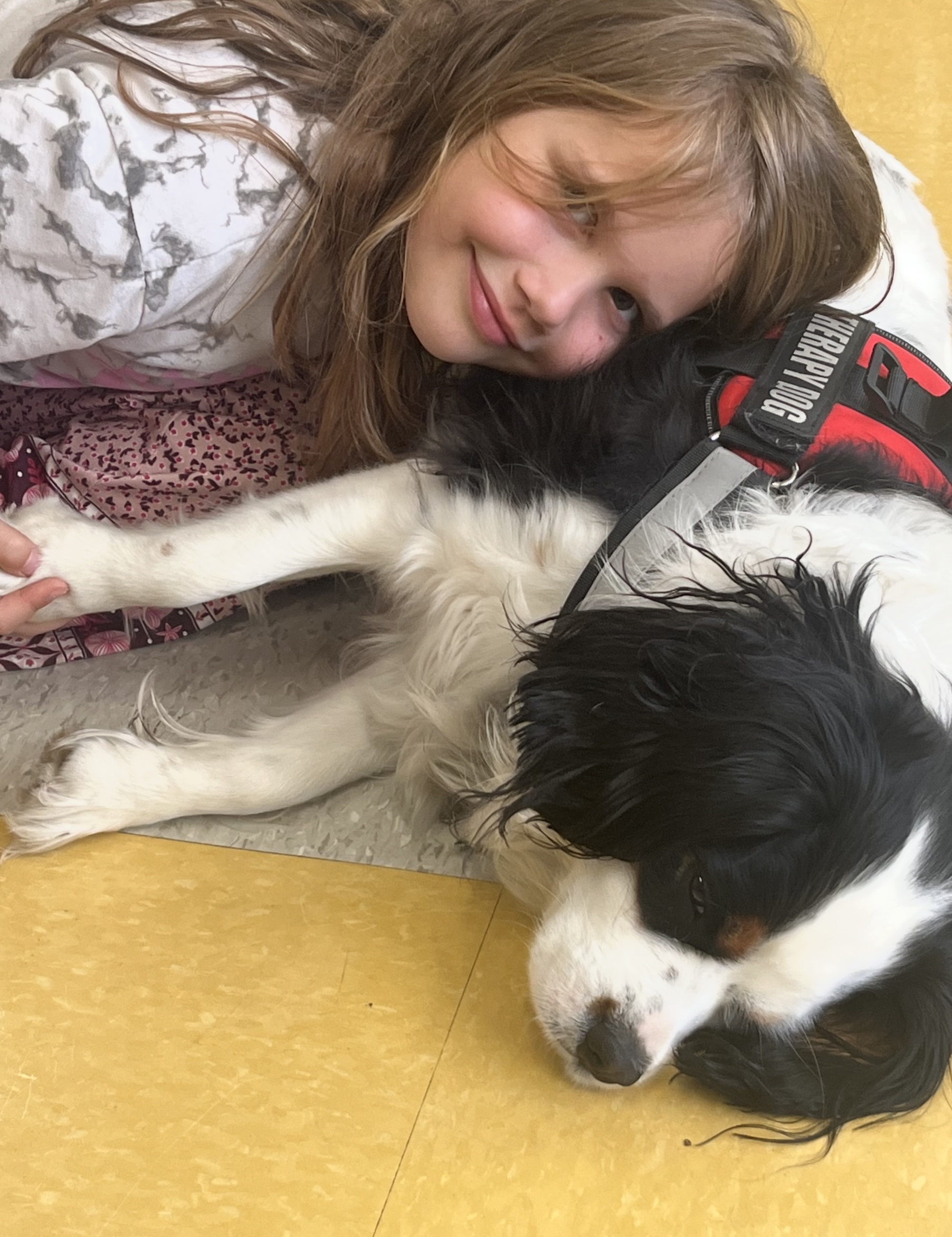
The “cava-bernie” — part King Charles Spaniel, part Bernese Mountain Dog — helped young Needham learners decompress and succeed in the classroom, Bayse said. Board Certified Behavior Analyst Dr. Shauna Vaughn Waters was behind the effort.
“I think that for many kids, Honu became the safe place in the building,” Bayse said.
Honu hasn’t visited Mitchell this school year, as the district waited for the new policy to go into effect. Bayse said he anticipates welcoming Honu back soon.
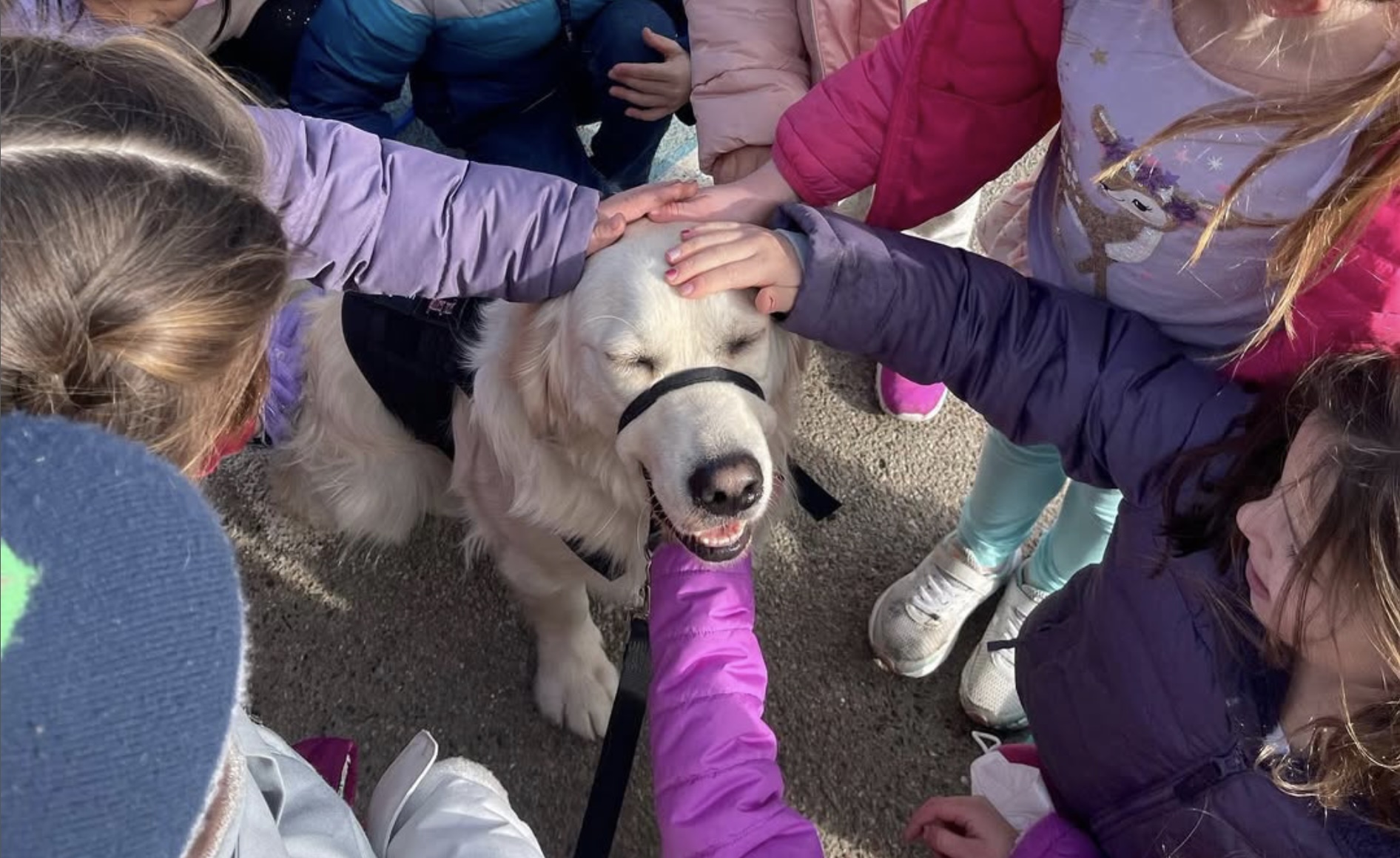
School Resource Officer Joe Brienze sees the power of puppies first-hand as Rocket’s primary handler. The pair make about 300 community visits each year, the vast majority of which are to area schools, he said. “The kids love it,” Brienze said.
“A lot of kids have a tough time with some dogs, and because Rocket’s pretty low-key and docile, they really love Rocket,” Brienze said. Rocket is a Golden Retriever. “The counselors are really good about balancing, utilizing the dog appropriately rather than just doing it to do it.”
For students having trouble socializing, they can turn to a therapy dog, with whom they can practice perspective-taking and friendship skills, Bayse said. The stakes are lower, he said, and animals are very forgiving.
“Honu is certainly loved by the staff here,” he said. “It’s hard to see Honu and not have a smile on your face.”