Local Teens Employ Tech to Tackle Hunger

November 16, 2026
• A group of high school students hope to transform communities by reducing food waste and addressing hunger. Their newest partnership coincides with National Hunger and Homeless Awareness Week.
About 1.05 billion tons of food went to waste in 2022, accounting for 19% of all food across homes and restaurants, according to the UN Environment Programme’s Food Waste Index Report, published in 2024. Other estimates, including one from the U.S. Department of Agriculture, put total food waste as high as 40%.
For FoodXChange, there exists an individual solution to that global problem.
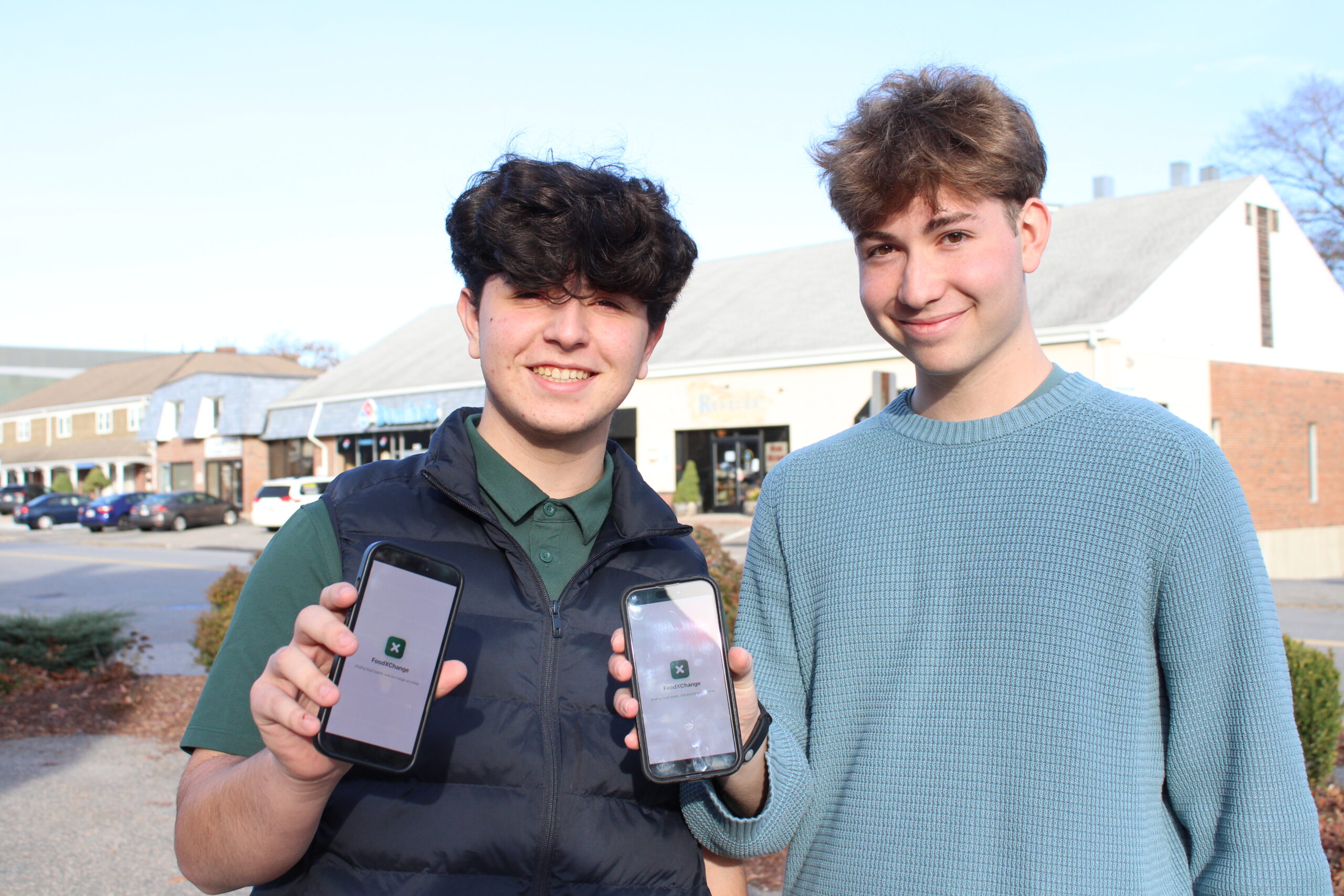
The app — developed by three high school students, including a senior at Needham High School — aims to connect people with free food in their community via person-to-person exchanges. Someone with unopened food they would otherwise throw away can instead give it to a neighbor through the online platform.
The goal is to get free food into the hands of those who need it, as well as reduce how much food goes to waste, said co-founder Max Gershberg, who lives in Newton.
“We have food that could be used, but the person that has it is either A., not going to use it, or B., won’t have the time or the resources to use it. The other part of that spectrum is the people that need food that may be struggling or can’t afford to put any meals on the table,” Gershberg said. “I think connecting those two ideas with the modern age of technology, an app, is just something that made most sense.”
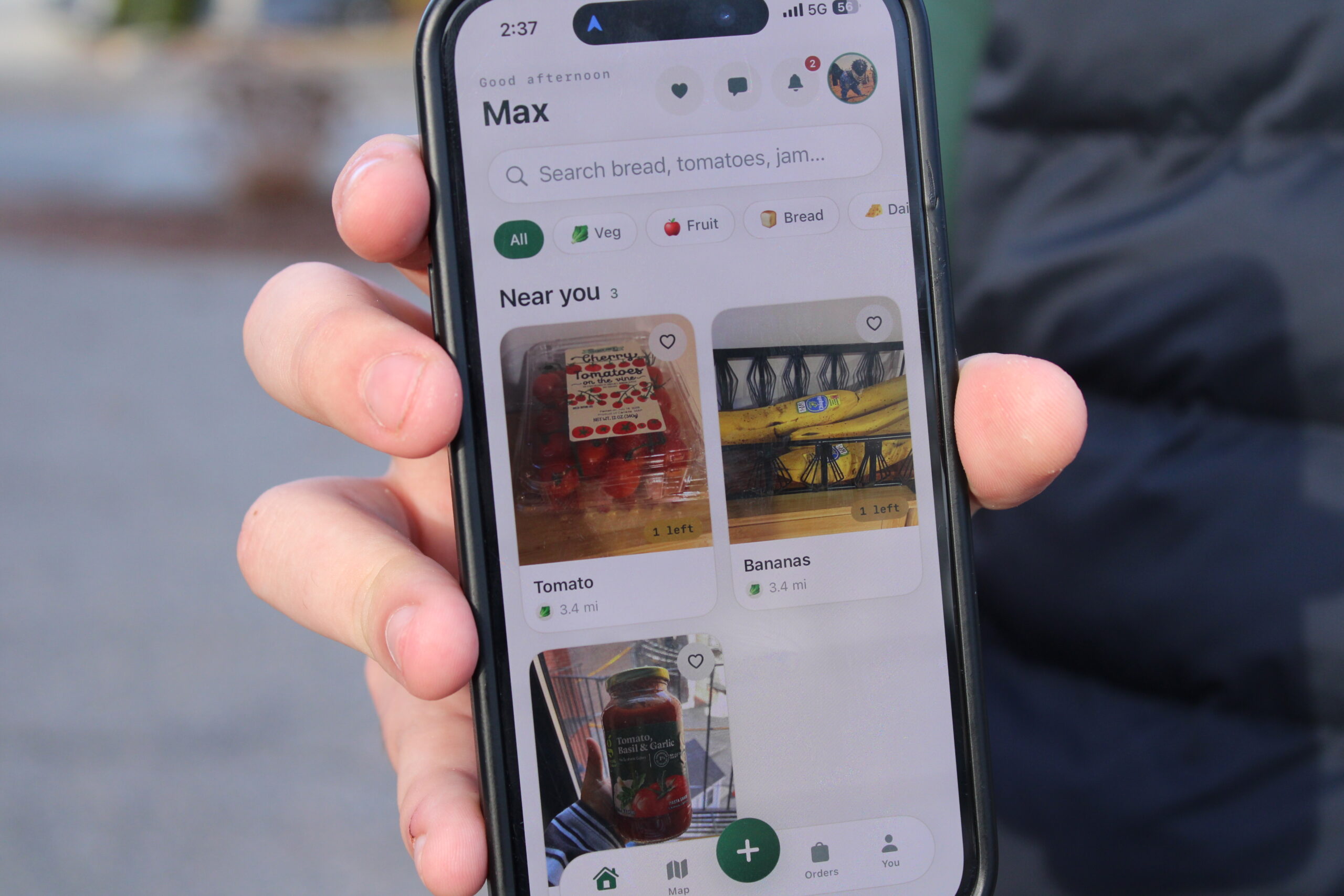
Here’s how it works: users upload a photo of the food they’re giving away and either scan its barcode to share the nutrition facts and expiration date or use a built-in AI scanner to do that. Any allergens can also be added to the post. From there, transactions carry out like those on Facebook Marketplace, with listings sorted by geographic region, conversations happening within the platform and drop-offs taking place at an agreed-upon location.
For security purposes, the person receiving the food must share an exchange code with the other to complete the transaction. All chats after an exchange are also deleted.
Rising costs, as well as cuts to SNAP benefits and similar programs, also contribute to a growing need for groceries, Gershberg said. Local programs, such as the Needham Community Council food pantry, have witnessed a sharp increase in monthly usage in the last couple years. Other services, such as Too Good To Go, partner with restaurants and grocery stores to sell food at discounted rates.
FoodXChange differs in its small scale, which Gershberg said contributes to the “feel good aspect of the app.”
Co-founder and NHS senior Eric Ayrumyan added that users may also sense they’re “alleviating that guilt of contributing to food waste.”
“There’s a lot of state and municipal initiatives for food waste, but there’s been an inability for households to contribute themselves,” Ayrumyan said. “That’s what we’re trying to foster with this app, is let the individuals see a tangible impact.”
This fall, the app launched pilot programs at Boston University and the University of Rhode Island, with another at the University of Maine set to start this week, coinciding with National Hunger and Homeless Awareness Week. The app was in development for close to a year before that.
Currently, usage is restricted to those college campuses, but Gershberg said the goal is to expand into regional communities. Since starting up in September, they’ve seen close to 300 downloads and nearly 50 exchanges between users at both BU and URI. The app will also track users’ approximate amount of CO2 saved and the number of pounds of food saved.
The response appears promising, Gershberg said. At BU, FoodXChange partnered with the college’s Nutrition and Dianetics Club, who hosted Gershberg and Ayrumyan at a club meeting this semester. They plan to return to introduce a college ambassador program, wherein students can encourage others to sign up.
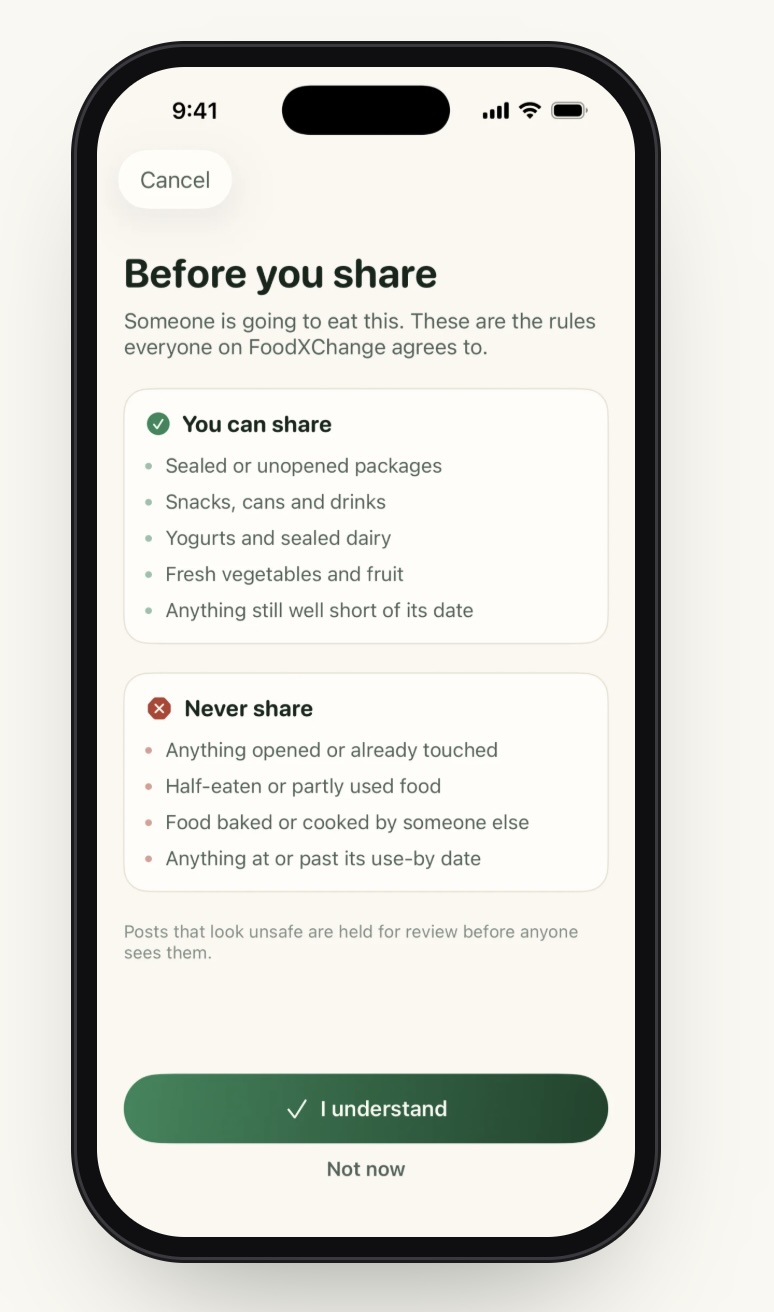
So far, students have posted everything from yogurts to sodas to cereal boxes and more, Gershberg said. Only closed packages and store-bought food — meaning nothing cooked or baked — can be exchanged, lest they want to attract the attention of the U.S. Food and Drug Administration.
Gershberg and Ayrumyan created the app with Idan Kestenbom, who lives in California.
The group has lofty goals, with the belief that their app could go national and eventually drive down grocery prices. Still, Gershberg said they’re taking small steps, with the hope of launching in a town like Watertown or possibly Needham or Newton to reach more people.
“We are still in pilot stage, but we’re reaching that peak of the point where we’re exiting pilot and we’re moving into a more public release,” Gershberg said, “in which we want to see towns and communities start to utilize this tool and see its real life effects on helping with food waste.”