Honoring the Enslaved of Needham

March 23, 2026
• First Parish in Needham Unitarian Universalist held a ceremony to unveil a new memorial for the enslaved people in Needham known by name.
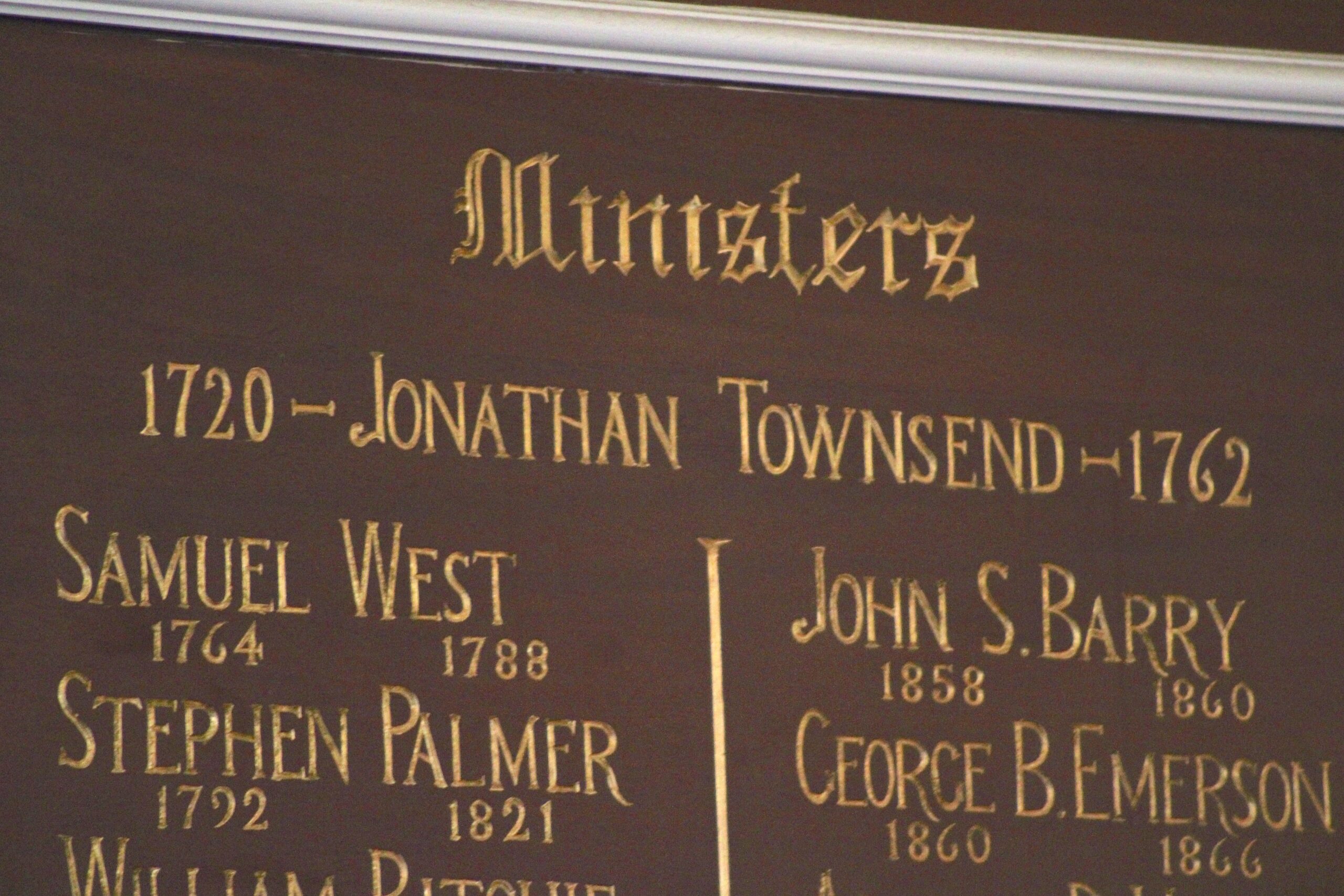
Inside the chapel hall at First Parish in Needham, two hanging plaques list the names of every church minister since its founding in 1711. At the top of the list is Jonathan Townsend, the church’s first minister who served for more than 40 years.
Townsend’s name doesn’t tell the whole story. For those four decades, he enslaved a man named Homer, who worked as the parish’s sexton and took care of the homestead before his death.
Homer’s name and story remained lost to history — until recently. On Sunday, First Parish unveiled a memorial dedicated to him and 14 other enslaved people in Needham during the 1700s. Organizers consider the ceremony a first step toward truth, reconciliation and reparations.
“We wanted the history to be unbury-able,” Rev. Catie Scudera said in an interview. The effort was several years in the making, in collaboration with Gloria Greis of the Needham History Center and Museum.
Among those named in the memorial are Jupiter Coffee, who was born into slavery, and his son Pvt. Ishmael Coffee, who went on to serve in the Revolutionary War. Their descendants, Darlene Troge and brother Chief Peter Silva Arrow of the Hassanamisco Nipmuc, participated in the ceremony.
Together with First Parish members, Troge and Silva read the 15 names, including those of their relatives seven generations back. During his remarks, Silva reflected on the spring equinox and how it represents rebirth. With each generation, there is also a rebirth, he said.
“I will not be here for too many more years,” said Silva, who is in his 80s. “And the question is, what do I do to ensure that well-being for the next seven generations?”
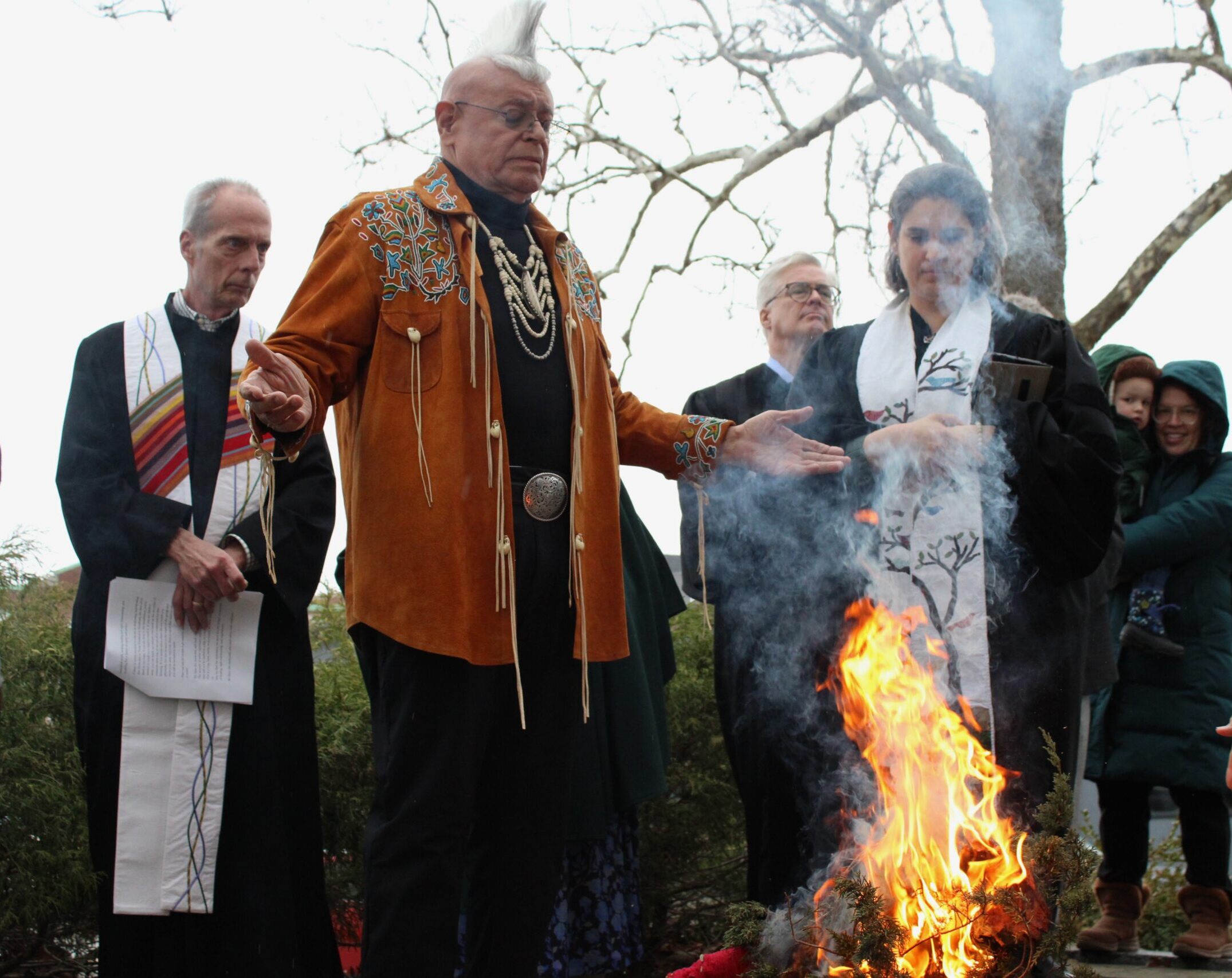
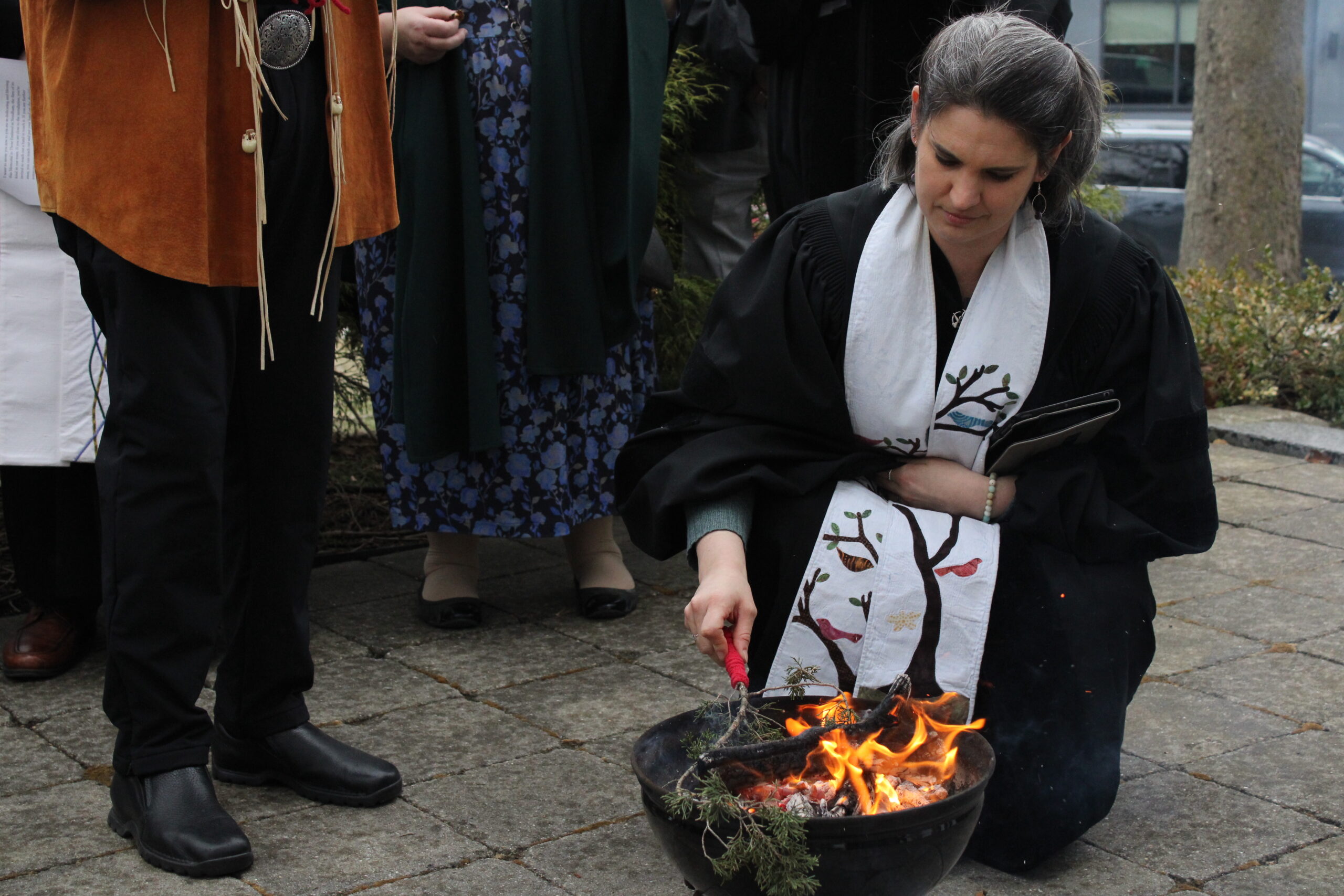
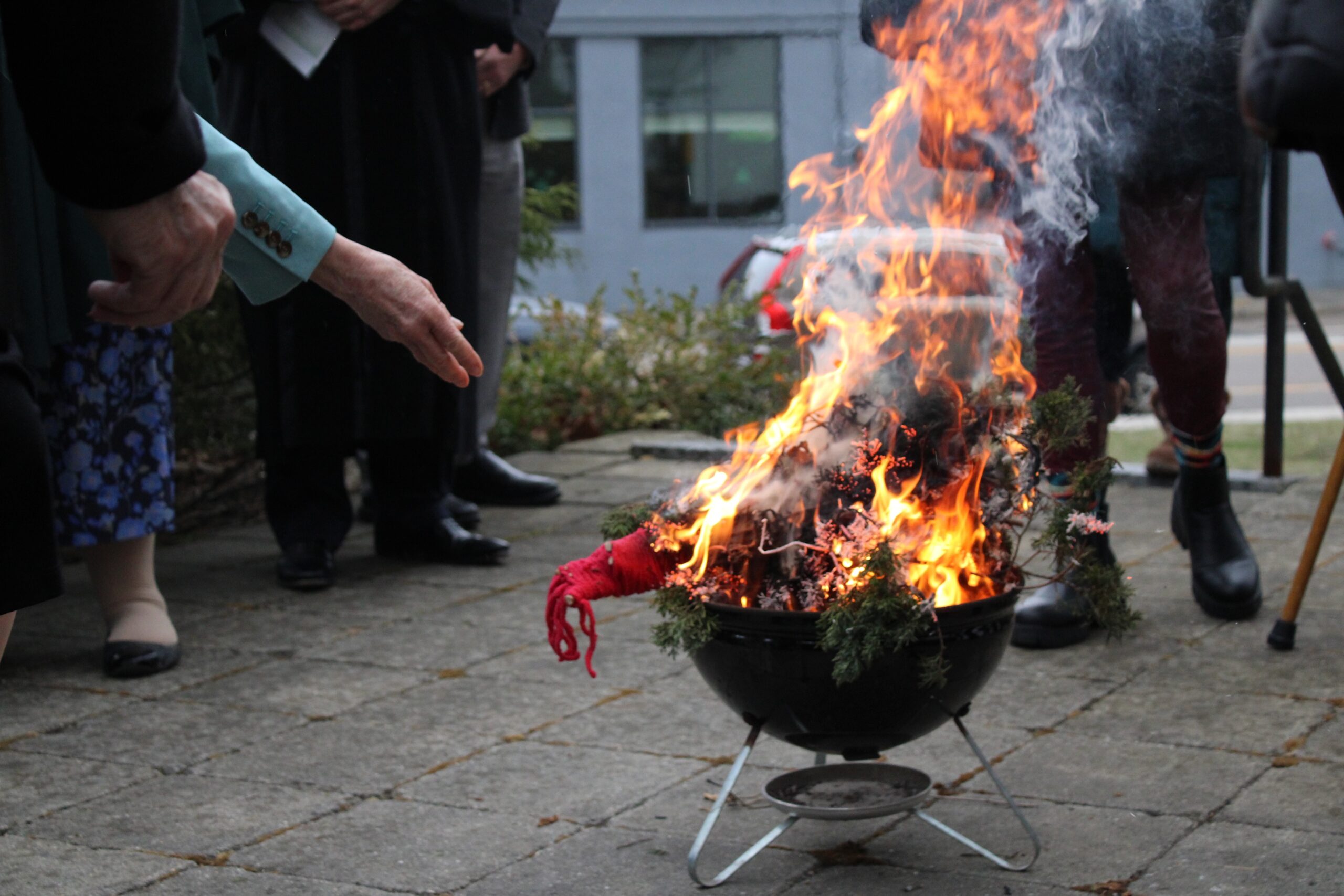
Silva led a procession outside to burn cedar and tobacco, an offering to the fire “to transfer our thoughts” into the ether and “help remember and unite us to the spirit of all things around us.” Attendees tossed pieces of tobacco into the fire.
The procession was preceded by a formal apology, made by Scudera, First Parish President Marianne McGowan and UU Wellesley Hills Rev. Mark Robel and Terry Dixon. The congregation accepted donations, half of which will be preserved for future programs on reparative efforts toward Black and indigenous people, while the other half will go toward the Newton chapter of the Jack and Jill of America Fund, which benefits Black mothers and their children.
The definitive record of the town’s history — “History of Needham Massachusetts, 1711-1911” by George Kuhn Clarke — omits much of the information on enslaved people found in vital records and other primary source documents of the time. Much of the information on enslaved people in Needham comes from birth and death records, which First Parish kept in the 1800s, Greis said.
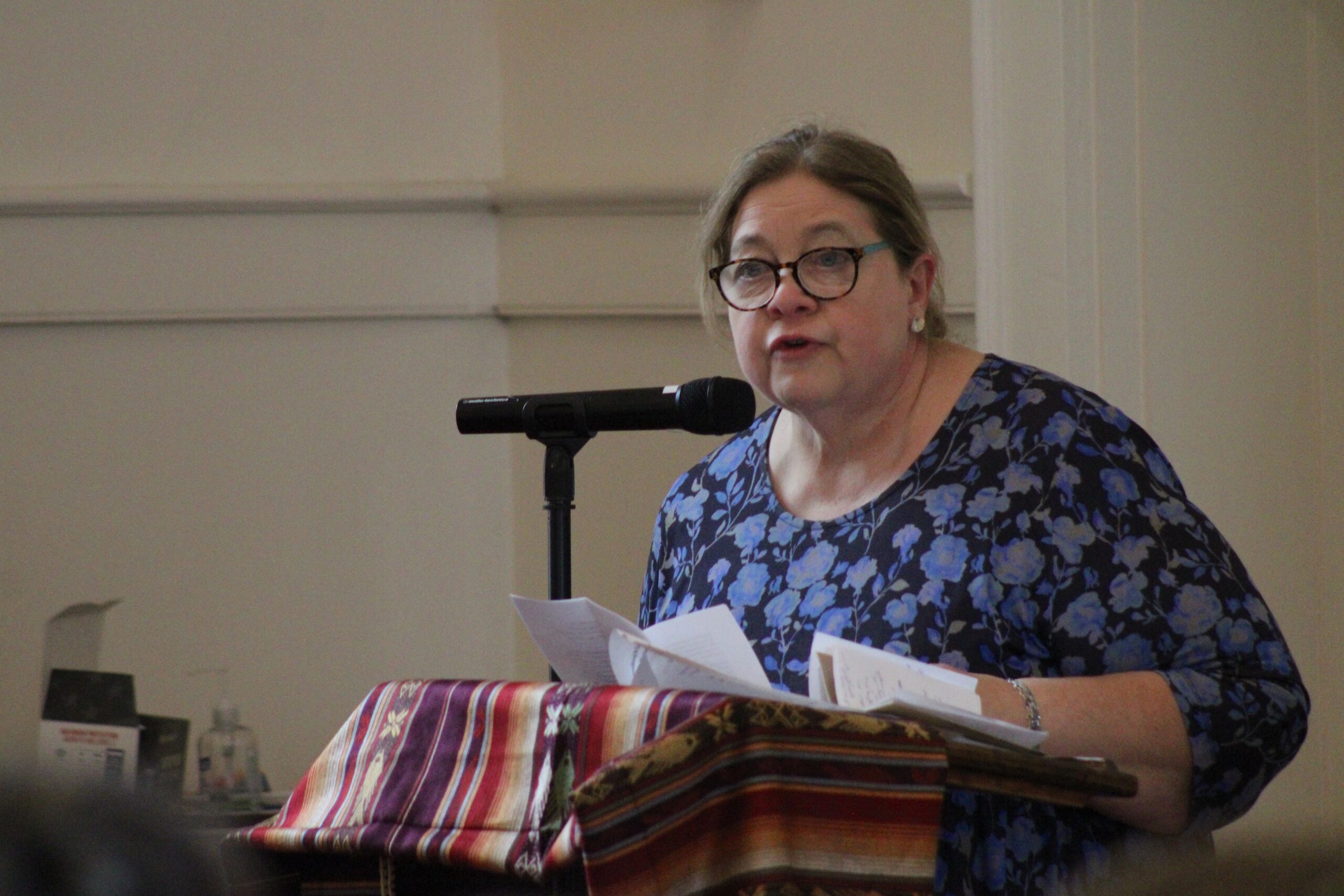
Greis and Scudera began researching the topic in 2019, holding several public lectures since then. In presenting their work, Greis said people pushed back, calling them “troublemakers,” perhaps because that history did not align with their version of Massachusetts.
Massachusetts was home to enslavement and discrimination, which “still have repercussions for employment, education and generational success,” Greis said. Only recognizing the state’s actions toward abolition and equity “denies the agency of the enslaved themselves,” she said.
“This memorial reminds us we can’t change our history,” Greis said, “but we can make a better future for ourselves and for the next seven generations.”
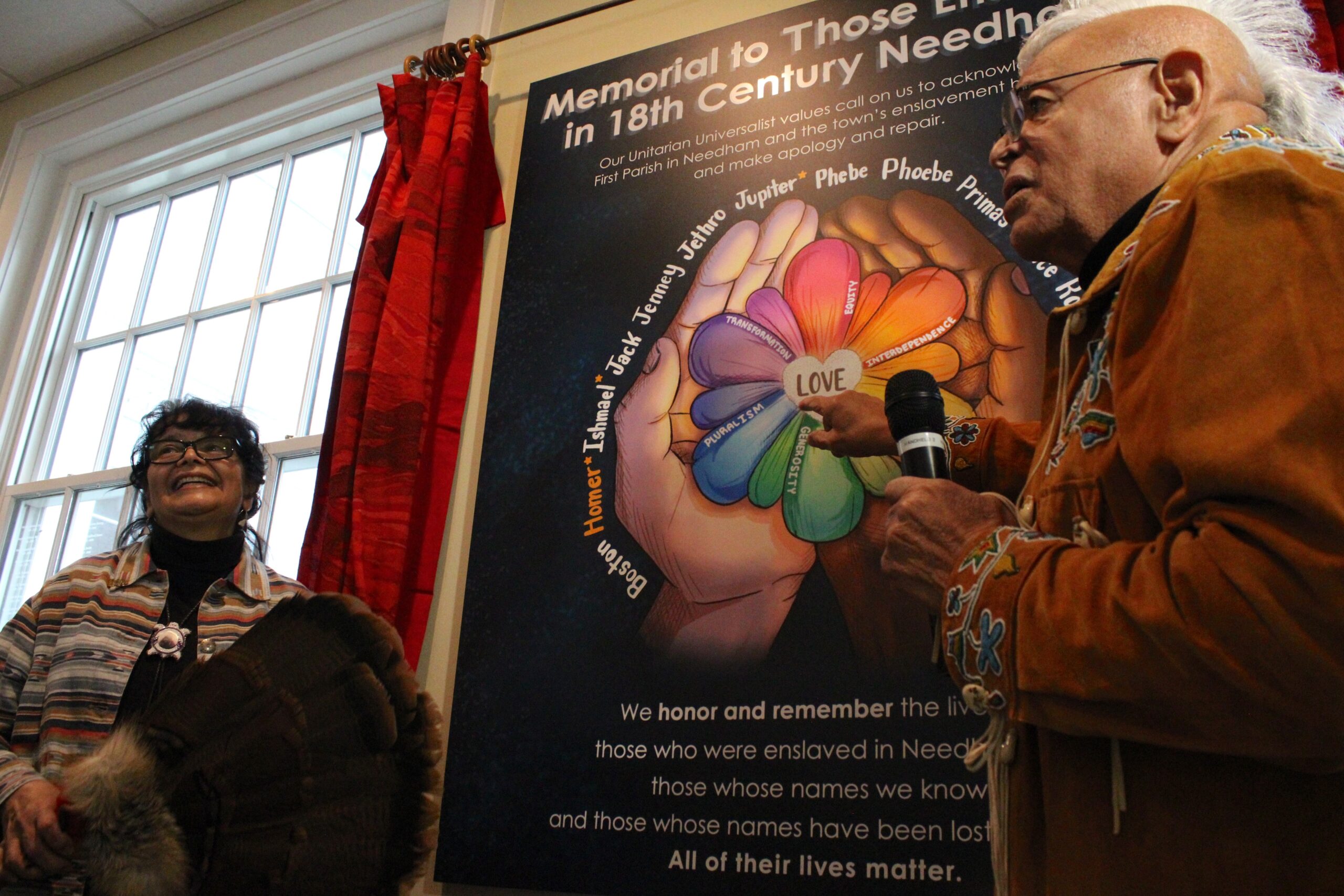
The installation lists the names of 15 enslaved people of Needham, which wrap around two hands, one white and one black, holding a colorful flower. Each petal of the flower stands for a Unitarian Universalist value: justice, transformation, pluralism, equity, interdependence and generosity. The center of the flower reads “love.”
The flower represents “a universal symbol of growth,” artist Josephine Calzada said.
Before starting the project, Calzada said she hadn’t fully understood the extent of slavery in Needham — she doesn’t remember covering the topic in her elementary school history classes.
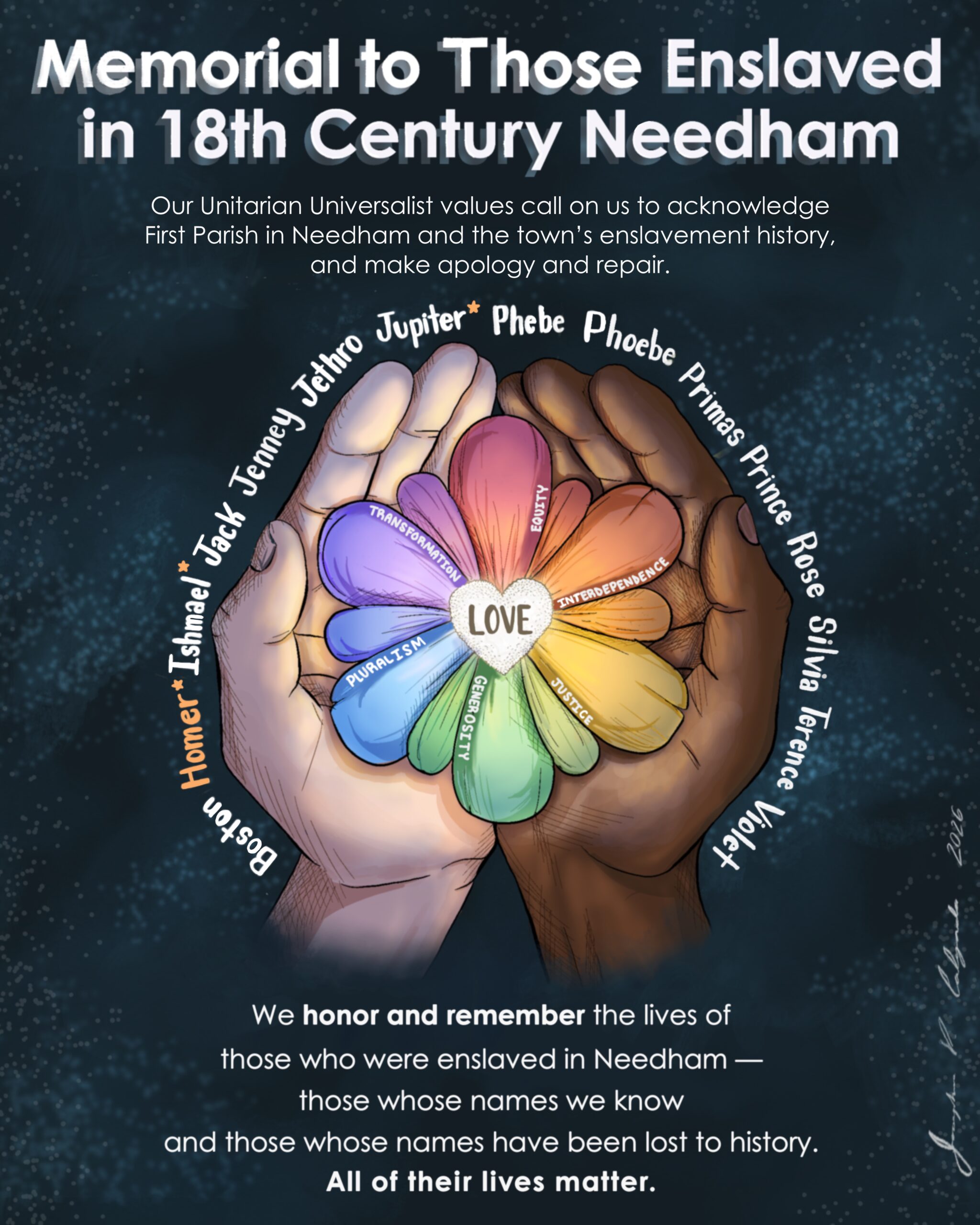
Now a senior at Needham High School, she views the mural as a moment for reflection and opportunity to learn, but also the start of something much bigger.
“An artwork is great, but at the end of the day, that doesn’t really mean anything to the descendants who are living with the aftermath of this systemic racism,” she said in an interview. “I hope that everybody who sees the mural takes time to reflect on their actions, on the actions of people they know, on what they as a member of the community are doing to educate themselves, to educate others, and to make repair.”
For Silva, he said he hasn’t reached forgiveness yet.
“Hopefully we can find that [gift] of forgiveness,” he said during the ceremony. “I must admit, I am not there at this point, but I do know that the greatest strength that I share with those that will listen to me for a period of time, I have found the greatest strength that I have is the ability to forgive.”
In discovering that Townsend was an enslaver, Scudera said it was a difficult truth to accept. Her church, centered on love with a storied history in Needham’s founding, had also been the site of suffering, indignity and injustice with present-day reverberations.
The way she put it, “my spiritual ancestors harmed your biological ancestors.”
“I do feel a sense of responsibility. I love First Parish in Needham, I’ve had a wonderful pastorage there, and I owe Homer, in part, for all of this,” Scudera said in an interview. “His unpaid labor made it, in some ways, possible for Townsend to serve the church for over 40 years.”
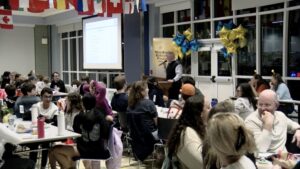
More than 80 people crowded along the hallway within the parish Sunday afternoon for the mural unveiling, where they held each other to bless the artwork and its message. Witnessing the moment was “powerful” for Troge.
The journey toward healing is a long one, Scudera said, but it starts with a step.
“We are called to declare the truth, that every life does matter, and today, that these Needhamites who were cruelly enslaved, their lives mattered,” she said. “We commit to working together and partnering with those in our community to dismantle white supremacy and colonization, both in our hearts and in our institutions.”
The installation hangs around the corner from the church hall, tucked between two windows looking into the church’s memorial garden. The garden is where past parishioners’ ashes are spread and where their memories stay alive.
Repair, to Troge, looks like healing and reparations and “acknowledging the legacy and the harm” done to her family and those that were enslaved. She may not see that in her lifetime, but she hopes her six-month-old granddaughter might.
“For us, it’s the beginning of coming together and learning what we can do collectively to repair, to heal,” she said, “because there’s pain on both sides.”