Needham Classrooms Investigate Wôpanâak History Through Workshops

January 19, 2026
• Third graders in Needham Public Schools received in-person instruction from a New England indigenous educator as part of their social studies curriculum.
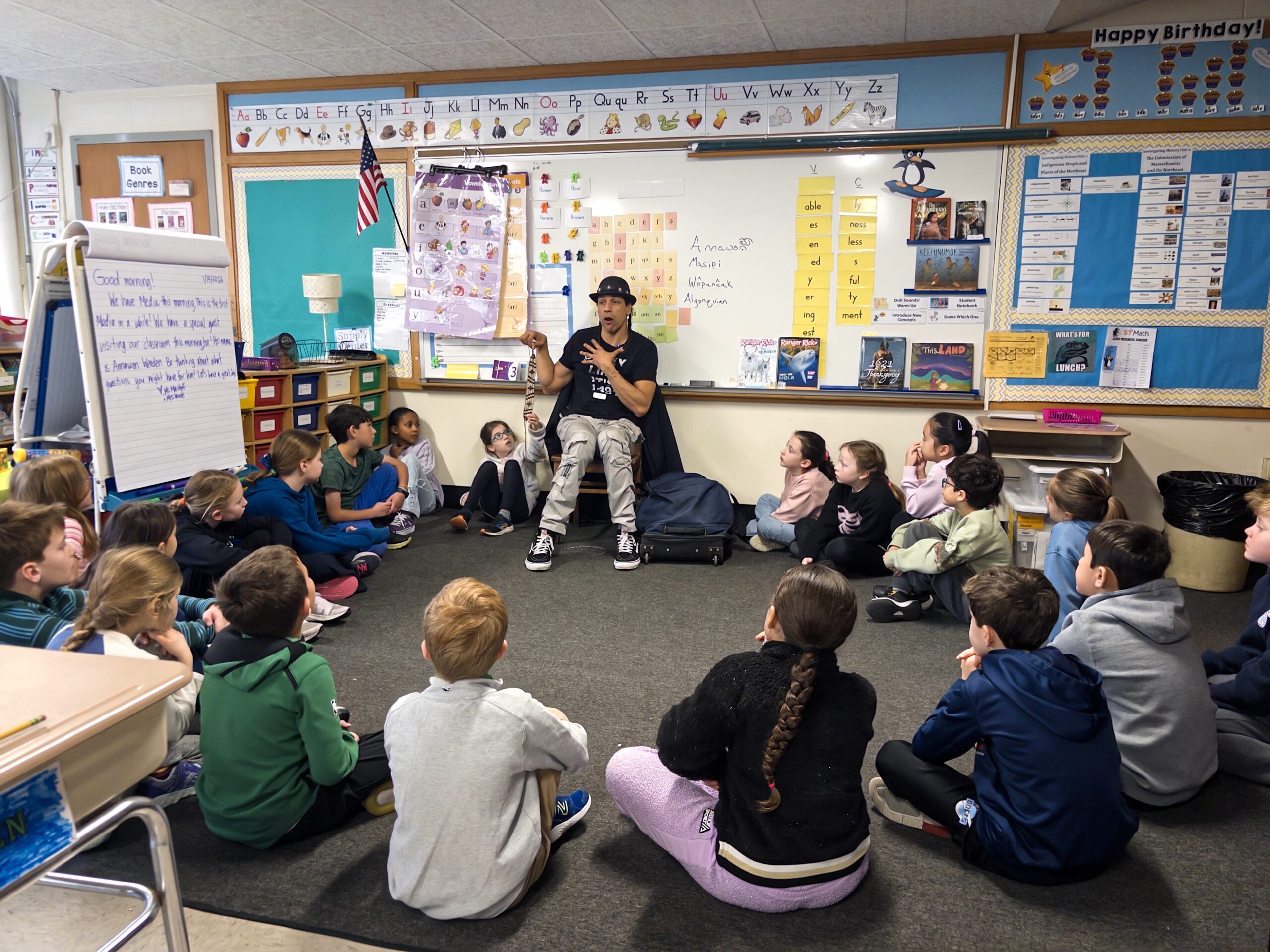
The third graders in Ms. Mackoff’s classroom had just 90 minutes to spend with Annawon Weeden Wednesday morning. But still, there’s “never enough time for 40,000 years worth of history,” Weeden said.
A Mashpee Wôpanâak education specialist, Weeden led a 90-minute interactive lesson on society and culture within local indigenous tribes, spoke the Algonquin language, showcased artifacts and taught students how to create and use different tools. He adorned students in Wôpanâak bags and beads and consulted with them as though they were council elders.
Over the last month, Weeden has visited third grade classrooms in Needham Public Schools to share a slice of history, and one personal to him.
“I can brag and boast about New England and never get bored of it. I mean, there’s so much here that’s unique and very much specific to here and specific to my identity as a result, as an indigenous person from here,” Weeden said. “As far as children, [it’s about] empowering them to be good members of their community.”
His stop at Mitchell Elementary preceded his final classroom visits, to Broadmeadow Elementary, on Friday. The program, funded via a grant through the Needham Education Foundation, started at Broadmeadow last year, thanks to the parent-teacher council at the school.
Weeden’s workshops coincide with a new social studies curriculum called Investigating History, a state-backed program that encourages third graders to ask questions, wonder and drive their learning based on curiosity, teacher Ashley Mackoff said. This is the third year she’s taught the curriculum, but the first year she will teach four of the five total units.
Different perspectives in history also play a role in the curriculum, Mackoff said, which is why Weeden’s workshop fits into the students’ instruction.
“I think the way that history ends up being taught is a lot of times by the predominant culture, and so what we’re trying to do is to teach especially about that [first] contact period time, the perspective of both cultures that were present, and indigenous people who were there for thousands of years before the people from Europe came,” Mackoff said. “And also teaching the idea that they’re still here, and Annawon being here today was such an amazing way to tie that all in together to that message.”
Third graders across Massachusetts learn about indigenous culture in their social studies instruction.
Brooke Kessel, the district’s social studies department chair for grades K-8, said Investigating History is still in its pilot stage in schools. Over the summer, Weeden spoke with teachers about environmental stewardship, Kessel said, leading to this year’s series of workshops.
“We thought, ‘Let’s make sure this opportunity is for all kids,’” Kessel said. “‘We’ve got this brand new curriculum, and it centers indigenous voices. How can we bring a native person in to teach our students about their own culture, identity, geography, and really bring the curriculum alive?’”
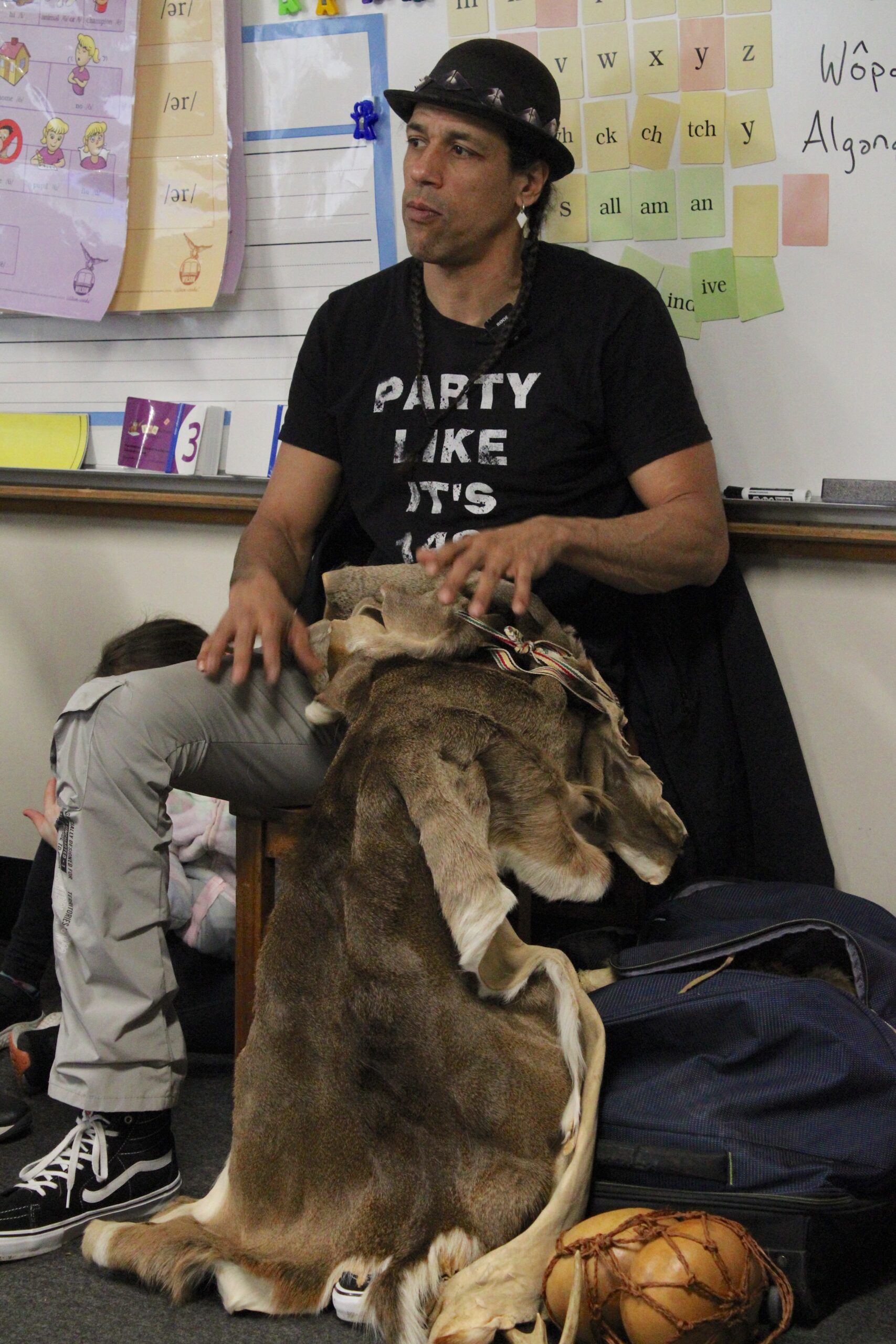
The 20 students in Mackoff’s class peppered Weeden with questions about the Algonquin words he spoke, building a wetu — a structure common among Wôpanâak tribes of which Weeden has built several — hunting animals in the winter and the games they play. He also tested them on finding materials to build different tools and showed them various animal pelts and wampum beads made from the quahog shell, local to the shores of Cape Cod.
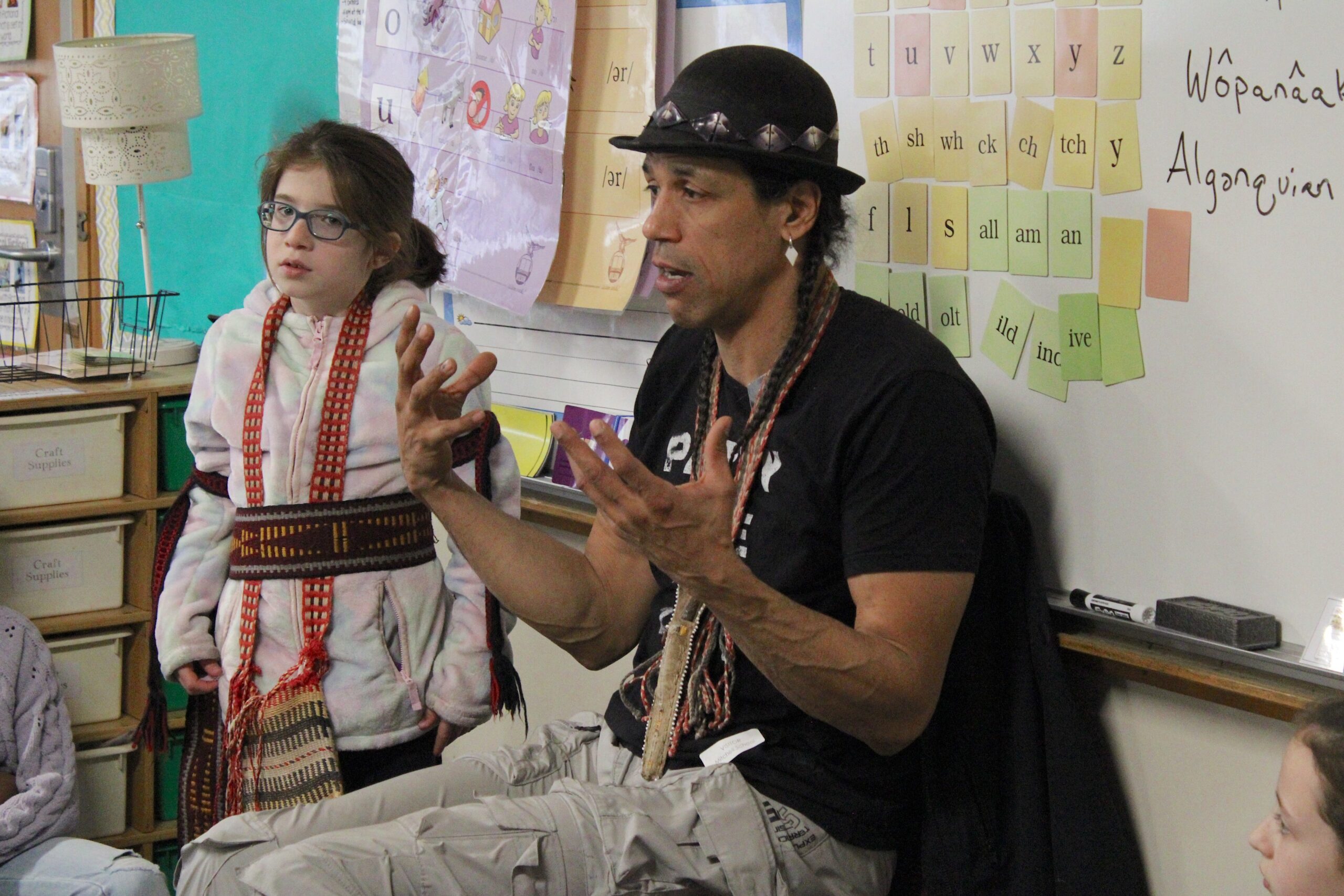
Weeden, who is from Rhode Island, also told students about the history of Wôpanâaks and their proximity to the shoreline. “We take our identity from seeing the sunrise” first, he said during the workshop. Weeden wore a shirt that read “party like it’s 1491,” the year before Christopher Columbus landed in the Americas.
Creating geographical touch points for students within their history lessons makes them more resonant and engaging, Kessel said. Weeden enables kids to connect with their learning in a more personal way, she said, and their lessons “are brought to life” because of him.
“I think that the challenge is, when we think about social studies instruction, is that we’re asking kids to learn about people they’ll never meet, places they may never go, and time periods they frankly can’t visit, and so it’s really hard. It can feel really flat,” she said. “It’s the pages of a workbook or we’ve got phenomenal stories and picture books and video but really, what brings social studies alive is getting to meet the people or go to the places.”
The ways in which schools teach about indigenous history has evolved and vastly improved in Weeden’s 30-plus years as an educator, he said. Offensive and inaccurate programming continues to fall by the wayside, he said, as schools more readily embrace authenticity and those who best represent that history and culture.
Surrounded by letters of the Roman alphabet, Weeden took a white board marker and wrote out words in Algonquin, which had only ever been spoken for just about the language’s entire existence. He spelled out “masipi,” meaning great water, and his name, which means “the one who succeeds.” He stylized the final n in Annawon as a wetu.
He asked the class about another member of his same tribe, Darius Coombs, who the students watched make a mashoon, a type of canoe, in a video. Weeden smiled. His history and culture lives on.
“Unfortunately, I get asked to represent an entire race or culture, and I’m usually the only person who comes in,” he said. “I don’t want you guys to think I’m the only one who survived hundreds of years or thousands of years.”