Mahjong’s Moment

March 16, 2026
• As the game soars in popularity, local learners, players and teachers delve into the joy and connection it brings them.
They’re not sure when it happened, or why, but mahjong players sensed a shift. Their social media feeds filled with images of colorful sets of tiles, and their casual group plays filled with new sign-ups.
“It’s just exploded,” said Sharon Katz, a mahjong instructor who has taught through Needham Community Education since around 2018.
Katz learned to play about 18 years ago, seeking out connections once her kids grew older. Now, with newer and younger people coming to the game, Katz said she sees that same drive for connection and “another outlet, in a way, to enjoy each other.”
Her average students used to be between 55-65 years old and mostly retirees and empty nesters, but her classes now fill up with older millennials, between 35-45, as well as more men. And the classes fill up quickly — faster than the NCE can mail out its catalogs, Program Director Amy Goldman said. “It’s become a frenzy,” she said.
“I think it’s social. It’s challenging, but it’s not off-putting. And if people are forgiving, who you’re playing with, you can sort of [muddle] your way through the parts that you don’t quite have mastered yet, and people will be nice about it,” Goldman said. “It’s tactile. The tiles are pretty. It changes every year, because there’s a new mahjong card issued every year, so you’re always having to learn some new hands to play.”
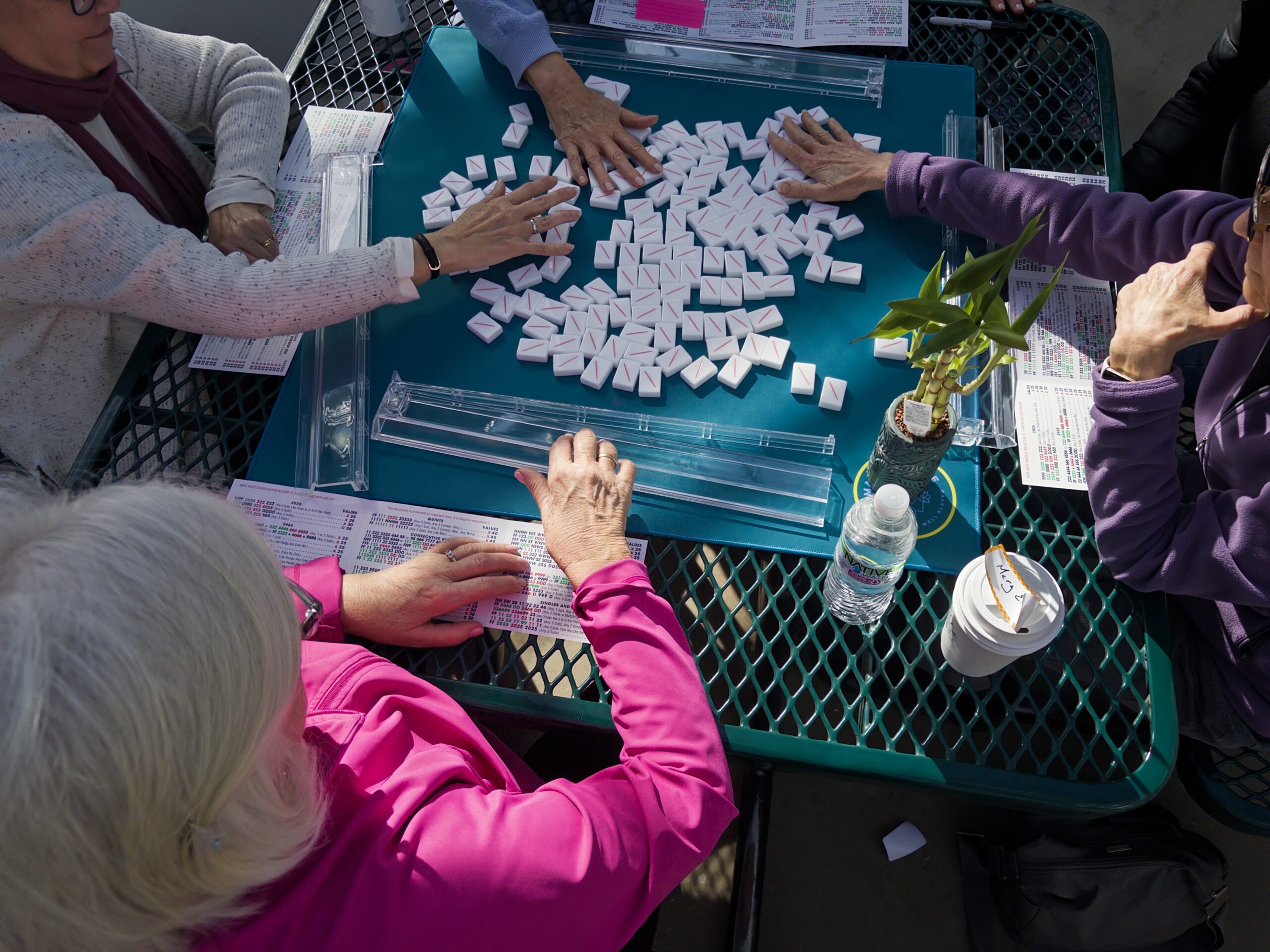
American mahjong — an offshoot of the original Chinese game, also spelled mah jongg — involves the swapping, drawing and discarding of 152 tiles until players have a matching line of 14 tiles. Each year, the National Mah Jongg League publishes a new card, which determines different, new ways players can win the game.
Following the Rules
There’s bams, craks and dots, which are numbered suits, as well as dragons in each suit, flowers, winds and jokers. There’s a precise shuffling procedure and process through which to pass tiles and pick up new ones. There’s pairs, chows, pungs, kongs and quints, which are all sets of tiles.
The rules don’t seep in immediately. Teachers acknowledge the game’s complexities are a lot to take in.
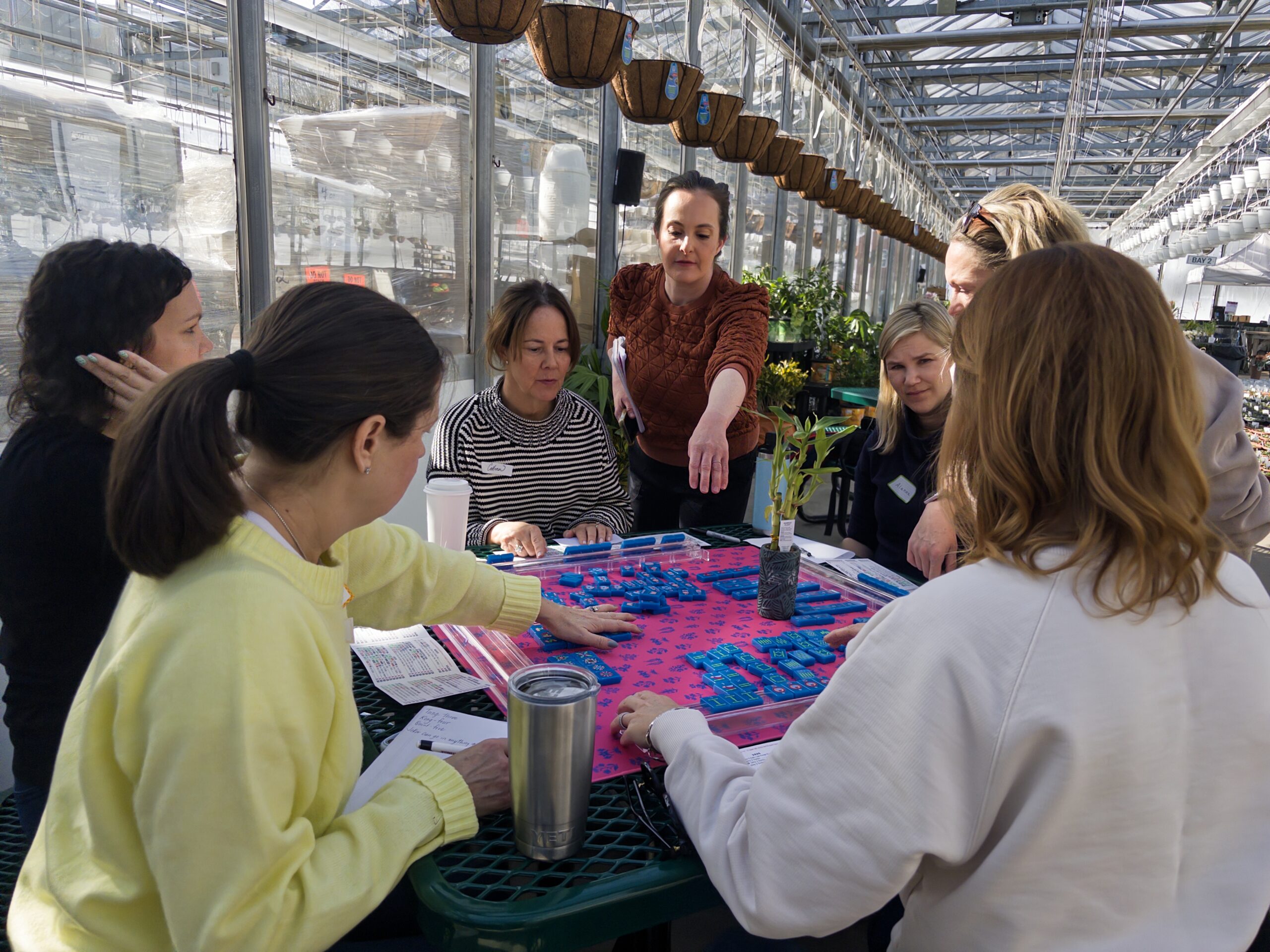
New players gathered at the Volante Farms greenhouse one Monday morning this month, intent on learning the game their friends have begun playing. Two tables of women, spanning a couple generations, walked through the game together.
Christina Awad, a Natick-based mahjong instructor teaching the lesson, walked students through the tile suits, procedure of the game and how to build out a winning line. Awad is new to the game herself, as she only started playing a few months ago after teaching herself.
“I fell in love with it, and I’m naturally a rules person,” Awad said. “There’s order to it. There’s an etiquette to it. There’s a loveliness to it.”
Needham resident Shawn Larsen came to mahjong through FOMO (fear of missing out). The game is trending, she said, so “you don’t want to get left out.”
Larsen attended Awad’s class to pick up the basics, though she feels she still has a way to go. Asked if she’s starting to understand the game, she said “beginning it.” She couldn’t learn by watching other people play, especially advanced players at the local Jewish Community Center. “All you see is movement,” Larsen said.
The friendly competition, as well as the opportunity to socialize and learn something new, all contributes to the game’s rise in popularity, Larsen theorized.
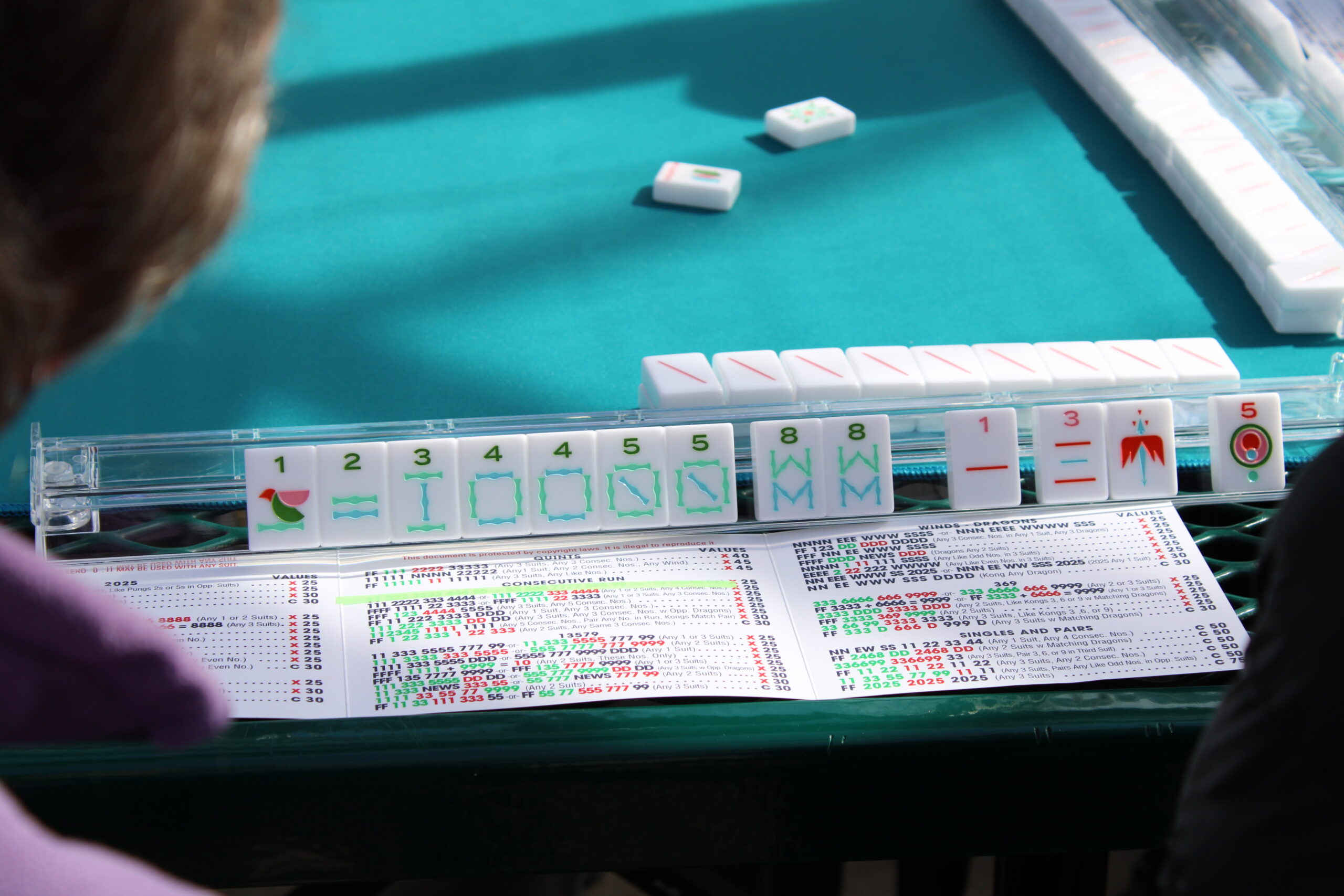
“I think it’s good for your brain to accept a challenge,” she said. “If I keep looking at that [card], maybe enough will sink in that I could play again. It’s a little unnerving learning something new.”
While mahjong is having its viral moment, Awad pointed to the game’s origin in China and its American version that goes back about 100 years. Awad said new tile companies contributed to the game’s recent mainstream appeal, though generations have played the game long before now.
“I think that’s totally worth acknowledging. All these people quietly playing mahjong, committed people,” Awad said. “I can’t tell you how many people who I’ve taught who will be like, ‘Oh yeah, my grandmother played,’ but they haven’t played.”
Generational Shuffle
The perception of the game has radically shifted since Sarah Fleckner first picked it up 24 years ago. Fleckner, then a new mom in her 30s, would surprise people when she told them she played mahjong.
“I feel like mahjong used to be ‘old lady.’ It used to be seen as your grandmother played,” Fleckner said. “I don’t know why it’s becoming popular.”
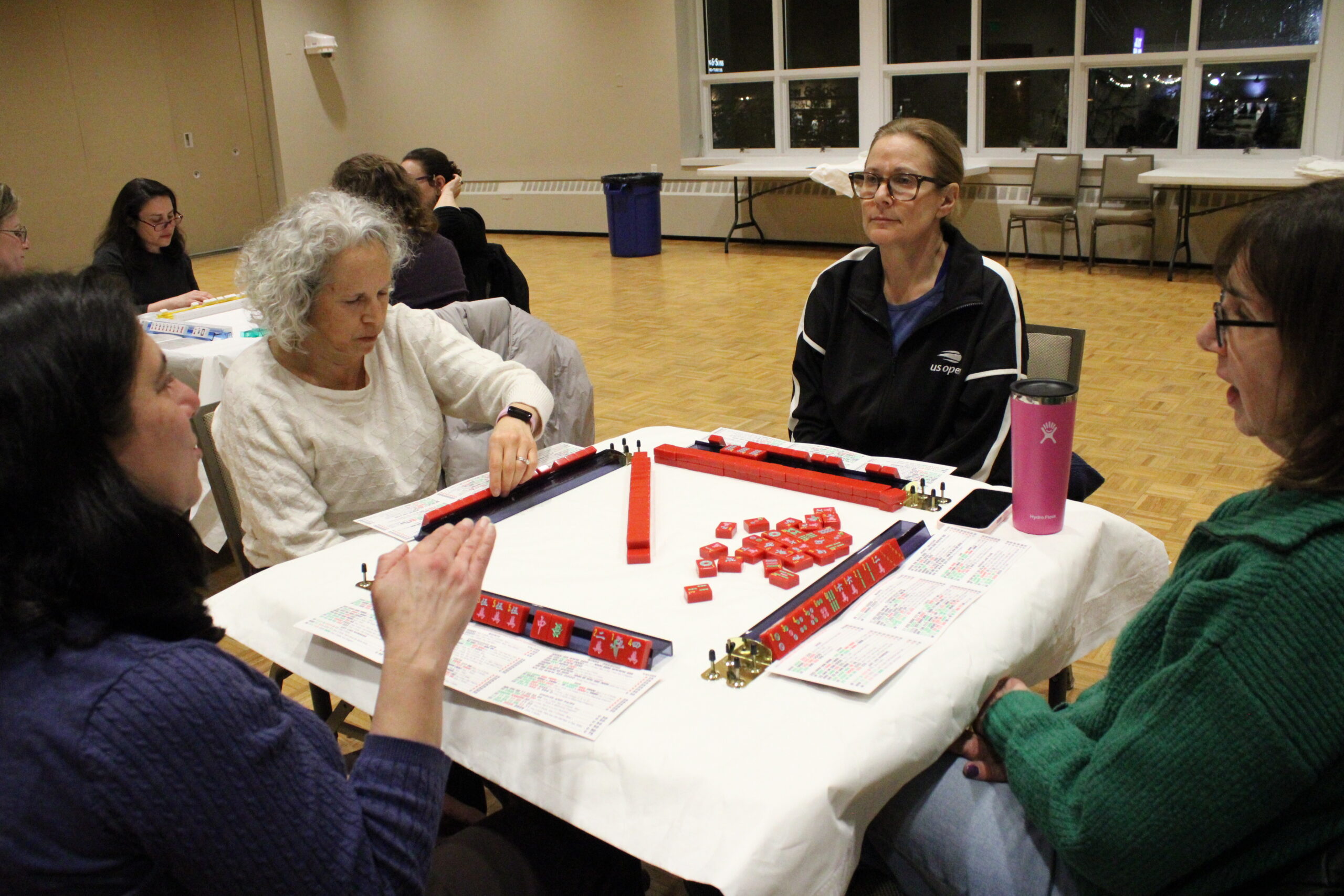
The demographic of players has, too, radically shifted in Fleckner’s time. Sisterhood Mah Jongg is a group of mostly Jewish women who meet monthly at Temple Beth Shalom, though their instructional sessions attracted outside interest recently from people unaffiliated with the temple. Learning to play there, instead of via a private tutor or class, was cheaper.
During a recent game, Holli Bassin won with three flowers, a chow of bams and two kongs. Bassin, who learned as a new mom about 20 years, played alongside Beth Greenwald, who learned during the pandemic.
The room got chatty, with newcomers asking questions and others catching up on life. For Greenwald, “it’s a lifelong game.” She still has her grandmother’s mahjong set, and her children also play.
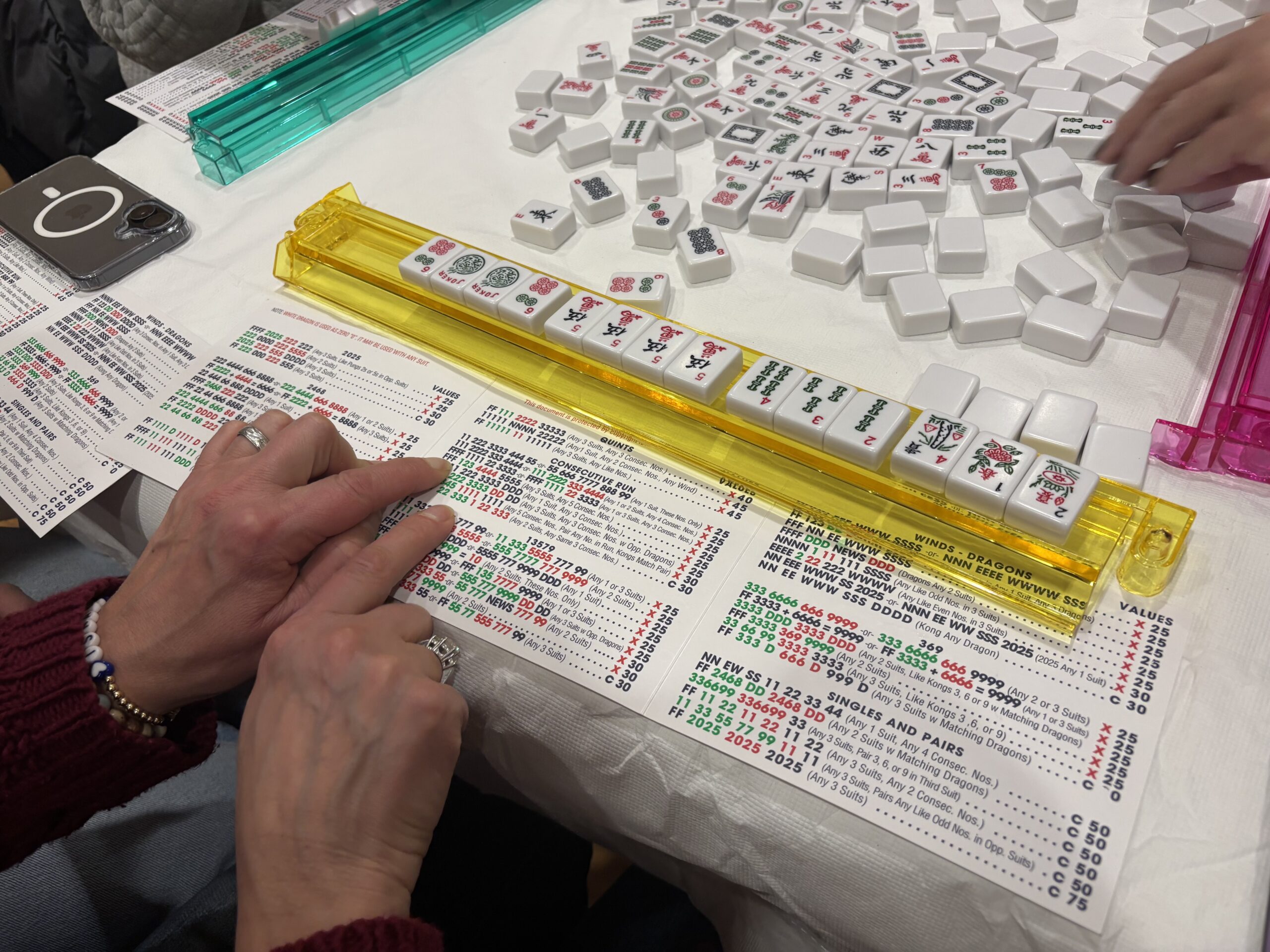
For others, including Bassin, mahjong is a constant and a source for connection.
“There are people who let you know this is their social life,” Fleckner said. “Their friends are here, and they don’t necessarily have a regular game, and they know that there’s always going to be a game here once a month, and so they’ll play.”
Emily Isman grew up hearing the tile clacking, as her mother and her friends played during her childhood — she couldn’t get too close to the action, though.
“I remember being intrigued,” Isman said, “but she, for some reason, never took the time to teach me.”
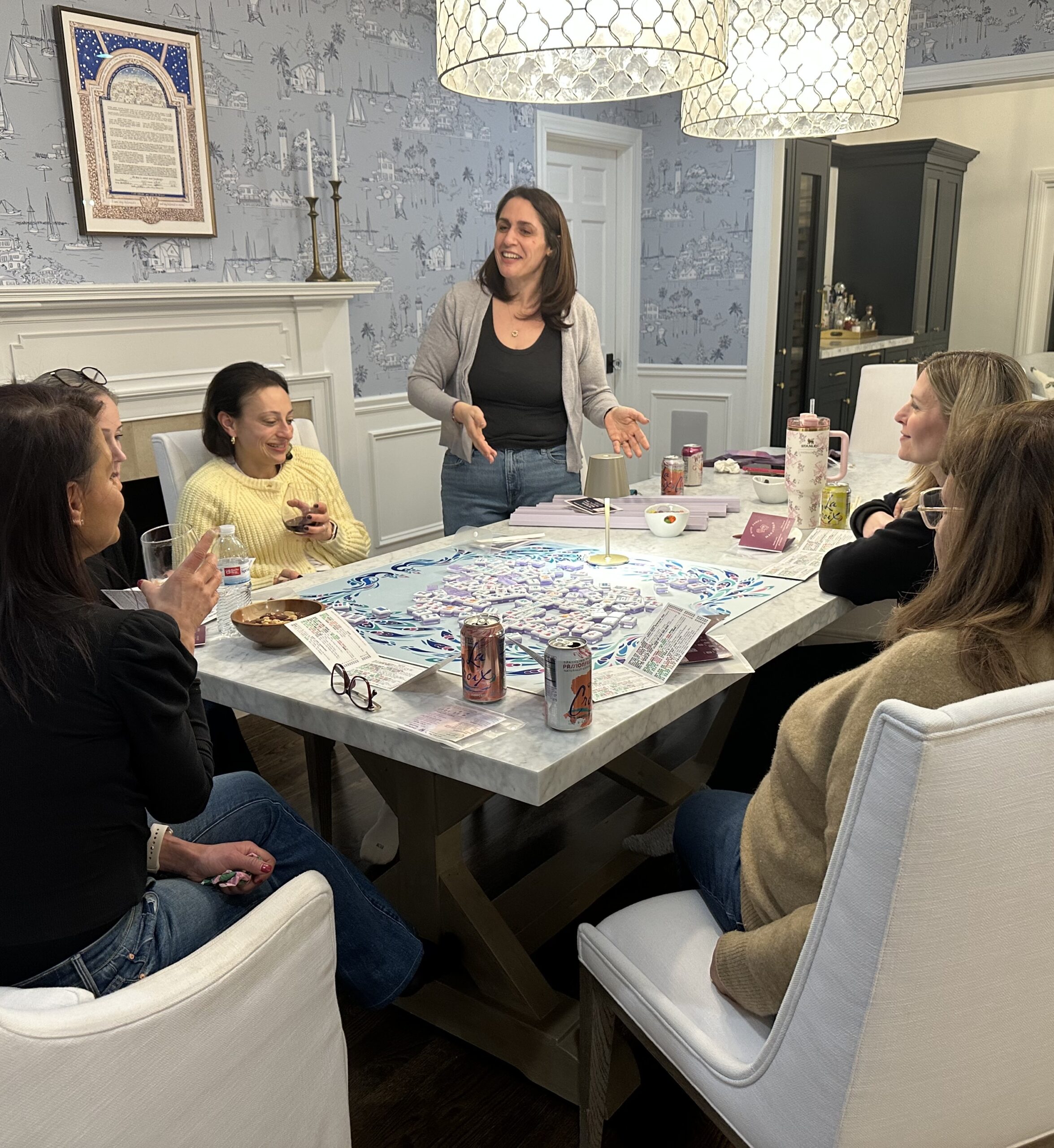
Isman and Ronnie Luria, who together teach mahjong in Needham and surrounding communities, signaled a generational divide. New players are younger, and many more of them are men, which seems somewhat unusual to older, longtime players, Isman and Luria said.
With enough new players to the game, the stigma broke down, Luria hypothesized.
“It just wasn’t lost enough. It hadn’t disappeared enough,” she said.
For the Love of the Game
Mahjong players now await the release of this year’s card, the guide players use to build their lines that also introduces new lines. The game, like its players, is in constant renewal.
Katz, the NCE instructor, said she loves its evolution and how “it’s not a static game from year to year.”
“It’s never the same game twice, and it’s always interesting. It’s both offensive, defensive. It’s strategic, with a little bit of luck thrown in there,” Katz said. “There’s always some new challenges to keep it fresh. So, I am obsessed with it.”
Katz’s love extends beyond the tiles. She has a mahjong-themed pocketbook, socks, soaps, apparel, aprons, soaps and more. “It becomes like a little subculture.” She’s now taught more than 700 people.
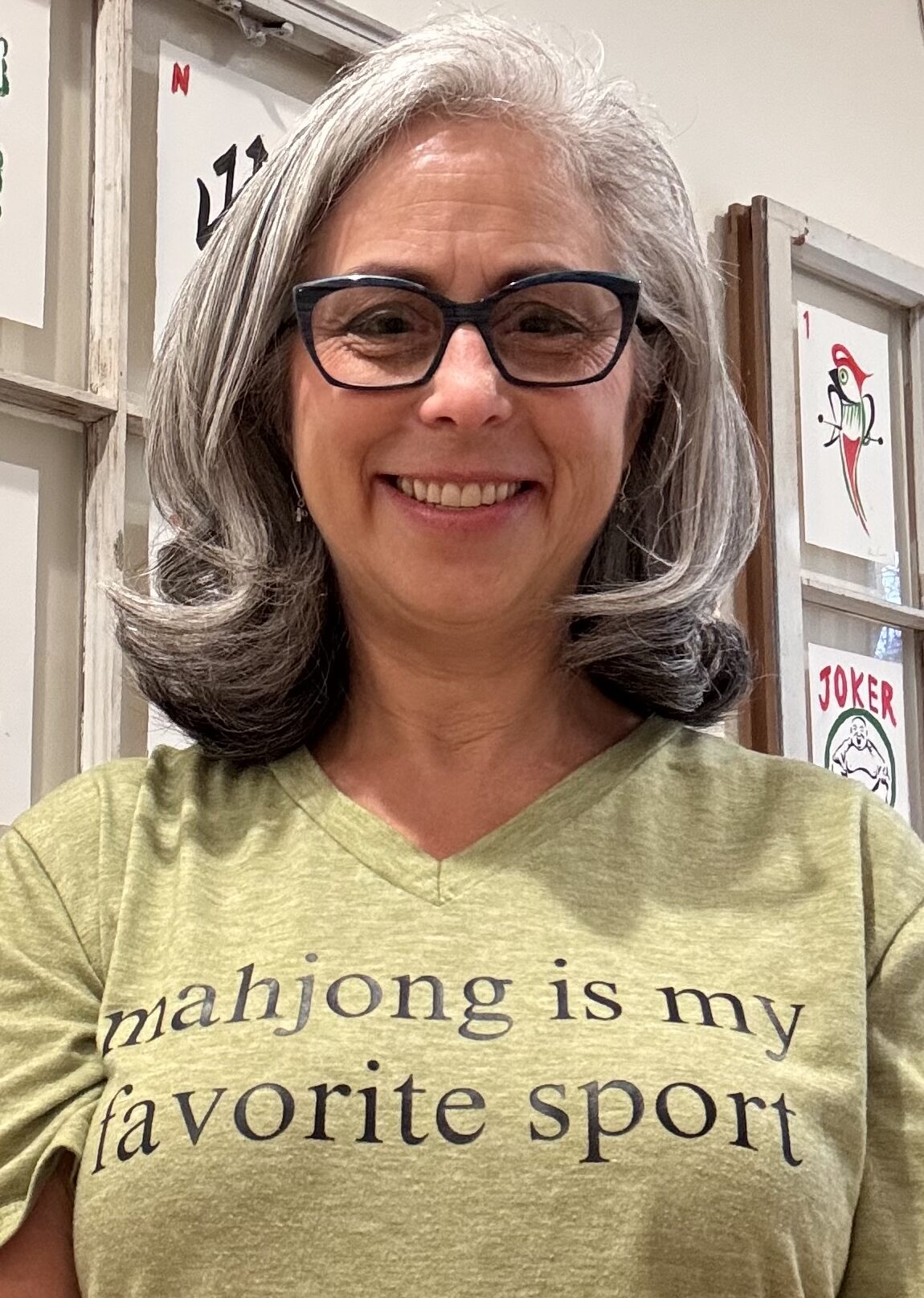
Invested mahjong players customize their sets with their names on joker tiles and with speciality designs. The beauty of the game, with its table mats and racks, has made its way to social media, where Awad said she first saw friends playing.
Isman and Luria, who became close friends through mahjong about 10 years ago, both have a love for games and puzzles. People are craving connection post-pandemic, which perhaps is the reason behind its current virality, they said. But they both pointed to a deeper reason for their passion: its appeal to a variety of people.
“It’s just so relatable. It’s so friendly and doable, Luria said. “Once you understand what you’re doing, I just think it has this baseline of it working for lots of different kinds of people.”
Other teachers and students pointed to mahjong as a brain exercise, offering the ability to juggle different pieces of information, practice flexibility and re-shift and refocus when the game changes.
“It’s something — just something completely and totally different,” Fleckner said.
“It’s just another reason to get together,” said Goldman, the NCE program director.
Before her class at Volante Farms, Awad said it’s about community-building.
“I’m very much about bringing people together, and that looks like millions of things,” she said. “And so mahjong’s an amazing way to do it.”
During her lesson, as players shuffled tiles and formed lines, sparrows chirped overhead. It felt like sonic serendipity — the original Chinese name for mahjong means sparrow, because the sound of the tiles clacking resembles that of sparrow calls.
The life lessons abound, Katz said: Don’t quit after the first try, stay open-minded, be patient and “keep a smile on your face.”
“I just think that mahjong has become, for me, a little bit of a philosophy of life. You learn about people, and it reminds you that some of life is luck. When you look at a mahjong rack, there’s no one right way to play that hand,” Katz said. “There’s lots of different routes you can take.”