Housing Still a Focus for Stephen Palmer Future

January 15, 2026
• Despite the need to close the existing apartments ahead of the building’s reversion to town property, residential use was favored by those attending a January 12th community meeting.
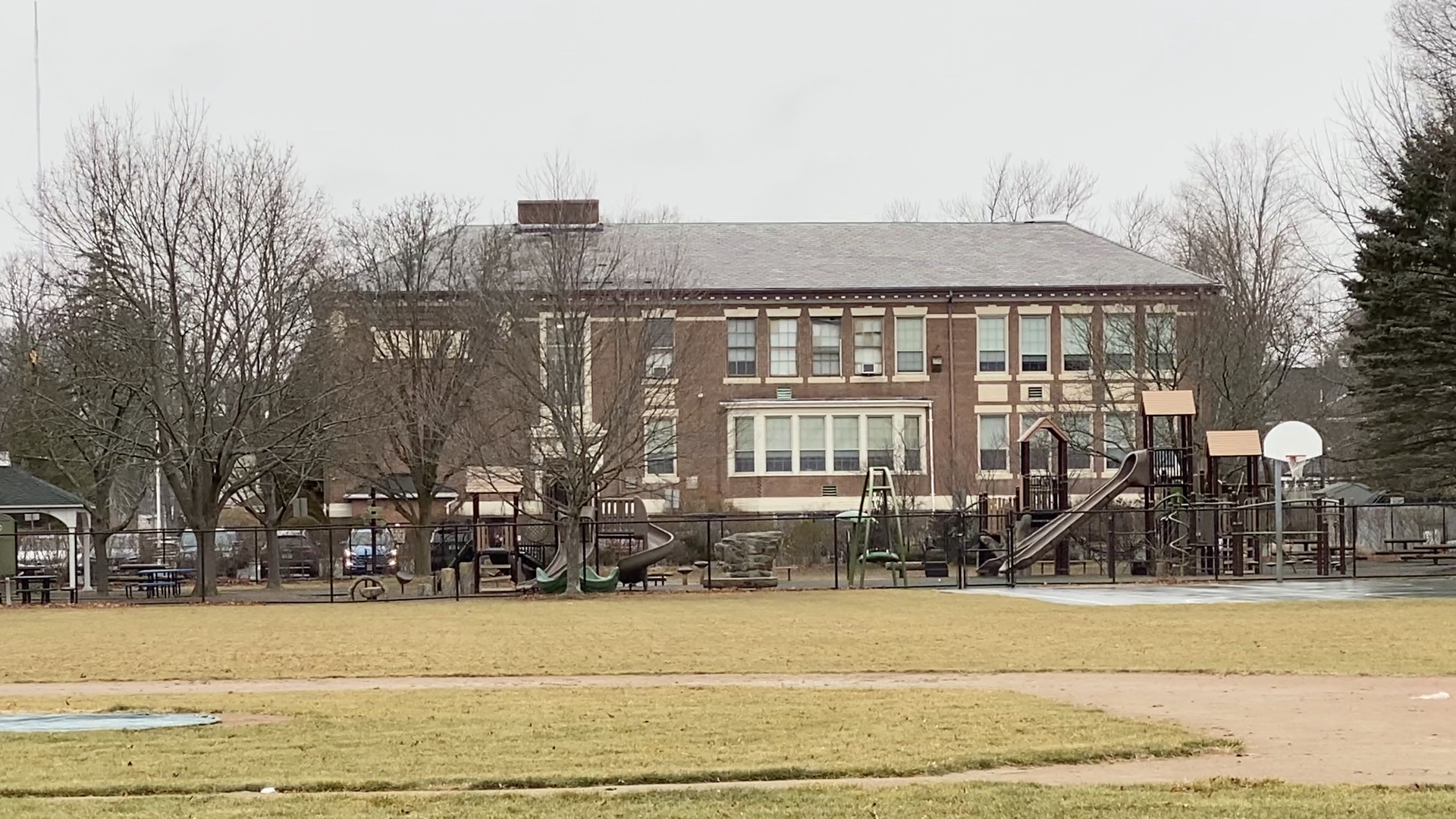
The Stephen Palmer Development Review Committee held the first of three community meetings Monday evening, to get a sense of what the town may want to do with the property once it is handed back to the town in April of 2027. Currently under the control of Crowninshield Management, the firm decided not to renew its lease of the property, which has been used for close to 50 years as residential apartments. Current leases are scheduled to terminate this October, and the land will subsequently fall under the jurisdiction of the School Committee, despite being zoned for residential use.
“So one of the things we had to look at, in addition to the sort of urban design and architectural issues, was just, ‘So what could be done with this property legally?’” Judi Barrett, of Barrett Planning Group, posed at the meeting. Barrett Planning Group, along with Gamble Associates, is consulting on the project. “If the town chooses not to continue owning the property, there is going to have to be a process for — for disposition, is what we call it. And that is governed by a state law called Chapter 30B.”
“If the town decided that it didn’t want to keep it for some type of municipal or school use, the town could lease the building out for up to 30 years. That could simply be a decision by the Select Board. A longer term lease requires the vote of Town Meeting,” she said.
Organizers asked attendees to set all the logistics aside and use the meeting as a brainstorming session for the site. They reported on the current status of the Stephen Palmer building, which was built as a school in 1914, with a major addition in 1930. Despite its age, they said the structure itself and its mechanical systems are in good condition, given its current use.
“If it were to change use, and that use triggered more people, that might require some structural investment that would stabilize it more or bring it up to code,” cautioned David Gamble. “So, just think that if it were to become more of a space of congregation, that might trigger some costs associated with it.”
Talk of possible future housing options prompted some confusion from the audience, as the town has repeatedly expressed over the past year that it has little interest in assuming the role of landlord for the property.
Representatives of the committee responded that, for the purposes of that meeting, no options for the use of the site were off limits. Katie King, Needham’s town manager, confirmed, “Everything is on the table right now. So, housing could absolutely be a future use. The town has made a decision: we do not want to be landlords. If housing is a future use of the site, then part of our ongoing work is what would that look like. Who would own the property? Who would manage it? So those things are not mutually exclusive.”
Strong interest was expressed by Charles River YMCA, located adjacent to Greene’s Field. They envisioned an opportunity for collaboration with town on the Stephen Palmer site. In their eyes, the location is perfect for a community center within walking distance of both the middle and high schools, although they expressed a desire to focus on intergenerational possibilities.
Paula Jacobson, the YMCA’s executive director, read from a prepared statement: “As all options remain under consideration, including new development, open space or modifications to the existing structure, our goal is to collaborate on a plan that benefits residents of all ages and strengthens Needham’s community fabric.”
After the initial presentation, those attending gathered in small groups to continue the discussion. Among them, the themes of affordable housing for seniors, young adults and teachers rose to the fore, with frequent conversations about community centers or arts spaces and uses that would appeal across demographic lines. They also expressed concern about costs, and maintaining the character of the neighborhood, although polling was mixed on whether the building itself should be preserved.
The results of this session will be narrowed down to three alternatives, which are scheduled to be discussed at the next community meeting, currently anticipated to occur in late March or early April. They hope to have a proposal for the property generated by June 2026.
 |
The Needham Channel News is a weekly newscast airing on The Needham Channel every Thursday at 7:30pm. The Needham Channel News can be found on the Community Channel: Comcast 9, Astound 15 and Verizon 29. Most Thursdays it also can be viewed on our HD Channel on Verizon 2129, Astound 613 and streaming on this site. |