State Disabilities Commission Spotlights Experiences, Resources

November 6, 2025
• Attendees coalesced around common issues and flawed systems at the commission’s inaugural Meeting the Moment community meeting at Needham Town Hall on Tuesday.
People with disabilities face mounting challenges. Federal cuts to Medicaid, a poor job market that under-hires them and shrinking resources amount to frustration and isolation, according to the Massachusetts Permanent Commission on the Status of Persons with Disabilities (MCSPD).
At a time of rapid change within the disability community, the state commission chair Denise Garlick saw an opportunity. Garlick, a former state representative of Needham, brought the commission to Needham Town Hall for its first community hearing and resource fair.
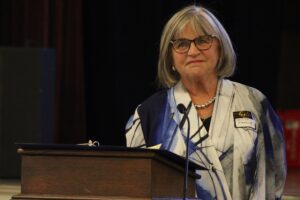
“I think the most important thing people can do now that have disabilities and the people that are their family and their allies and these advocate agencies, is to know we are not alone,” Garlick said in an interview. “So to draw on each other’s strengths, to communicate what it is we can contribute to each other, we ensure that our voices are heard.”
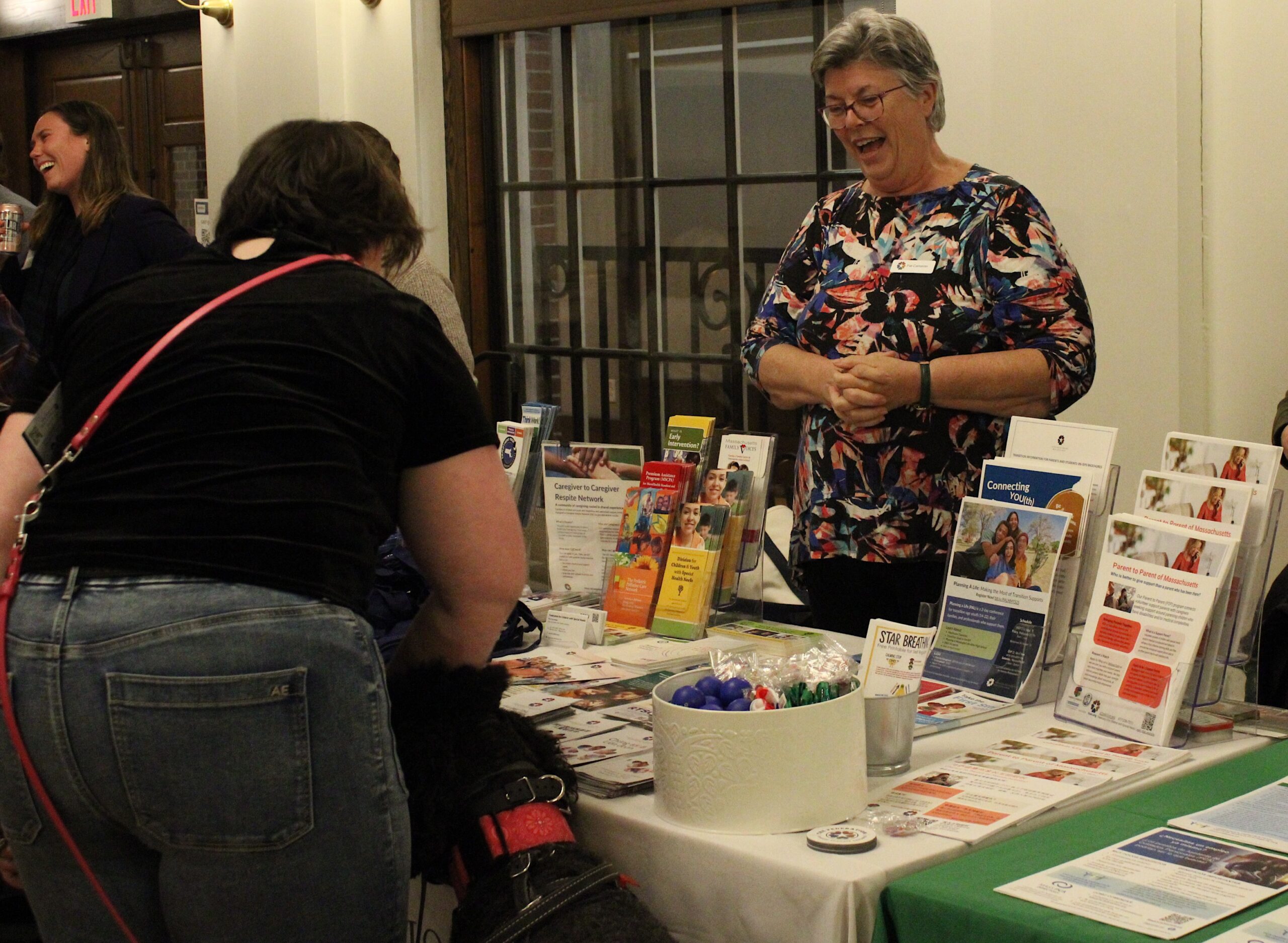
More than 35 local and regional organizations tabled around Powers Hall, and about 100 people attended in person and on Zoom. Garlick said she hoped the event would open a dialogue and spark connection, and they aim to host similar events across the state.
“The disability community is not monolithic,” Garlick said, and that diversity was on display during a public testimonial portion of the event. People with disabilities shared their unique experiences, as well as struggles navigating transportation, the health care system, stigma and more.
For Stephen Register, that struggle takes the form of a four-mile trip that takes more than an hour. Register, a Needham resident and student at MassBay Community College, uses a MetroWest ride service that makes a transfer, “and only once has it worked,” he said. Other times, his ride hasn’t shown up and he was left on campus without a ride home.
“I hope you can try to understand my frustration. I have physical and visual disabilities, and I have worked towards obtaining a college degree, but I cannot do this unless I have access to campus,” Register said. “The ride is supposed to facilitate this, and I’ve been met with disappointment and anxiety.”
Catherine Cuddy, chair of the Framingham Disability Commission, sat beside her service dog Bodhi. Cuddy and the commission are currently working on standardizing signage about pets in grocery stores to better ensure safe access for service animals.
Cuddy said she found meaning and community through advocacy work.
“While there could be so many ups and downs to living life with disabilities, I truly believe becoming an advocate saved me in many ways. I learned to be proud of my disabled identity and have confidence in who I am and to own both my struggles and my successes, knowing that one will never detract from the other.”
Other speakers referred to a state bill that removes outdated and offensive language referring to people with disabilities from state laws. The bill passed in the House on Wednesday, and state Rep. Josh Tarsky was in attendance for the event.
While many Massachusetts organizations advocate for disabled people and work toward equity, the landscape can feel siloed, said Karen Morales, co-chair of the Needham Commission on Disabilities. Those within the community can also face “a labyrinth of paperwork,” she said.
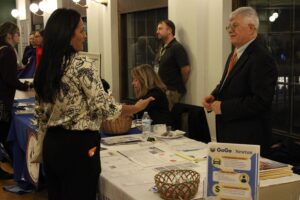
Morales said Wednesday’s event brought people together. She also showcased her own commission’s work to “make things get unstuck” for the people they represent.
“There’s so many discrete organizations that do different things… and I think any time we can think about ways to remove barriers and have single touch points would make things a lot easier,” she said. “Make one phone call to the native commission on disabilities and let us make the 20 phone calls to get people aligned.”
The commission also tours municipal buildings to ensure accessibility. In checking out the Needham Public Safety Building and Emery Grover renovation, Morales said they found heavy doors and steep wheelchair ramps.
Morales took pride in recently creating an accessible viewing platform at the high school football field, where people with wheelchairs can comfortably watch the game, with help from town departments and the NHS Boosters Club. “A lot of really teary, wonderful, happy mothers” expressed their gratitude.
“We can bridge the gap when people are trying to advocate for themselves. We were able to fix a broken door at the high school, get that elevated so that the automatic door opener was working for a student that needed it,” she said. “Those are the types of moments where I think we all feel like what we’re doing actually matters.”
The Needham Commission on Disabilities tabled alongside the Federation for Children with Special Needs, the National Alliance on Mental Illness, MBTA Accessibility, Special Olympics, the Best Buddies program and others.
Angela Ortiz, a member of the MCSPD, viewed the event as an opportunity for action.
“We want to amplify the critical work that you are doing. Our system leaders don’t understand when you cut from one area, the ripple effect is absolutely devastating to our community. One string, it affects the whole web of complexity,” said Ortiz, whose daughter is medically complex. “So lean in. We all need to. I think there needs to be a new, strengthened disability movement in the state of Massachusetts. Nobody mobilizes like the disability community.”
When different networks and people come together, they can form something greater than themselves, Garlick said.
“I have always considered them to be planets. They are planets that have, at times, unique needs. They have their own nomenclature and language. They have certain goals and priorities,” Garlick said in an interview. “The goal of the commission is to unite all of these unique and special planets into a galaxy.”