Needham History: Frogs Under the Tongue? There’s a Cure for That!

Boneset, woundwort, feverfew, and beer – all good for what ails you
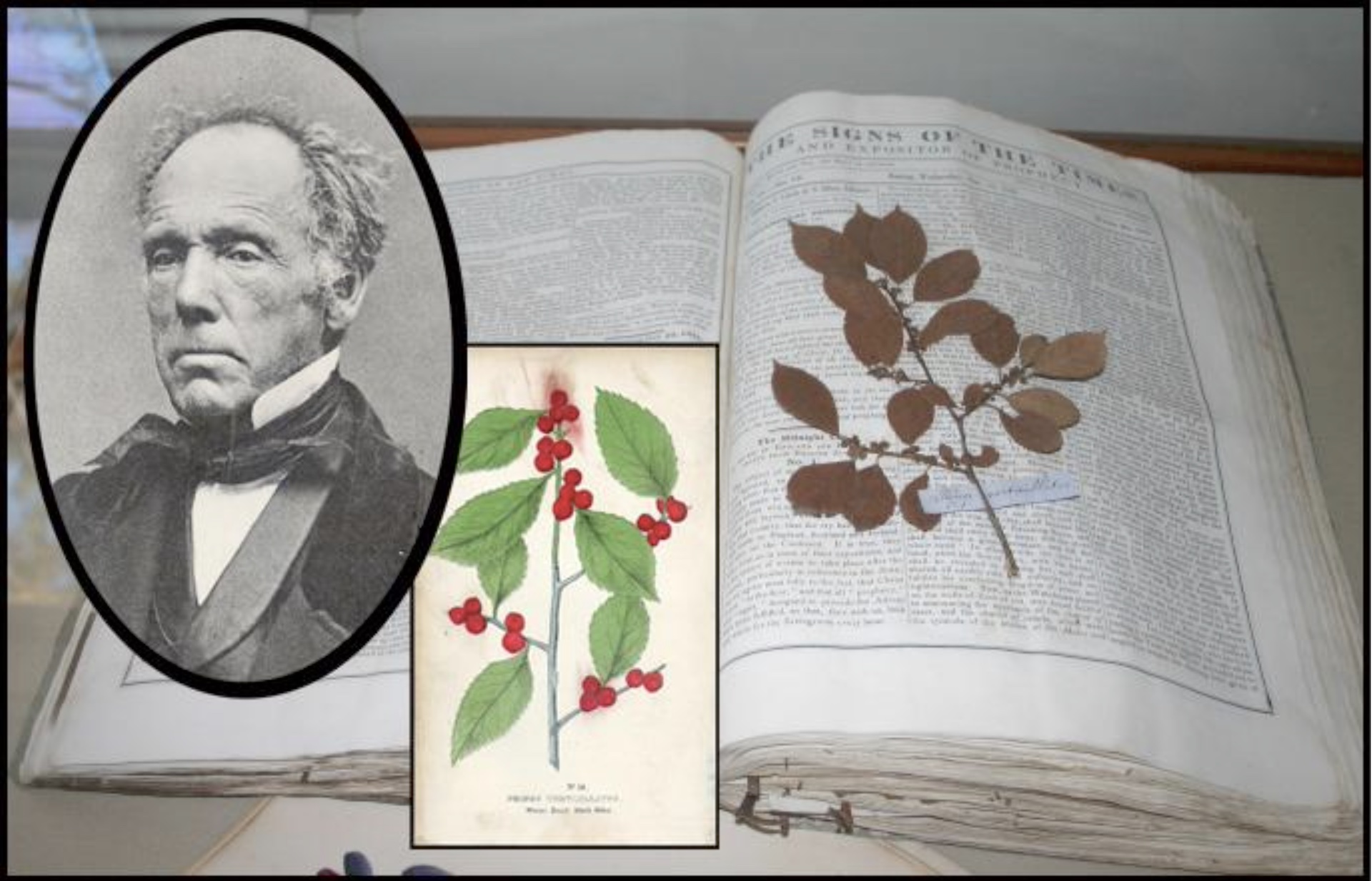 One of Dr. Josiah Noyes’ herbaria. Noyes was a doctor and scientist with a wide range of interests, including botany and the uses of plants. This book contains one of his collections of pressed plant samples from Needham, dating to about 1840. This is a sample of Prinos verticillatus (black alder), which was thought to have emetic and antiseptic properties.
Frogs Under the Tongue?
There’s a Cure for That!
Feeling OK? You sure??
Because if you do need medical advice, I can always lend you my handy-dandy copy of “The Canadian Farrier, or Farmer’s Manual for the treatment of Horses, Net Cattle, Sheep & Swine by A PRACTICAL FARRIER. To which is added The Family Physician, Or Useful Family Guide, containing Plain and Simple Directions for the treatment of the most Common Diseases, with a great variety of Medical and Other Recipes.” (1834)
As titles go, that one pretty much covers all the bases.
Needham’s first physician was Dr. Josiah Wheat. Dr. Wheat lived near what is now the intersection of Oakland Avenue and Hunnewell Street from about 1730 until he died in 1762. He was succeeded by Dr. William Deming, who lived in West Needham on Washington Street and practiced until his death in 1789, perishing in the influenza epidemic. Dr. Isaac Morrill doctored in Natick and Needham in the early 19th century, passing on his Needham practice to Dr. Josiah Noyes. Dr. Noyes came to Needham in 1825 – fresh out of medical school at Dartmouth, with degrees in Medicine and Chemistry (eg, pharmacy). He was the first Needham doctor to have formal medical training, and practiced here until his death in 1871. Apart from these men, Needham relied upon doctors from the surrounding towns to make periodic visits. Town records of the efforts at smallpox inoculations (a risky and expensive venture involving live cow-pox exposure) refer almost entirely to itinerant or visiting doctors.
In the absence of doctors, or the funds to pay one, people doctored themselves using the materials they had to hand. And often, as the above title makes abundantly clear, home medicine was an extension of the lessons and observations learned from caring for their livestock. A Farrier, after all, is the guy who shoes horses.
The Practical Farrier’s aim was to produce a “plain and simple work, to which [farmers] might with safety and success refer.” He laments that “many valuable horses and other creatures, die annually… from a want of knowledge of the proper treatment of those diseases to which horses and cattle are subject.” He also assures us that he has “tested most of the prescriptions,” and that they are “the results of practical experience, and may be relied on with a good degree of certainty.”
The list of livestock diseases is unnerving and colorful, including Staggers, Bots, Glanders, Glister, Gripes, Garget, Thistalow, and Flyingworm (ewww!). Each is indexed and a procedure for cure or alleviation is included. For thistalow, which is an abscess that usually occurs near the horse’s head, PF recommends “oil of vitriol,” which is the old name for sulfuric acid. “Take the oil of vitriol, and drop a small quantity on the part affected, so repeat till the pipes become clear; then carefully pull the pipe from the wound, wash it with cold water, and then oint it till it becomes sound.” Neither the procedure involving the “pipes” (for draining the abscess?) nor the “oint”-ment is specified; clearly this all assumes some practical experience on the user’s part as well.
Just under half of the book is dedicated to the physicking of humans. It is notable that the writer mentions traditional native medicine as one of his sources for this section: “While [living] among the Indians, this author was a particular intimate and confidant of a native Indian… [and] with this Indian the author had the opportunity of learning the Indian method of the treatment of diseases.” He also notes that the gentleman in question was both a practitioner of traditional native medicine and also held a medical degree for University of Pennsylvania – the best of both worlds.
PF is a big proponent of what we would regard as holistic or natural medicine, and he especially valued cures made from plants: “…it must be acknowledged that [the medical establishment] has too often overlooked the virtues of the vegetable kingdom… Nature has provided an effectual remedy for all the disorders incident to the human system.”
According to my friend the Practical Farrier, for example, the cure for a broken bone is as follows – “For a broken bone, take beef brine and Roman wormwood, boil them half an hour, and bathe it on the man’s wound twice a day sufficiently.” I assume splinting was also involved. But clearly PF knows his medicinal herbs. Wormwood (Artemesia sp.) was most often used as a digestive, but has antiseptic properties as well, and could be used in the treatment of wounds and bruises. He also recommends a mixture of rendered hen’s fat and the stewed seed-bowl of skunk cabbage as a cure for “phthisic,” a lung ailment which can refer to either asthma or tuberculosis; the plant does in fact have some anti-spasmodic properties that can help alleviate (though not cure) some of the coughing associated with asthma and tuberculosis.
Anyway, people had been testing and observing the materials in their environment for millennia. Even the traditional names for some of these weeds – boneset, woundwort (also called ‘heal-all’), feverfew – tells you something about how they were used. However unlikely some of these cures may sound to us, it is not unusual to find that these materials have effective anti-inflammatory, antibacterial, or analgesic properties – these folks were not foolish.
For Consumption PF recommends daily doses of a nourishing mix made by pouring six buckets of boiling water over half a bushel of barley malt, allowing it to stand for six hours, and then boiling it up with white pine bark, spikenard root, sorghum until reduced by half. The resulting liquid is then stored in a keg with yeast and left to ferment, before bottling and drinking daily – Wait! That’s beer!!
And that’s not all! The Practical Farrier also stands ready with cures for the Hungry Evil, the King’s Evil, Rattles, Quinsy, Flying Rheumatism, and Frogs Under the Tongue (cysts of the salivary glands). He also kindly provides advice on household problems such as eradicating cockroaches, making lamps burn cleanly, and fireproofing wallpaper, and even manages to throw in recipes for jams and jellies, Pickled Hams, Preserved Eggs, and a frosted Wedding Cake.
Practical, indeed.
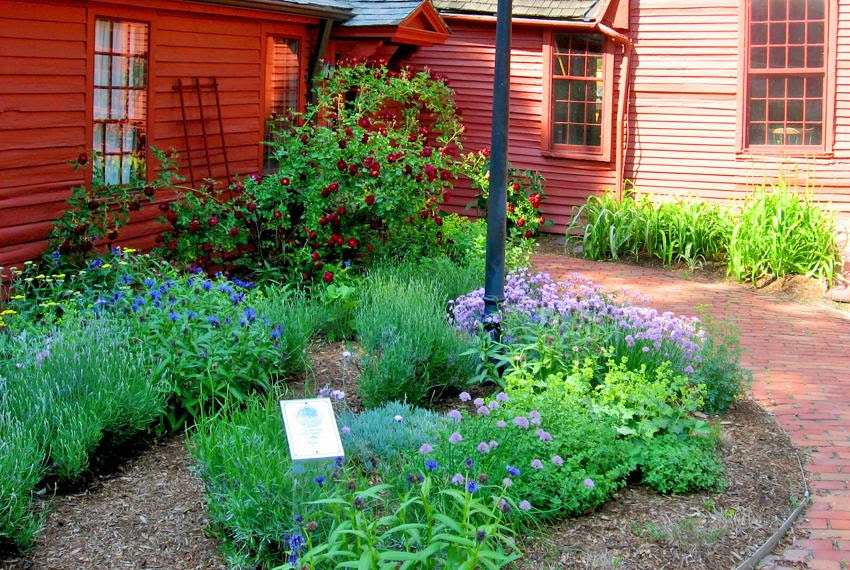
In addition to gathering wild plants, colonial housewives planted both culinary and medicinal herbs in their dooryard gardens for easy access.
 |
Gloria Polizzotti Greis is the Executive Director of the Needham History Center & Museum. For more information, please see their website at www.needhamhistory.org. |