Finding Community in Recovery

August 29, 2025
• During an opioid overdose awareness vigil, speakers recounted how substances forever changed their lives and their families.
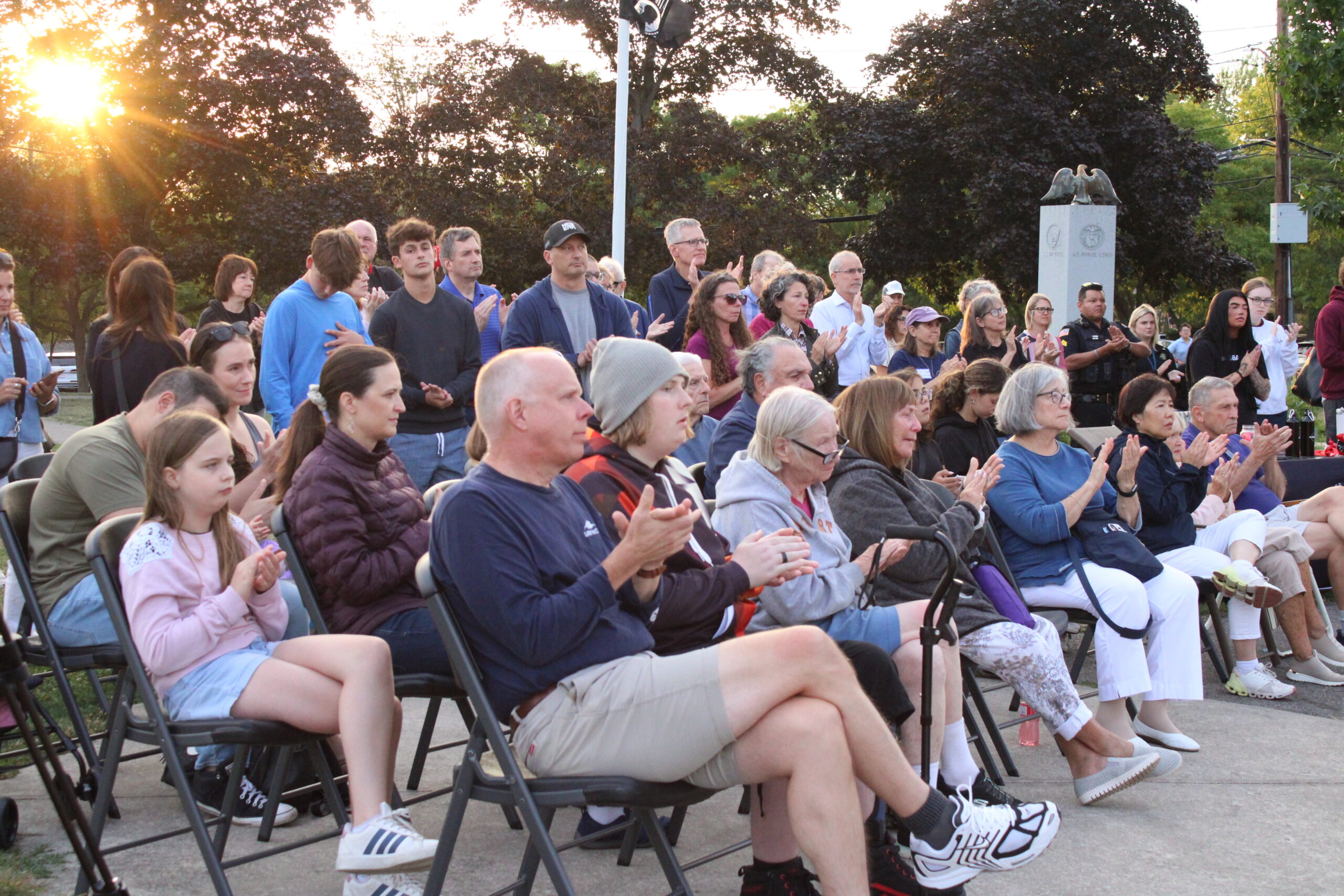
“They say that the opposite of addiction is not sobriety, it’s community,” Phil Bonasia said Thursday night. For the dozens of people gathered at the Memorial Park gazebo, those words rang true.
Needham’s fourth annual opioid overdose awareness vigil began just before sunset. After community members shared their stories and lit purple candles, reflecting and remembering, the sky went dark.
Behind them, the statistical impact illustrated the gravity: 1,763 pink flags covered a stretch of the park, representing the number of Massachusetts lives lost to opioids between July 2023 and June 2024. In all of 2024, 1,339 people died from an opioid overdose in the commonwealth, according to the data shared by the Massachusetts Bureau of Substance Addiction Services.
“They were cherished, mothers, fathers, sons, daughters, sisters, brothers, aunts, uncles, cousins, grandparents, partners and friends,” said Kalina Mihova, a Needham High School student and member of Students Advocating for Life without Substance Abuse (SALSA). “They were loved, and they are missed beyond words.”
Just before her father’s passing, Hayden Krug didn’t know anything about his addiction — only that he spent short stints in the hospital and time away from family.
Krug, now an NHS sophomore, lost her dad in February 2023 to an overdose during her seventh grade year. It took time to realize she was not at fault.
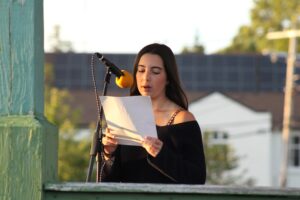
“We are incapable and not responsible. We should not feel guilt for the loss of a loved one due to their own choices and actions. We cannot help them. They must help themselves,” she said. “It took me a long time to learn these things, to adjust to the new way of life without him and with this weight. It wasn’t easy, but it did get better.”
The first responders who field drug-related calls — police officers, firefighters and medical professionals — stood along the edge of the ceremony. Some of them may have recognized Colin Van Dyke, whose family called on them to save him. It was “a dark point in my life,” he said at the vigil.
“I had three intubations in six weeks,” he said, “and I had to be Section-35’d by the Needham Police Department.”
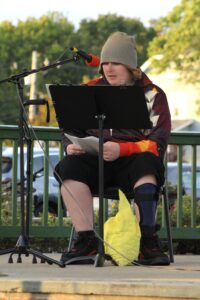
An opioid addiction can begin with a doctor’s prescription, Van Dyke said, or in his case, a peek into someone’s medicine cabinet at just 13 years old. “That moment unknowingly sealed my fate,” he said. “I didn’t choose addiction.” He lost friends to opioids and came to expect an early death.
A fentanyl overdose in May 2024 put him in a five-day coma and left him without feeling in his left leg. He now uses a cane and walker.
“When people ask me about my hobbies, I usually just say video games. I can’t skate, hike or swim anymore,” he said. “The only reason I’m still here is because of my dad. He pushed me uphill in a wheelchair through rain, sleet and snow just to get me back home. He gave me the time and support I needed to relearn how to walk. He deserves father of the year 100 times over.”
As a recovery coach, Angi MacDonnell sees that impact firsthand. MacDonnell, who herself is in recovery from drugs and alcohol, helps local residents “find their path” and stay well.
Since starting full-time in March with the Needham Public Health Division, she has recognized the need.
“In this very short period of time, once you get somebody talking about addiction in a community, you find the people who have that experience,” MacDonnell said in an interview, “and they’re everywhere.”
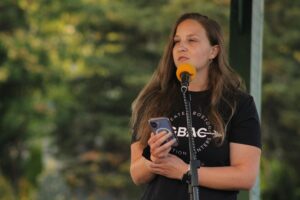
Addiction runs in Angela Kelly’s family, and since losing her brother to an overdose, his struggle inspires her to help others recover at the Greater Boston Addiction Center in Needham. His memory lives in all the people she helps get better. Community is at the core.
“We all deserve to feel love and to know that there is help when we need it,” she said, “and that asking for help isn’t a sign of weakness, but a sign of strength.”