Providing Care for the Caregiver

August 21, 2025
• Dementia caregivers are sometimes deemed “the second patient,” often putting their needs behind those of their loved one, but new local initiatives aims to provide them support.
In Needham, more than 15% of adults 65 years and older have some form of dementia, according to a 2025 report by the MA Healthy Aging Collaborative. Loneliness plays a key role in dementia risk, but those who provide care for loved ones with dementia can feel equally closed off from the outside world.
“Caregiving itself can be very isolating,” said Jess Moss, a social worker at the Center at the Heights. “You’re not able to necessarily get out as much. Your social relationships outside of the home and inside of the home can be drastically changed when you’re a care support partner.”
Identifying an unmet need, the Needham Community Council launched its Dementia Care Partners Support Program, which aims to increase awareness around dementia and facilitate connections and positive experiences among those touched by the disease.
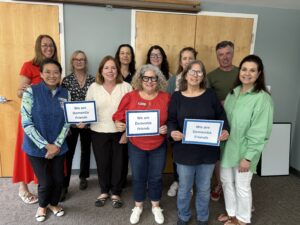
Starting in September, the council plans to start holding hour-long informational sessions with community organizations around town, where locals can learn about dementia and how best to support others.
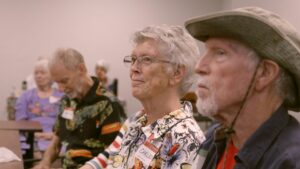
They also will host memory cafes, where people with dementia and their care partners can “have a safe place” to gather, NCC Executive Director Sandy Robinson said.
“Memory cafes really help prevent that isolation,” Robinson said. “It allows people to get out in the community. It allows people to meet others that are also in the same situation, and to have some experts in the room that can really help with resources and some of the information that will make this path a little easier.”
The first memory cafe will take place Thursday, Sept. 25 from 10:30 a.m. to 12 p.m. at the Needham Free Public Library. After that, each cafe will occur on the fourth Tuesday of every month.
Caregivers are often “viewed as like they’re the second patient,” said Stephanie Knoch, director of the Dementia Care Partners Support Program. Their personal needs sometimes take a back seat, she added.
“The worry, the attention towards the person living with dementia,” she said. “The care partner, I think, just doesn’t get to take care of themselves.”
The memory cafes would act as a source of socialization and support for all parties, Knoch said. The Center at the Heights, where Knoch previously worked, holds a care partner support group, but no other town organization currently provides programming that includes both caregivers and people with dementia.
Dementia describes symptoms of memory loss and executive dysfunction attributed to brain-related diseases, the most common cause being Alzheimer’s disease, according to the Alzheimer’s Association. More than 7 million people have Alzheimer’s in the United States.
Dementia mostly impacts people 65 and older, with increasing risk as they age. One person every three seconds develops the disease, according to Alzheimer’s Disease International.
At the CATH, staffers will host their own memory cafe monthly beginning next month, in collaboration with Wingate Living, who organized the program. Those cafes will take place every third Tuesday of the month, with the first planned for Sept. 16.
“When you’re a care partner, your world can become a little smaller,” said Moss, the CATH’s assistant director of aging services, counseling and volunteers. The senior center strives to provide a space for people to comfortably engage with others that’s close to home, she said, and the memory cafes are another opportunity to do just that.
“It’s a safe space to enjoy a slice of normalcy,” Moss said.
Over the next three years, the NCC plans to pursue grants to fund respite care for dementia caregivers, as well as provide mentoring between caregivers, particularly those who know how to navigate the medical and professional world, Robinson said.
The council hosted its first informational session with volunteers this week and hopes to make inroads with other community partners, she added.
Materials shared at the Dementia Friends information sessions come from Jewish Family and Children’s Services via Beth Soltzberg, the director of Alzheimer’s/Related Dementias Family Support Program at JF&CS.
The trainings guide community members through how dementia impacts people, basic communication skills and ways to reduce stigma and increase understanding around the illness, Soltzberg said. So far, close to 20,000 people have participated in Dementia Friends in Massachusetts, she said.
“When someone in their circle develops dementia, they might not know how to stay connected with them, and the session culminates with each person choosing a personal action,” she said. “It’s just a personal pledge to use the information that they’ve gained, and then each person is counted as a dementia friend.”
The JF&CS memory cafe, founded in 2014, was just the second one of its kind in the state, Soltzberg said. As the Needham initiative takes off, she said she looks forward to more important conversations about dementia.
“It’s one of the most common things that no one ever talks about. It’s something that touches so many people’s lives,” she said. “But there’s a lot of silence about it, there’s a lot of fear, and there’s a lot of misinformation.”
One common misconception about dementia is that it’s a normal part of aging, Knoch said. As a licensed social worker, Knoch advises people to seek advice from a neurologist and primary care physician, who can perform cognitive testing.
As the number of diagnoses rise — a nearly 13 million people are projected to develop Alzheimer’s by 2050 — Knoch said they aim to spread information about the disease and provide care for those touched by it through the Dementia Care Partners Support Program.
“We are seeing the numbers growing exponentially,” she said. “It’s our duty, I think, to provide awareness for dementia and for people living with dementia and their care partners.”