During Black History Month, Historians Encourage Us to Remember

February 9, 2026
• Two Massachusetts history scholars discuss slavery in Massachusetts and the challenges in both uncovering that history and addressing misunderstanding.
When people think of Massachusetts, slavery is likely not top of mind. The dominant narrative on New England’s role in slavery is that “we are the cradle of liberty, and the south is the bastion of slavery,” Dr. Kyera Singleton said, “but that’s not quite right.”
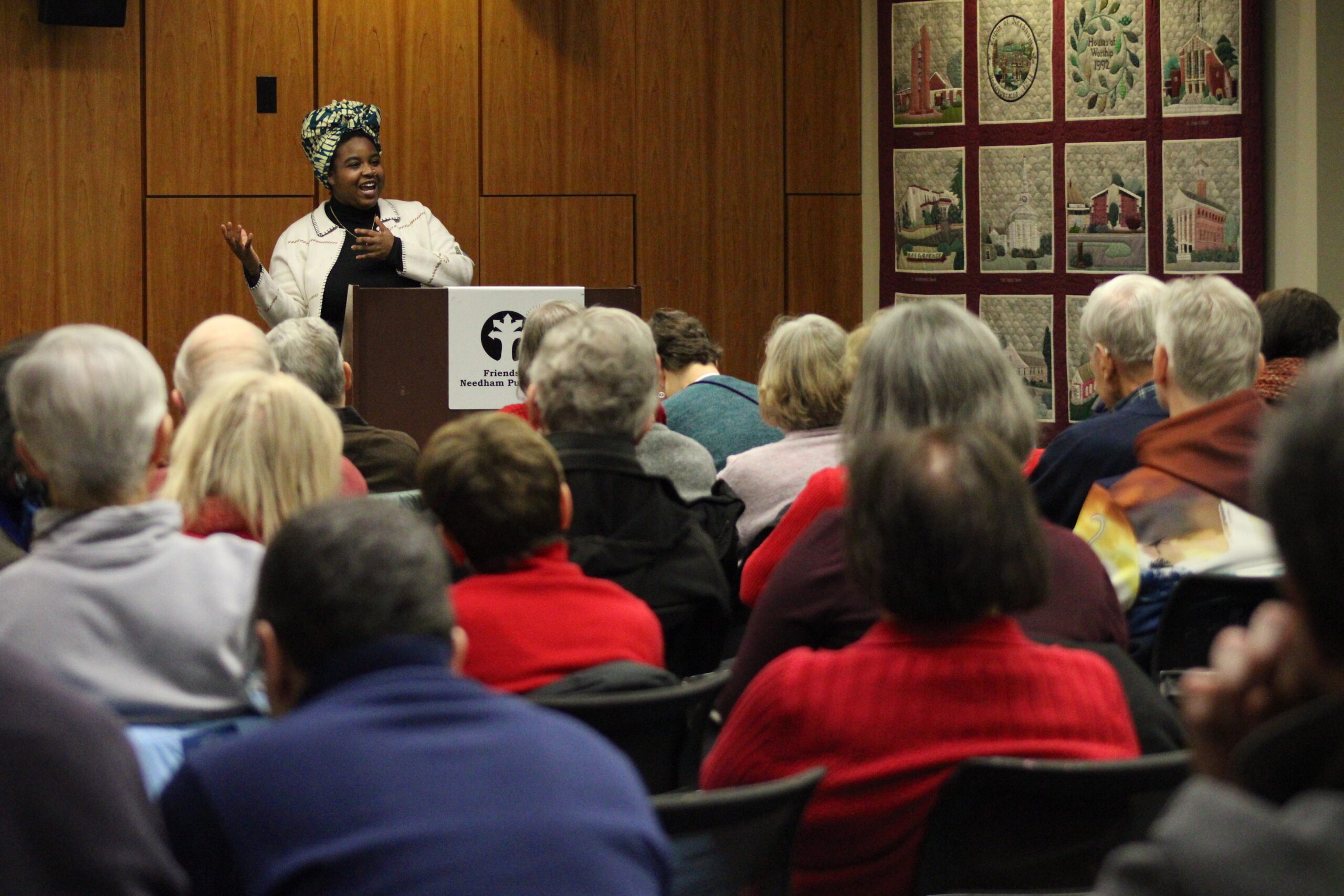
Needham and surrounding communities participated in the enslavement of people through much of the 17th and 18th centuries, before Massachusetts effectively ended legal slavery in 1783. During a talk at the Needham Free Public Library on Sunday, Singleton, executive director of the Royall House and Slave Quarters in Medford, addressed that revisionist history.
“We have a problem with forgetting, and there’s a violence in forgetting,” Singleton said, “and there’s a violence in not seeing the legacy of slavery is all around us.”
Uncovering information about Black Needham residents, however, has proved difficult. Gloria Greis, executive director of the Needham History Center and Museum, said they have “no real sense of the extent” of enslaved populations in town. Their records, which are few and far between, indicate only the first names for 13 people, mostly children, she said.
The best resources are often official records and family documents, though many Black families don’t appear in either, Greis said. Elected officials, business owners and other powerful people made it into the books, but often, Black residents were only recorded because of their enslavement or because they lived in the poorhouse.
“The information is tantalizing, but it’s fragmentary,” Greis said.
Needham’s Black population was virtually non-existent at the time, Greis said, unlike in seaport towns such as Fall River and New Bedford, which were “by nature extremely diverse.”
Appearances, however, can be deceiving — Singleton said Massachusetts played a critical part in slavery, which helped the state build its wealth. Massachusetts traded sugar and other commodities and enslaved Africans and indigenous people, Singleton said.
About 12-15% of Boston’s population was enslaved, and in Rhode Island, nearly a quarter of people were enslaved, she said, quoting from Jared Hardesty’s “Black Lives, Native Lands, White Worlds.”
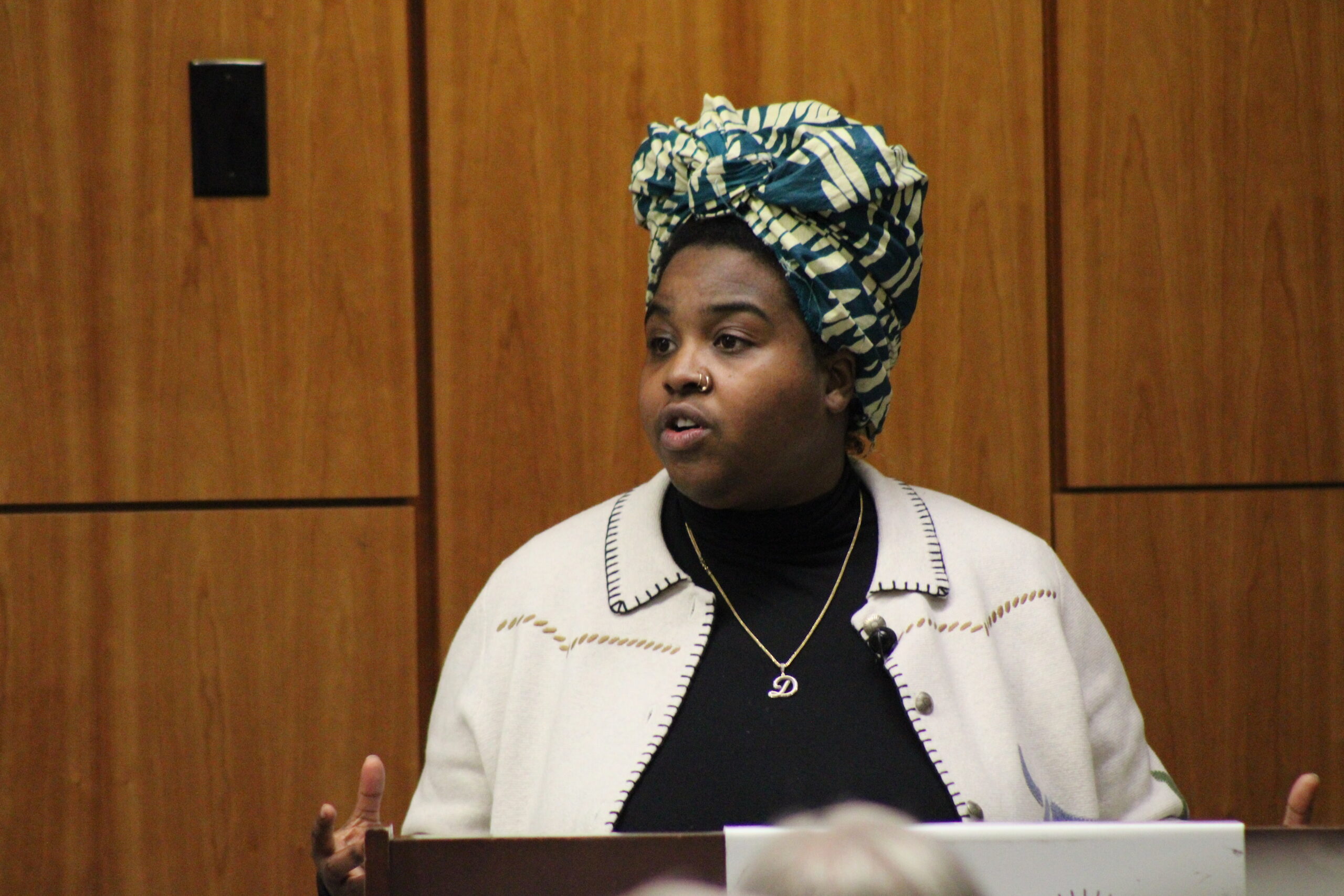
“More importantly, it doesn’t matter if there was one person enslaved or 1,000. Their lives matter,” Singleton said. “The wealth enslaved people generated for this country… while imploring the brutal and dehumanizing system of enslavement should also never be forgotten.”
While slavery was still legal in Massachusetts, Needham was home to possibly its only free Black family. Cromwell Oliver, or Oliver Cromwell, lived with his wife and several children in Needham for about 15 years in the mid 1700s. The family lived alongside enslaved people in Needham and were educated and middle-class, Greis said. That’s about where the records end.
“We could see their marriage record. We could see the births of their kids. They’re specifically listed in the minister’s record as being Ethiopian, so we know that they’re Black,” she said. “They have a house, they have a last name. They’re not listed as being servants… It’s hard to know where they came from, where they went.”
Needham was also home to Jethro Cato, a formerly enslaved man who owned and worked a farm alongside his wife Dinah between Pine Street and Charles River Street in the last few decades of the 1700s. There’s also Phoebe, who gained freedom in 1783 and was promised support from her former enslaver but ended up in the poorhouse, Greis said. And Richard Fry, a Black man in the early 1900s, found a second home in Needham and was recently re-memorialized for his work with local youth.
“I don’t want to only be studying people who were enslaved, because there’s a history that’s not built around slavery. But it’s harder to find,” Greis said. “We’re looking for and we’re trying to find it, but it’s serendipitous in a lot of ways.”
Greis is currently working with Rev. Catie Scudera of Needham’s First Parish to research records of Black residents via probate records and other historical documents. “It’s wonderful to connect with folks also doing this work,” Scudera said after the talk.
Even after enslavement was abolished in Massachusetts, the Commonwealth still economically benefited from the maritime transport of enslaved people and products tied to slavery, Greis said. Still, confronting that history is difficult for some — a presentation she held with Scudera several years ago received intense pushback.
“We were very much involved, and people were very surprised to hear that and very disturbed to hear that, as they should, but you know, you can’t change what happened in the past,” she said.
Belinda Sutton, who resided at the Royall House and was enslaved, is one of the first cases of successful reparations, Singleton said. After Isaac Royalls Jr. died, he instructed in his will that Sutton, whom he owned, would be entitled to security if she chose her freedom. In 1783, she petitioned Massachusetts for a pension from the Royall estate and was approved, though she was only awarded that pension twice.
Laws at the time treated enslaved people as property and commodities that could be exchanged, inherited and sold, Singleton said. “It is actually essential to the foundation of Massachusetts.”
At the Royall House and Slave Quarters, more than 60 people were enslaved by the Royall family, a significant slaveholding family who grew their wealth first in Antigua and later in Massachusetts. Singleton displayed photos of the site, juxtaposing the family’s spaces with those of their enslaved servants. In many cases, their rooms were right beside each other.
“One of the things that this reveals is that slavery is an intimate institution. People are literally living side-by-side,” Singleton said.
Singleton also shared photos of artifacts, including a game piece and marble found in the gardens right in front of the slave quarters. From the big house or the back of the quarters, someone wouldn’t be able to see what they’re doing, she said.
The finding, as well as the legal history of Black people petitioning for their freedom in Massachusetts, indicates that resistance — in many forms — was always present.
“It is a reminder that even though people were enslaved, we cannot make violence the cornerstone of Black people’s history,” she said. “When we do that, we literally erase their personhood. And more importantly, we don’t see certain things.”