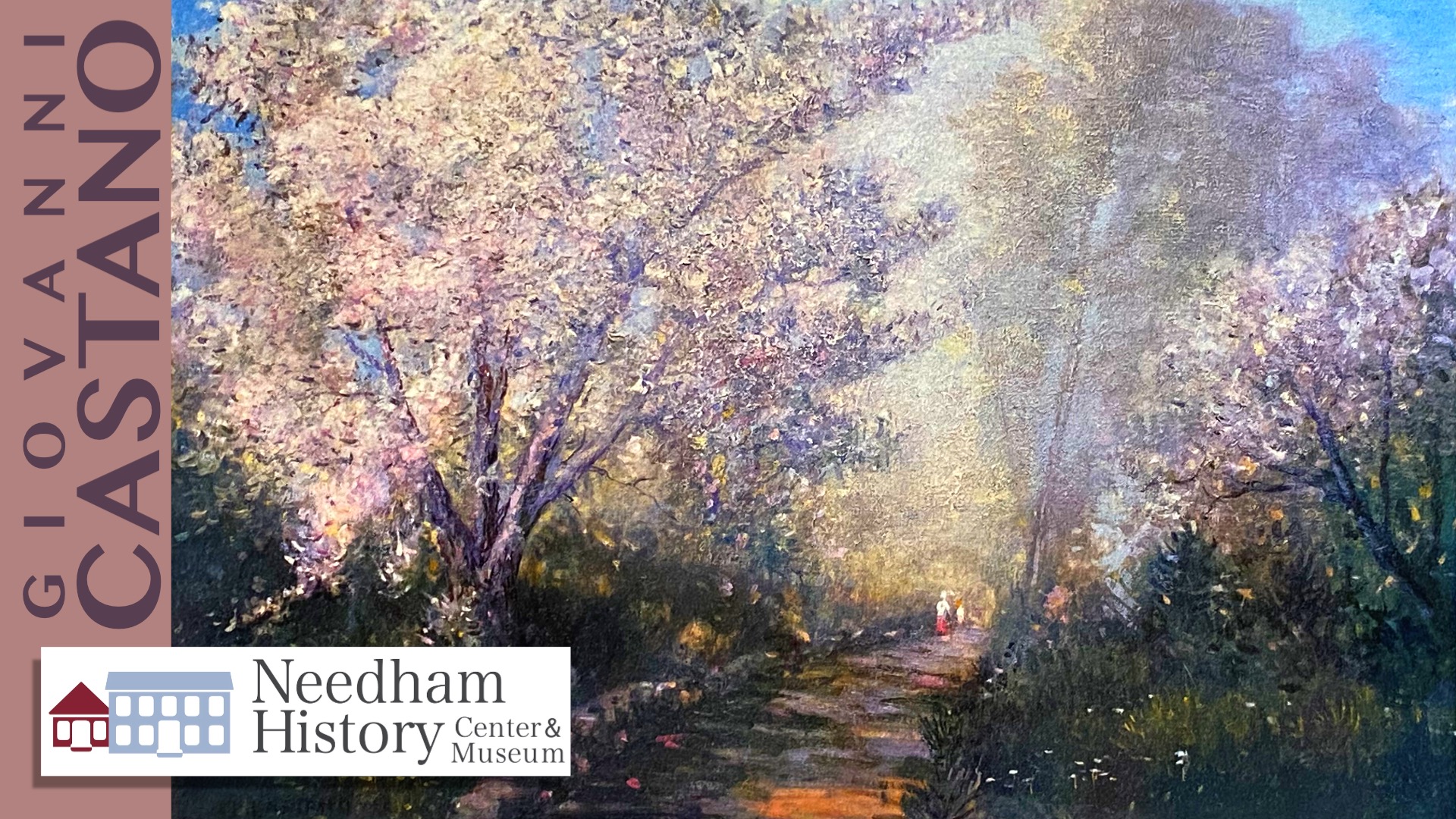
Needham History: Giovanni Castano

Painting the things he loved, including Needham
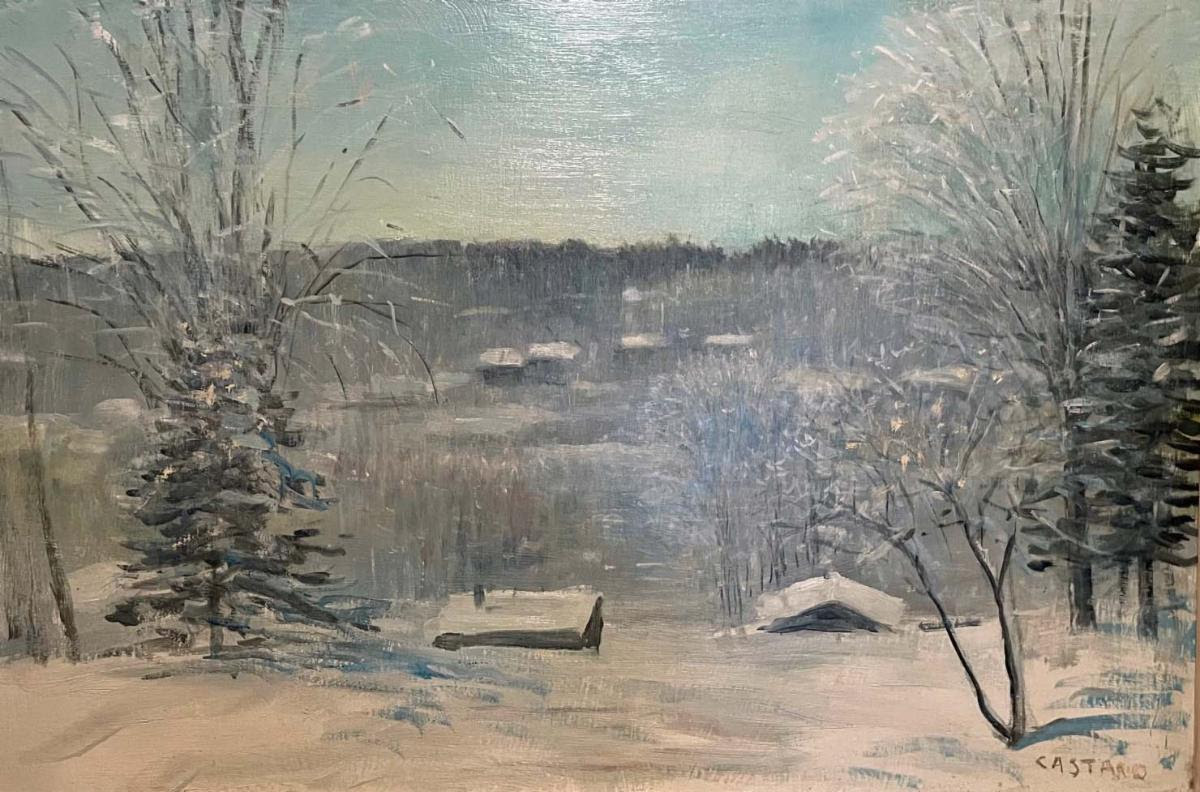 “From My Studio Window,” by Giovanni Castano. The painting shows the artist’s garden and the hills behind his Hunnewell Street home.
Giovanni Castano
For many years, the Needham History Center has displayed the painting, “From My Studio Window,” by Giovanni Castano. Castano was a long-time Needham resident, and the painting was given to us by his daughter, Elvira Castano Palmerio. Elvira was a former Director of the History Center, and had a career as an opera singer and interpreter.
Giovanni Castano was born in Gasperina, Calabria, Italy in 1896, and came to Brockton, MA in 1905, as a small boy. In 1912 he received a scholarship to attend the School of the Museum of Fine Arts in Boston, and then worked in various locations across the country as a scenic artist for theaters and opera houses, including the Boston Opera House and the Cincinnati Grand Opera. He also worked as a muralist for numerous public buildings and churches.
In 1931, Castano moved back to the Boston area and opened the Castano Art Gallery on Newbury Street. The gallery specialized in artists of the “Boston School,” such as Edmund C. Tarbell, Frank W. Benson, Philip Hale, and Lilian Hale. The Boston School style merged French Impressionism with a more classical realism; it was primarily associated with the MFA’s School of Fine Arts, and Philip Hale had been Castano’s teacher. The Gallery also featured some of the more prominent regional artists such as William Morris Hunt, Childe Hassam, and Fitz Henry Lane. Through his long friendship with Charles Savage Homer Jr, the artist’s brother, Castano also became an important dealer of Winslow Homer’s paintings.
Castano was also a talented restorer of Renaissance and Impressionist works, including works by Raphael, Titian, Degas, and Homer. In 1966, he was awarded the Order of Merit and the title of Cavaliere (Knight) by the Italian government for his own work and his advocacy for Italian artists. In 1970, MA Gov. Frank Sargeant appointed him to be official painter of the Commonwealth, and selected him to restore the five murals by Albert Herter, “Milestones on the Road to Freedom” (1942) in the House Chamber of the MA State House.
In 1937, Castano settled in Needham, in a house at 245 Hunnewell Street, at the corner of what is now Castano Court. This event was considered sufficiently noteworthy by the Needham Chronicle for them to mention it in several issues, commenting that “It is a tribute to the town that, from all the small towns surrounding Boston, the Castanos were very careful in picking out this location for their home.” (Needham Chronicle, 26 February 1937). The Castanos raised their family in the house. Its large garden was an especially-loved feature, that they planted with flowers, vegetables, and fruit trees with the assistance of Al Hendison, who worked for the family as gardener and chauffeur. Castano commuted from Needham to his gallery in Boston until 1975, and then ran the gallery from his Needham home for the next few years, until he passed away in 1978.
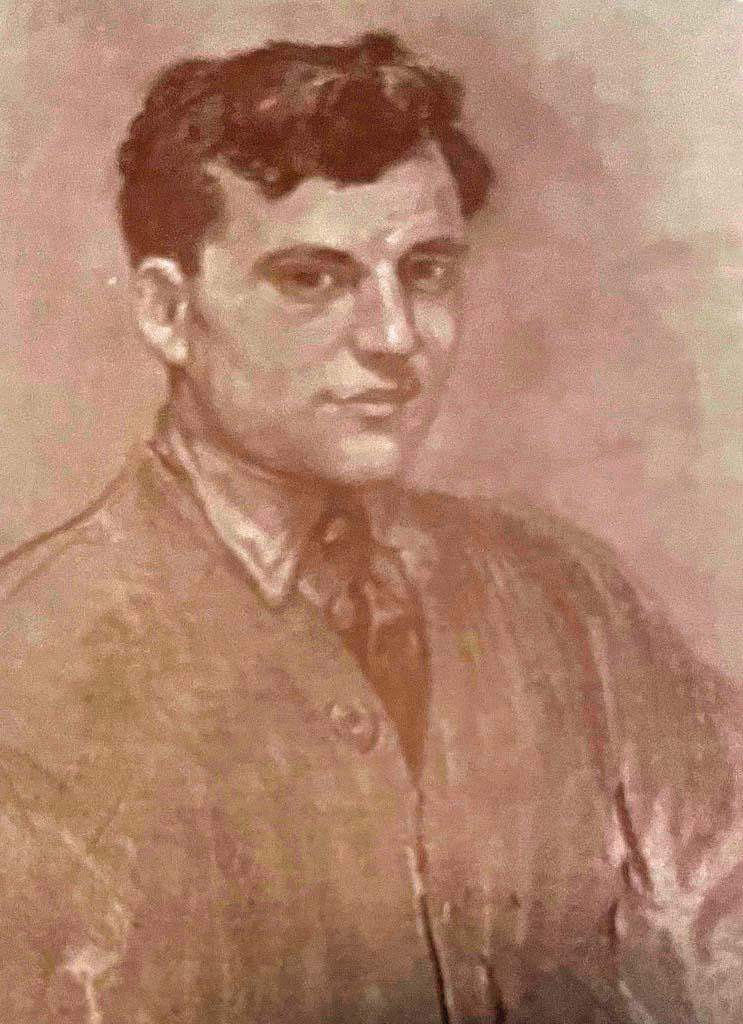
A portrait of Giovanni Castano, circa 1912, by Francis Mortimer Lamb. Lamb was one of Castano’s early teachers, and remained a long-time colleague.
Castano’s own work reflected his Boston School training, influenced by both Impressionism and classical realism. He worked in both oils and watercolors, primarily depicting landscapes in Europe and around New England, including Italy, Cape Cod, Boston, his childhood town of Brockton, and his later hometown of Needham. One of his best-known works is a view of the bridge and swan boats in the Public Garden. He also painted scenes of Venice and other locations in Italy after traveling there in 1953, for the first time since he left as a child.
In Needham, Castano’s favorite subject was his garden, and he made several paintings of the property. At the time he owned the Hunnewell Street property, Castano Court had not been laid out, and his land extended down the hill, all the way back to what is now Booth Street.
The Needham History Center is proud to own and exhibit one of these garden views by Castano. “From My Studio Window” shows his garden, covered in snow. Beyond the snow-bound garden sheds is a line of houses on Booth Street, and beyond that, the trees and scrub of the wetlands along the Rosemary Brook that extend from the old Hillside School to the new Sunita Williams School. The painting was given to the History Center in 1992 by Castano’s daughter, Elvira. This was a view that he painted several times, most commonly in the summer when the garden was in bloom.
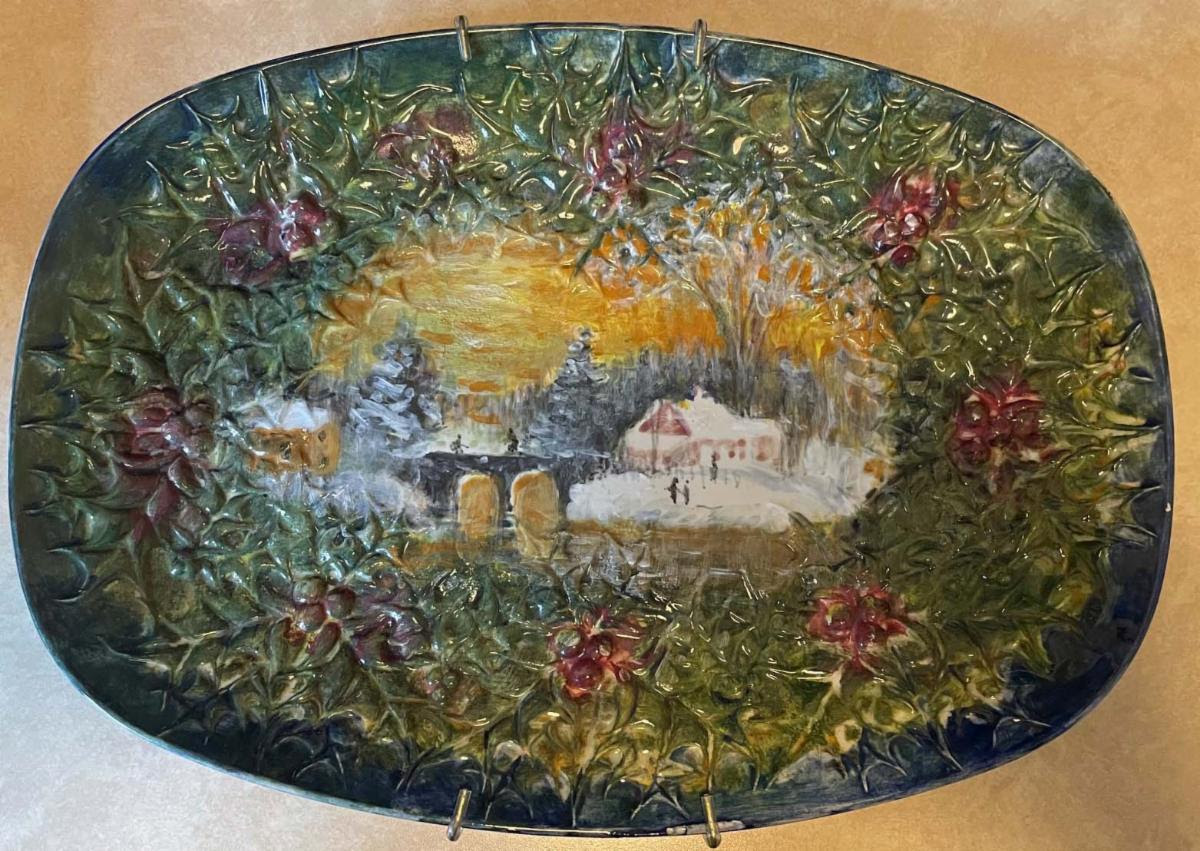
By happy chance, we just received another version of this view, in an unexpected medium. This is a hollow ceramic plaque, painted and then covered with a clear overglaze, that also shows the property in the snow. The scene is looser and more impressionistic, but the red brick house is clearly seen, as are the two pine trees that bracket the “Studio Window” composition. There are also at least five sketchy figures in the scene, as well as an elm(?) tree that still stands on the property. The border is green holly leaves and red berries, suggesting that it was made as a Christmas gift or decoration. The plaque belonged to a neighbor of the Castano family, given to them by Castano’s granddaughter at some point. The neighbor passed it on to another resident of the street, whose house now stands on what was once Castano’s back garden – in fact, right on the land shown in the “Studio Window” scene, and in the plaque. The new owner, being (as well) a Director of the History Center, gave it to us this month to add to our collection.
Giovanni Castano was by all accounts a genial man, somewhat shy but enthusiastic about the things he loved. He loved Italy and the United States, the old Masters and the modern Impressionists. And he loved Needham, his adopted home town. We can see this in his more academic works, but also in this little bit of holiday whimsey that arrived in our stocking just in time for Christmas.
A glazed Christmas plaque made by Castano, showing his house and yard in the snow.
 |
Gloria Polizzotti Greis is the Executive Director of the Needham History Center & Museum. For more information, please see their website at www.needhamhistory.org. |