‘The Anxiety is Real’: Food Needs Rise in Needham

October 27, 2025
• As the country braces for cuts to food assistance programs federally, local organizations are adapting to increased demand.
At its twice weekly mobile market, the Needham Community Farm has sensed a shift. Demand for its free produce, which benefits affordable housing residents, has shot up nearly 20% this year over last.
Customers who previously selected a few items are now taking the maximum allotment, the farm’s Development Director Courtney Sodano said. The weekly value of its market averages more than $1,000, Sodano said.
The rising need coincides with anticipated cuts to SNAP benefits, or the Supplemental Nutrition Assistance Program, which provides financial support for low-income households to buy groceries. Starting Nov. 1, more than 1 million Massachusetts residents could lose those benefits, should the federal government shutdown continue.
“It seems like every time we see an uptick, it pretty much follows cuts in any type of food donation services, [such as] the federal cuts to SNAP,” Sodano said. “I think there’s big cuts to food aid, which had a really big impact on, I think, different food pantries in Boston, which really does filter out to us here.”
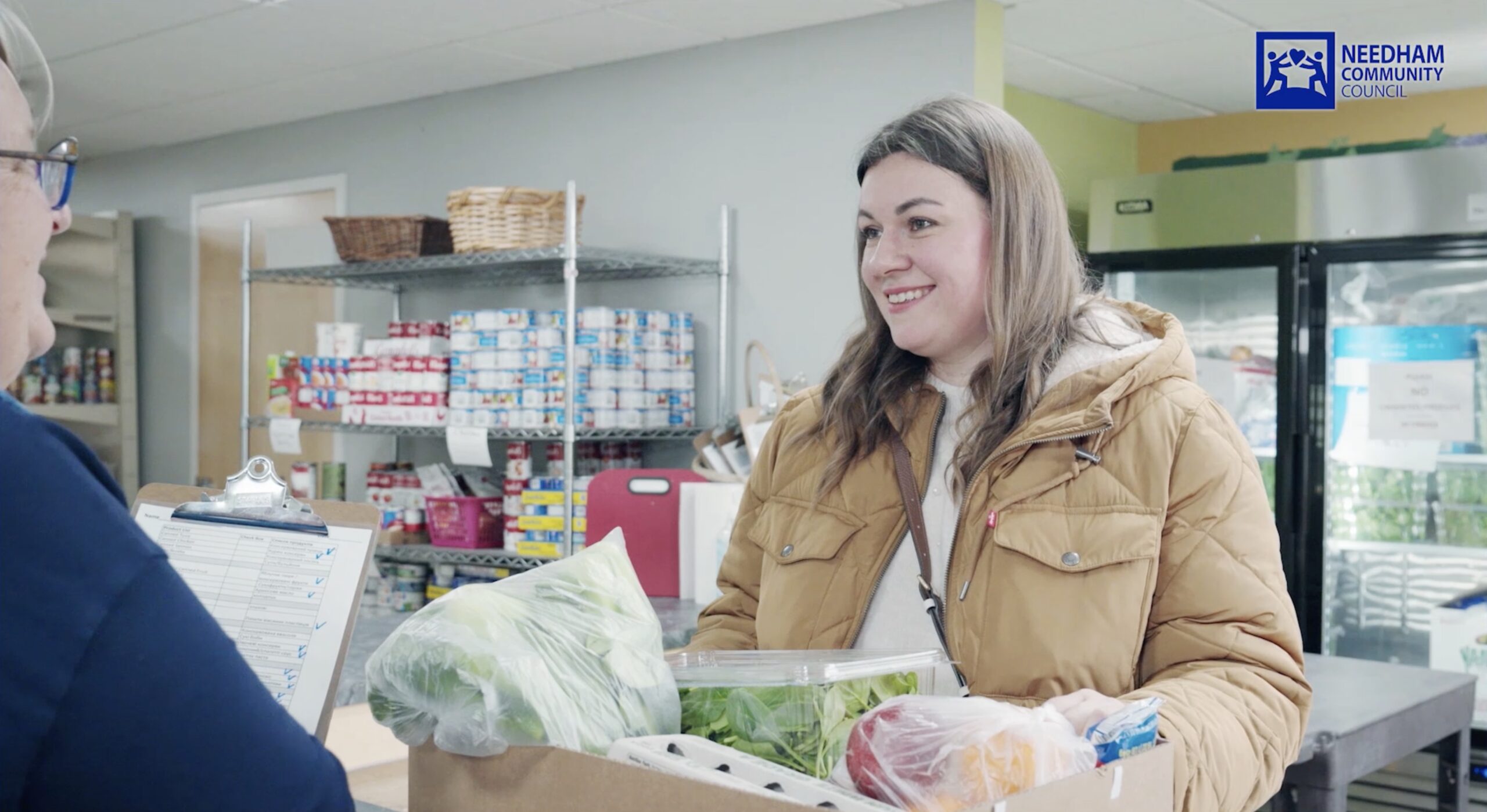
The Needham Community Council, which runs its own food pantry, saw 12% more visits last month compared to September 2024 — from 355 visits to 398 — Executive Director Sandy Robinson said. They observed a similar rise in need this past summer, and numbers continue to rise since 2019. All of its users live in Needham.
The NCC incurred a 50% increase in its own food cost in an effort to meet that demand, food pantry manager Katerina Posadskova said, with about one-third going toward fresh produce. The approximately 8,000 pounds a month they receive from the Greater Boston Food Bank is not enough, prompting the council to order groceries from Costco and Trader Joe’s, Robinson said. They also receive excess from the community farm.
NCC food pantry customers are limited to a certain number of items, based on family size, but similar to those at the farm’s mobile market, they are taking as much as possible. More often, they are choosing pantry staples such as rice and pasta over more luxury items. “Basic needs took over,” Posadskova said. Their table of imperfect foods “disappears by the end of the day,” she added.
Uncertainty among residents has grown. Over the last month, two different high-earning families approached Posadskova about joining the pantry in the event of a financial emergency.
“We are definitely seeing people that used to come maybe once every three months are now coming twice a month,” Robinson said. “The anxiety is real, and we hear that every day when they come in.”
Robinson attributes the increased need to the rising cost of food and a previous reduction in SNAP benefits. The council also offers food at the mobile markets at Needham Housing Authority properties.
The U.S. Department of Agriculture’s website states that SNAP benefits will not be issued beginning Nov. 1. “Bottom line, the well has run dry,” the message states. About 1,000 Needham residents are on SNAP, which makes up about 3% of the town’s population, according to data shared by the state.
About $212 million in federal dollars goes toward Massachusetts residents on SNAP every month. Gov. Maura Healey announced Friday that United Way aims to support the state’s recipients via private donations. About 655,000 households in the state are on SNAP, according to the Department of Transitional Assistance.
Local faith-based organizations also provide assistance. Temple Beth Shalom’s Social Action initiative partners with regional agencies, including Jewish Family Service of Metrowest and Jewish Family & Children’s Service, while St. Joseph Parish runs its Neighbors in Need program that donates funds on an as-needed basis to individuals.
Eric Meyers, a member of Neighbors in Need and longtime St. Joe’s parishioner, said the program is “a longstanding effort of the parish” that started about 10 years ago. Regardless of religious affiliation, the program supports those who need help with things like rent, utilities, childcare, car expenses and food on a temporary basis.
Neighbors in Need helps just about five people a year, though Meyers noted they’ve seen a “modest increase” in those seeking assistance. Few people, however, specifically request money for food, he said.
“I think we’ve anticipated that the numbers may increase, but it hasn’t been too significant to date,” he said. “The number of cases has been fairly steady the last five years post-Covid.”
The rate of need, at least at the Needham Community Farm, has only risen since the pandemic, Sodano said.
The Needham Community Farm donated more than 5,500 pounds of food last year, both through the market and donations to the council’s food pantry, Sodano said. The farm donates 50% of its harvest and sells the other 50% through its community-supported agriculture program.
Apart from SNAP cuts, the farm relies on grant funding. With federal cuts, food-related charities are vying for a limited pool of resources, making it much more competitive, Sodano said. This month, they received about $14,000 from the Healey-Driscoll Administration, which will go toward installing a new deer fence around their 1.25 acres of farmland.
Having recently expanded that farmland, they hope to double their production space with the goal of increasing their harvests by next year, Sodano said. The farm will supply vegetables at the market and the council’s food pantry through the end of the year, according to their newsletter.
Posadskova said she hasn’t lost track of the council’s slogan: “Neighbors helping neighbors.”
“It’s about dignity to serve our neighbors,” Posadskova said. “It’s our family, and some do it for a couple months to get back on track, some a little bit longer. But we never know what’s happening in our neighbor’s family, and we have to help them and do our best.”