Needham Company Earns FDA Approval for Rare Disease Treatment

October 13, 2025
• After more than 10 years of work developing the drug, Stealth BioTherapeutics looks to bring Forzinity to Barth syndrome patients.
In biology class, students learn about the mitochondria, the powerhouse of the cell, which generates 90% of the body’s needed energy. Genetic defects, however, can impact the mitochondria and the energy created.
Barth syndrome is one such disorder, where very young babies and children experience progressive muscle fatigue, congestive heart failure and low white blood cell count that can prove fatal early in life. Until recently, patients turned to cardiac medications, as well as immune system boosters, which did not provide relief or treatment for all their symptoms.
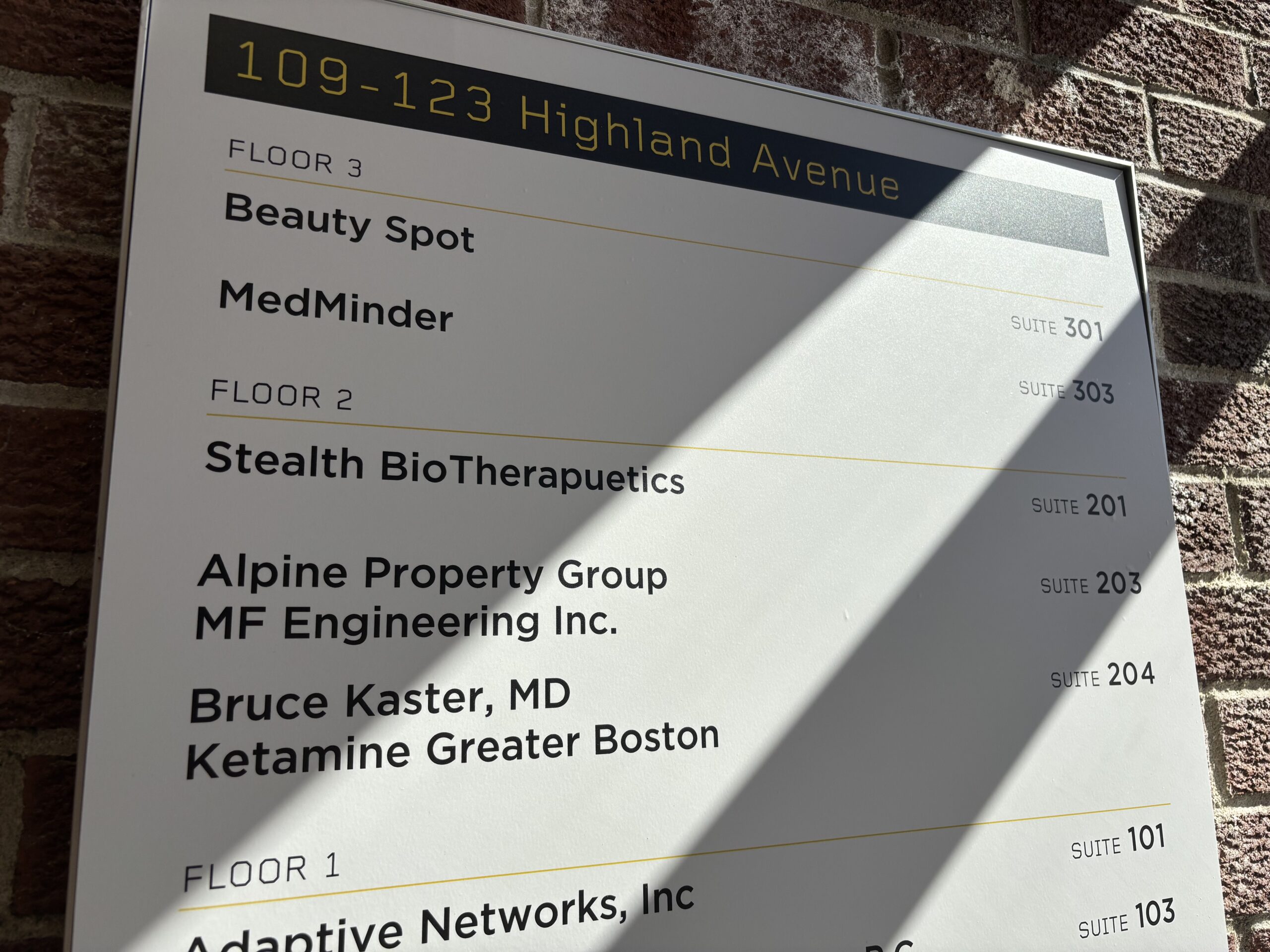
Since 2014, Needham-based Stealth BioTherapeutics — at the encouragement of Barth syndrome advocates — worked to create a therapy for the illness by targeting the mitochondria. Last month, after several years of limbo with the U.S. Food and Drug Administration, Forzinity became the first FDA-approved mitochondria-targeted therapeutic.
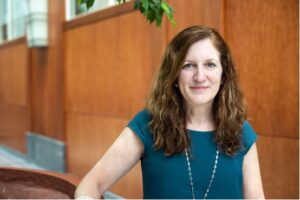
“My first reaction was relief, because this has been just a very personal commitment by us to this patient community,” Stealth CEO Reenie McCarthy said last week. “When you work so closely with such a small community, you kind of feel this sense of obligation and responsibility.”
Barth syndrome impacts an estimated 150 people in the United States, the vast majority of whom are male because of how the genes are passed on. About one in every 300,000 to 400,000 babies worldwide have the disease, according to Boston Children’s Hospital.
McCarthy calls the disease “debilitating.” Those diagnosed — typically in infancy or before birth — can fail to thrive, miss motor milestones and require assistive devices as they age, McCarthy said, while others can’t attend a full day of school because of exhaustion or can’t work a job because of muscle weakness.
Elamipretide, marketed as Forzinity, is a daily injection that will treat patients 30 kilograms (about 66 pounds) and over. The FDA granted accelerated approval to the drug due to data observed in clinical trials that showed “improved strength of the muscle used to straighten the leg at the knee,” according to an FDA press release.
“The FDA remains committed to facilitating the development of effective and safe therapies for rare diseases and will continue to work diligently to help ensure patients with rare diseases have access to innovative treatments,” said George Tidmarsh, director of the FDA’s Center for Drug Evaluation and Research, in the press release.
Now, Stealth will need to carry out a post-marketing trial to confirm those results can benefit patients, which they aim to start next year. In a disease so rare, it’s challenging to conduct clinical trials with a large enough sample size, McCarthy said, because researchers need statistically significant results. The next trial will provide more data, and she said it’s “the best pathway to get there.”
And given the novelty of the treatment — the first mitochondria-targeted therapy approved by the FDA — McCarthy said she feels this could drastically shape how all disease is treated.
“Many times with disease, what we’re trying to do is reduce the bioenergetic burden on a failing organ. Think for heart failure, we try to reduce heart rate or blood pressure,” she said. “Our approach is actually a little bit more organic in terms of trying to restore healthy bioenergetics… If we could actually improve bioenergetics, how our bodies make energy, you might be able to not just slow down how fast a disease progresses, but actually restore aspects of function.”
In Barth syndrome, a phospholipid called cariolipin is deficient. Cariolipins make up the inner structure of mitochondria. Forzinity aims to target that deficiency, McCarthy explained.
The Barth Syndrome Foundation, the advocacy group that petitioned Stealth to work with their lead drug, elamipretide, to treat the genetic disorder, celebrated the FDA approval. In a press release, Shelley Bowen, the foundation’s director of family services and advocacy, said there’s still work to be done, specifically for smaller patients who are currently unable to take the drug.
“This regulatory journey has been a daily exercise of resilience,” Bowen stated. “For the past two years our community has tearfully pleaded to be heard in hundreds of Congressional meetings. Today, some of those pleas have been heard. While access for our most vulnerable population remains incomplete, we are deeply grateful for Stealth’s commitment to provide an Expanded Access Program (EAP) for this population to make sure that emergency cases and individuals who are already on the therapy will have access. They are doing right by our community while we continue to push for approval for all ages.”
There are about 30 patients in Stealth’s compassionate use program for Forzinity, and some can be converted to commercial use soon. McCarthy said they’re working to “broaden out the label” to those who weigh under 30 kilograms.
The commercial biotechnology company is also in late-stage development in using elamipretide to treat age-related macular degeneration, which leads to blindness in elderly people. They’re working now to launch the commercial drug for Barth syndrome.
The hope, in McCarthy’s eyes, is that mitochondria treatments gain traction.
“This was a really important milestone for the Barth syndrome patient community, and so I think that’s first and foremost in our thinking,” McCarthy said. “But yeah, it does sort of open the door a notch to the potential of this approach to treating disease.”