Needham History: Where’s the Chapel on Chapel Street?

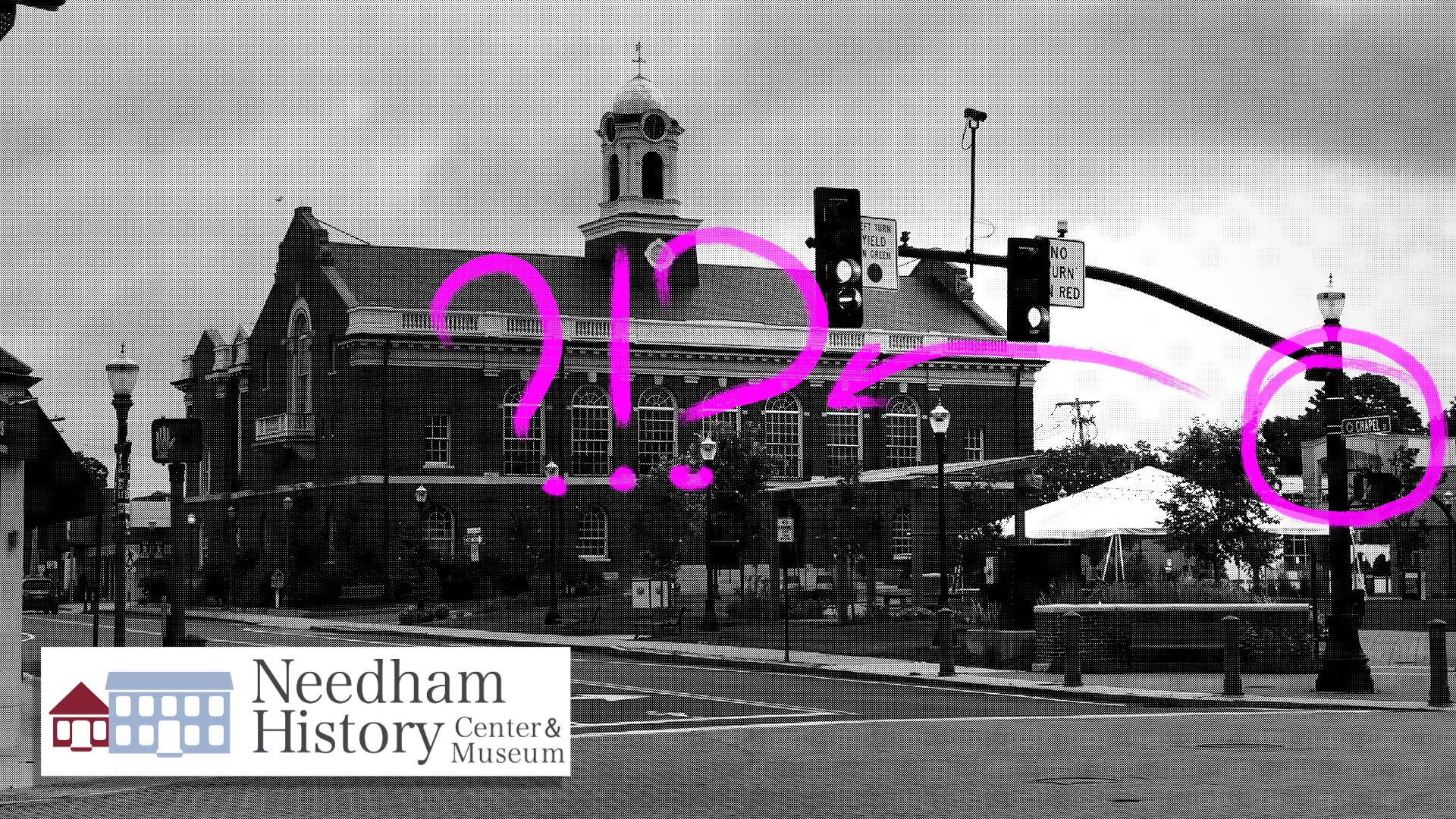
Downtown used to look a little different.
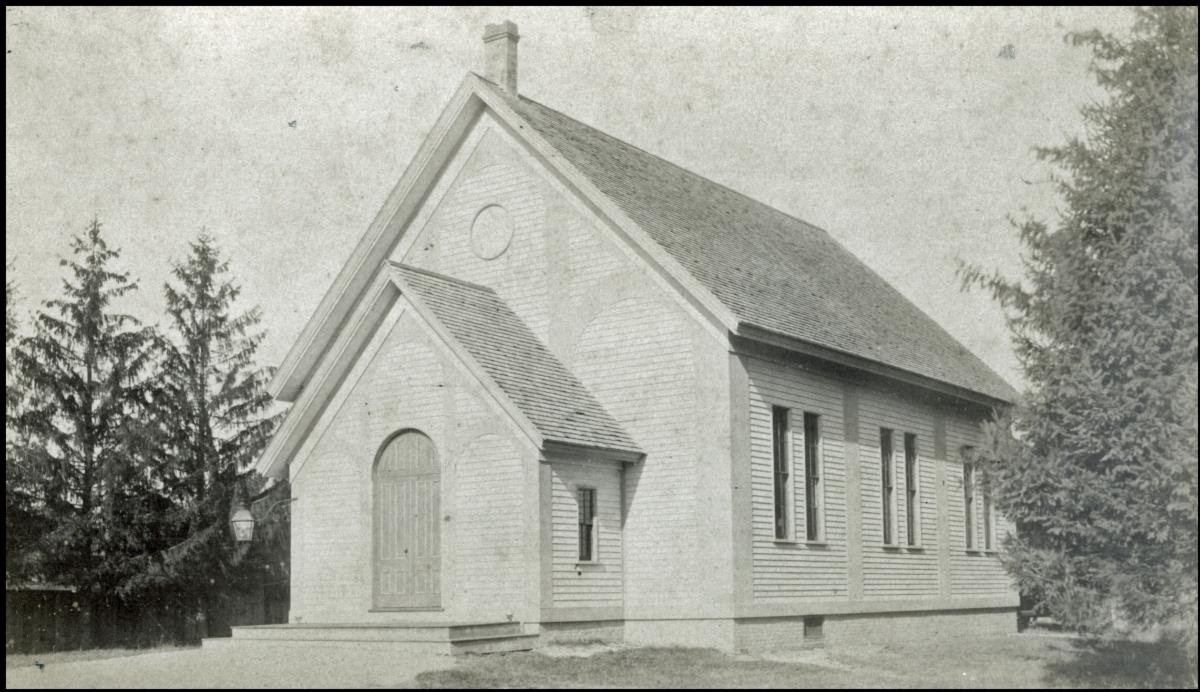
The Evangelical Congregational Chapel on Chapel Street, circa 1890.
Where’s the Chapel on Chapel Street?
Chapel Street is one of the nicer downtown streets, with a mix of shops and an attractive and well-tended streetscape. The store owners plant pansies (yes!) in the spring, and colorful flowers in the summer. There are places to eat, whether you’re hungry or just peckish; you can buy a gift or purchase a service or invest your money. Chapel Street has everything, except… a Chapel.
Well, not any more, it doesn’t – but it did. Chapel Street was laid out in the late 1850s to provide access to the new Evangelical Congregational Chapel. Since its founding in 1711, Needham residents were required by MA law to pay taxes to support the established church – in this town, the First Parish. This law was repealed in 1833, freeing up people who belonged to other denominations to establish and support new congregations.
One of these was established in 1857, when the more conservative Congregational Trinitarians split off from the more liberal Unitarians of the First Parish. They built their new chapel in 1859 on an empty lot in the Great Plain, and shortly thereafter the road was formed to access it.
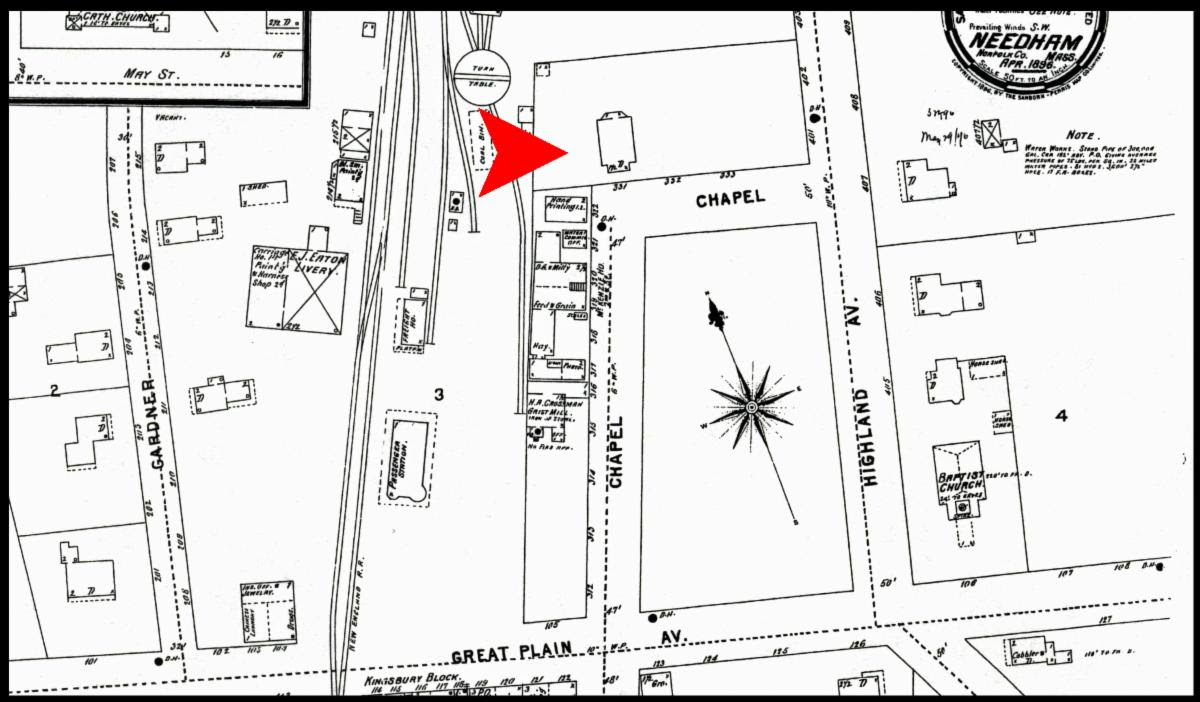
In its original layout, Chapel Street did not connect with May Street, but took an eastward bend to meet up with Highland Avenue. In terms of our current layout, Chapel Street ran north from Great Plain Avenue, and then turned sharply right along the route of the Town Hall parking lot and Bank of America drive-through lane, coming out on Highland Avenue. The Chapel itself, just at the bend, would be in what is now the middle of the street in front of the Bank, facing south toward Great Plain Avenue.
The Chapel served the congregation until 1886, when they had raised enough money to build a new and larger church on the corner of Linden Street. The old chapel was loaned to the new Roman Catholic Parish of St. Joseph for a few years until they built their own new church on the corner of Highland Avenue. The chapel was then used for housing. By the mid-1920s, the structure had served its purpose, and was becoming shabby and tattered, and in 1928 it was demolished.
Detail from the Sanborn Fire Safety Insurance Co. map of Needham for 1896, showing the original configuration of Chapel Street. The red arrow indicates the Chapel.
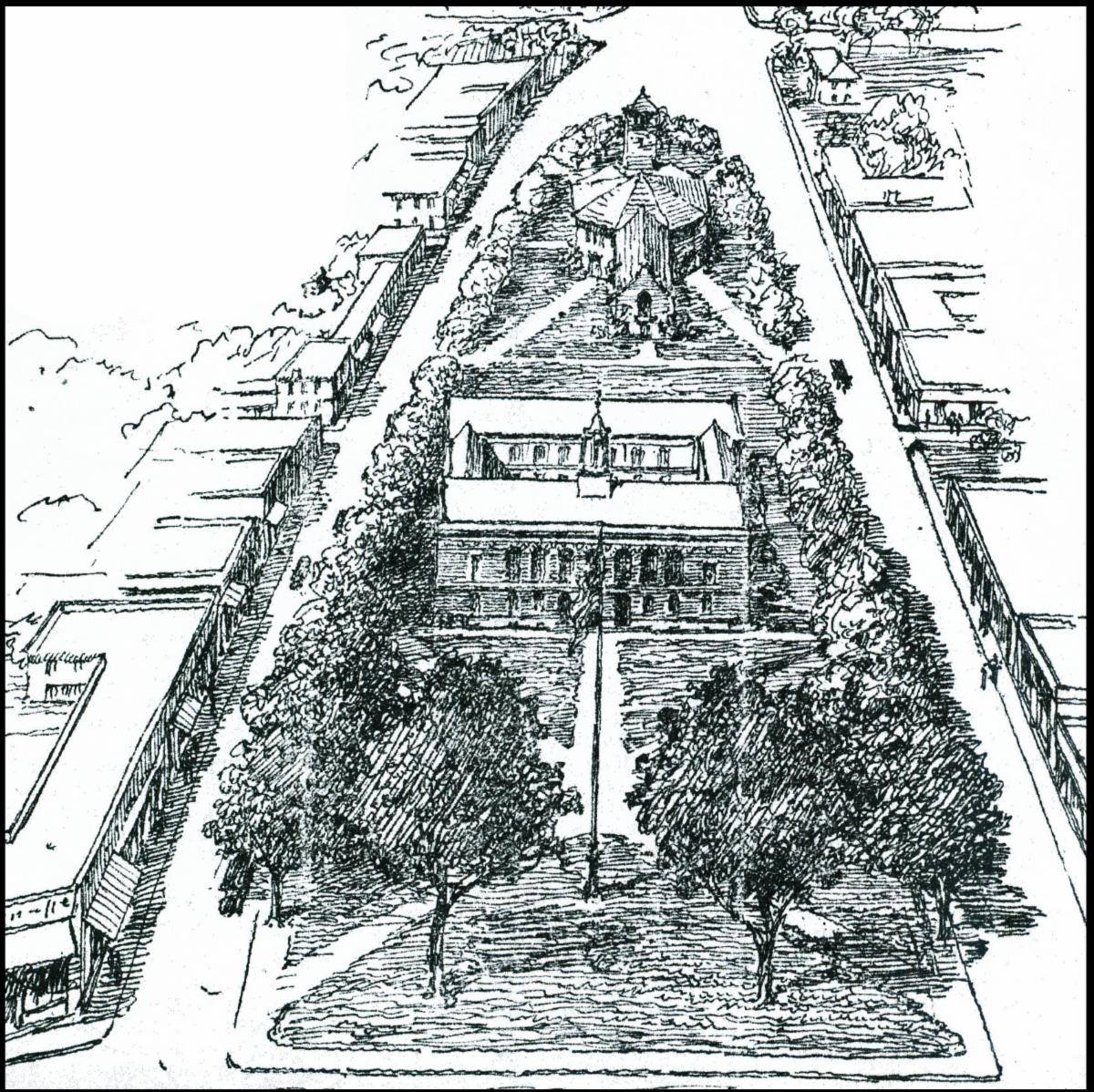
In 1926, local architect and planner Walter Kingsbury proposed “An Indication of Civic Development at Needham” that envisioned the extension of Chapel Street from Great Plain Avenue straight all the way to May Street, rather than turning east toward Highland Avenue. The new lots created by that extension could be used by the town to expand the Town Hall and build a new and much-needed fire station to replace the old 1885 structure on Chestnut Street.
Kingsbury drew up a rendering of his plan, which was published in the Needham Chronicle in April 1926. It showed a second wing on Town Hall, doubling its size and creating a quadrangle in between. Behind Town Hall, on the new triangular lot, Kingsbury proposed a cross-shaped fire station. The intent of this structure was to have one truck in each of the four bays, at 90-degree angles to each other. In the event of an alarm, the truck facing most closely in the right direction would be the first to respond. In addition, nearly all of the storefronts along Chapel Street and Highland Avenue would be rebuilt and modernized.
Only one part of this intriguing proposal was actually implemented. In 1928, Chapel Street was extended to May Street, the way we know it today. However, the town declined several opportunities to purchase the new lots that were created, and they were sold to private owners as retail space.
Walter Kingsbury’s rendering of the proposed new layout for Chapel Street, showing the expanded Town Hall and new fire station, 1926.
 |
Gloria Polizzotti Greis is the Executive Director of the Needham History Center & Museum. For more information, please see their website at www.needhamhistory.org. |