Pollard Auditorium, Flooding Emerge as Concerns at Listening Session

July 10, 2025
• The Needham Public Schools hosted two listening sessions concerning the future of Pollard Middle School with the goal of attracting community feedback.
The contemporary classroom sits between 850 to 900 square feet, with the average science classroom at about 1,400 square feet. At Pollard Middle School, those numbers look a little different: classrooms there are about 700 square feet, as are their science labs.
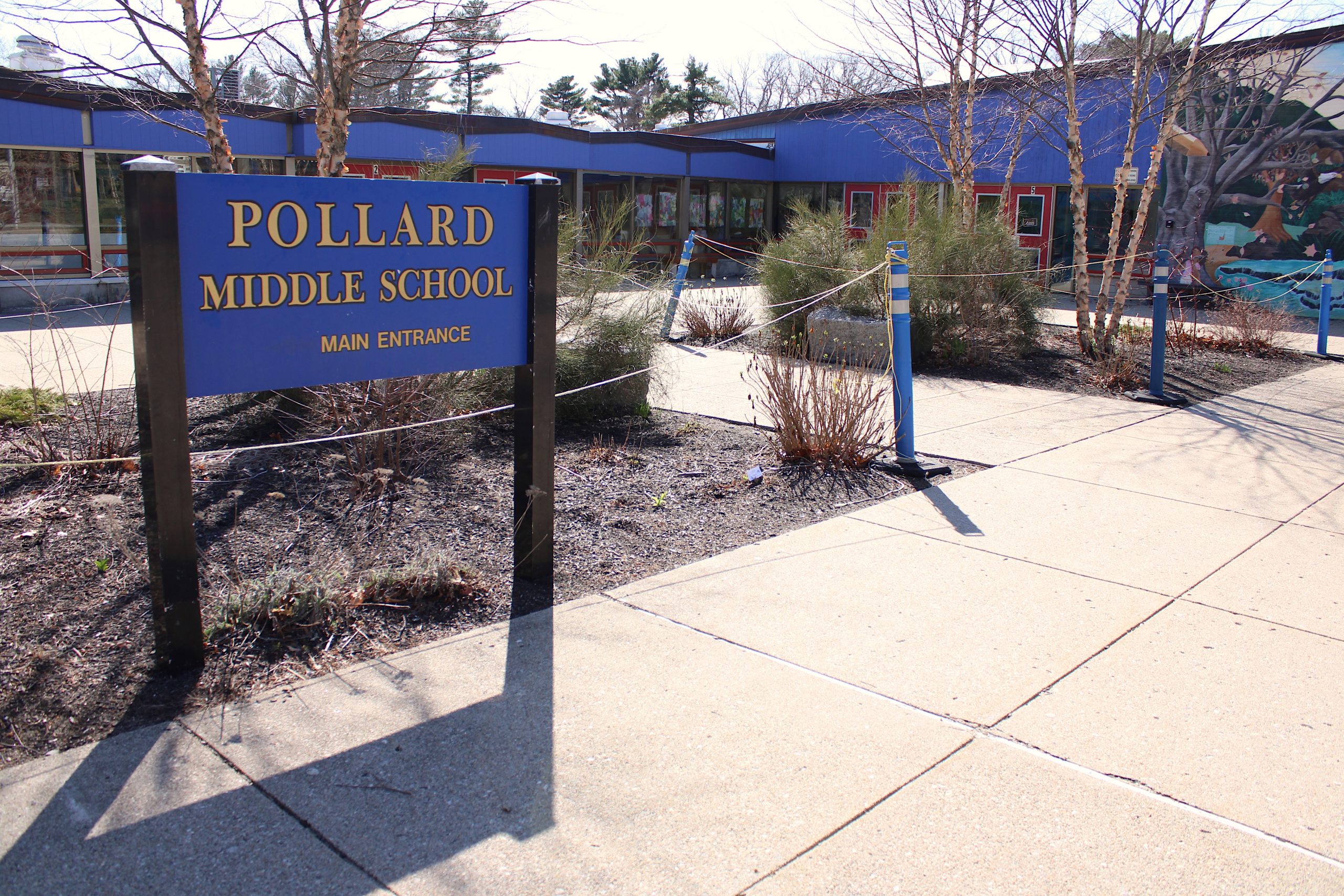
Pollard, built in 1956, could use an update, Superintendent Dan Gutekanst told community members Wednesday. The district held two listening sessions about future plans for Pollard, a renovation project that could cost $313 million, sharing data and options to better serve students.
Students’ needs, as well as accessibility requirements, have also evolved in the last seven decades, Gutekanst said.
“Our kids come here every day, they work with great teachers, and they are learning. I want to make sure that people understand that,” he said during the evening session. “And yet, the programs that we have, the needs that our kids have, can be served much better in a facility that doesn’t have leaking roofs, that has a working HVAC system, that has efficiencies built in that will really allow for learning to thrive.”
During the evening listening session, Needham residents questioned the price tag on the project and urged the district to consider an auditorium that accommodates its burgeoning thespians.
The Massachusetts School Building Authority is expected to cover 20-30% of the total construction cost, pending parameters the district must meet. The 250,000-square-foot building, for one, must be LEED Silver certified. It must also meet Needham’s specialized stretch energy code, which would trigger an additional reimbursement from the MSBA.
The MSBA does not, however, cover auditoriums at the middle school level, which means the town would have to foot the bill. A representative from HMFH Architects, the firm chosen for the project, said the state may reimburse just for the stage portion — falling under a “cafe-torium” hybrid room distinction — but not the remaining space.
Gutekanst, in front of an audience in that very auditorium, expressed his own slight dismay.
“This room is a big part of what goes on academically,” he said. “It’s weird, it’s strange that the MSBA doesn’t even consider an auditorium in the middle school design. I don’t know why, but they don’t, and they’ve heard from us that it is a big part of what we do in our school programming. And of course, certainly it has benefits to the community.”
Heather Salerno, a member of the Needham High School Friends Of Music, said the town “has chronically underinvested in performing arts spaces.” High schoolers currently use the Newman Elementary School auditorium for shows, which she views as “laughable.”
“We have kicked the can for too long when it comes to performing arts spaces in Needham,” she said.
Asked whether the town can rent out its performing arts spaces down the line, Gutekanst said “we’re not there yet.”
The MSBA also does not cover more than one gym space. Pollard currently has two gyms.
Pollard could house either sixth through eighth grade — about 1,335 students — or just seventh and eighth grade — an estimated 880 students. The campus would either remain at 200 Harris Ave. or move to DeFazio, adjacent to the Department of Public Works.
Pollard is one of several school facilities “approaching or past their useful life,” School Committee Chair Alisa Skatrud said. Skatrud, who also sits on the School Building Subcommittee, said converting Pollard to include sixth grade would allow High Rock School — currently just a sixth grade school — to become another elementary school. When Mitchell Elementary School is eventually renovated, those students would have a place to go, she said.
Those maneuvers would save the district “a very costly temporary school building” — an estimated $40 million — while allowing school leaders to strategize the Mitchell rebuild, Skatrud said.
“We feel like the work that we have done so far has allowed us to be strategic in thinking about a plan that could be really fiscally responsible going forward,” Skatrud said.
In collaboration with the district, HMFH Architects held visioning sessions in the last few weeks to inform the look of the school’s spaces and priorities, one major one being safety. The firm said it’ll commit to working with the police and fire departments to secure the campus.
Should Pollard move to DeFazio, several residents pointed to flooding issues. Town Meeting member Andrea Dannenberg suggested the town assess possible flooding risks, while another resident stressed the need to not only preserve the nearby fields but consider creating turf fields for soccer, given how frequently their fields flood.
Following Special Town Meeting in October 2026 and an override the following November, the project would move forward. For now, the district is holding feedback meetings to inform the design and location of the project.
Gutekanst said the schools intend to hold additional listening sessions into the summer and fall. While “a very expensive project” that will eventually fall on taxpayers, Pollard is an important one, he said. The price, though subject to slight inflation-related increases, should remain steady, officials said.
“This is a huge lift for this community, there’s no doubt about that,” he said, “and that’s why these conversations and the questions will continue to be important.”